skip to main content

HIV testing in the 4th decade of the epidemic

Despite advances in HIV testing, barriers to HIV testing remain

APA Style leaf logo Cite This Article in APA Style
Starks, T. J., & Sauermilch, D. (2020, March 1). HIV testing in the 4th decade of the epidemic. https://www.apa.org/topics/hiv-aids/hiv-testing

HIV testing in the 4th decade of the epidemic

As the 4th decade of the HIV epidemic draws to a close, substantial advances in HIV care are evident. Those living with HIV today have life expectancies approximately equivalent to those who are HIV-negative (Marcus, Marcus, Chao, Leyden, & Xu, 2016). Improvements in HIV treatment have permitted not only longer, but healthier, more active and vibrant lives (Brahmbhatt et al., 2014; Luz et al., 2016). Meanwhile, viral suppression can successfully prevent forward transmission to HIV-negative partners (Rodger et al., 2016).

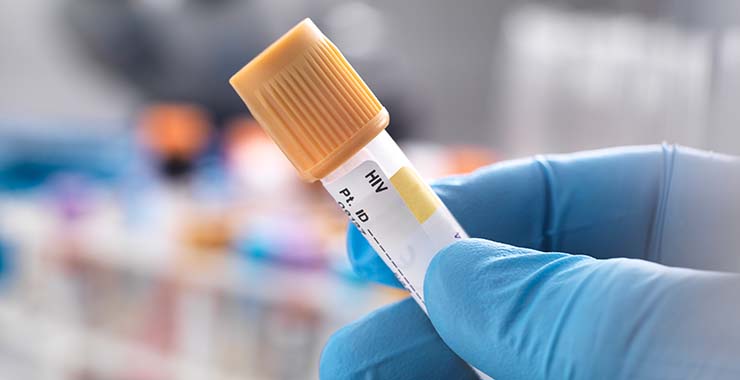
In order to benefit from these advances, individuals must know their HIV status. This positions HIV testing as the initial step in the care cascade, and it has evolved substantially along with treatment. We briefly explore these developments in HIV testing, review ongoing barriers to HIV testing, and discuss their implications for the continuum of HIV care and the Ending the HIV Epidemic campaign in the US (Centers for Disease Control and Prevention, 2019).

The transition from specialized service to standard care

From the approval of the first HIV diagnostic test by the US Food and Drug Administration (FDA) in 1985, until the advent of the first approved rapid test in 2002, most HIV testing was conducted in specialty clinics, emergency rooms and laboratory settings (Hurt, Nelson, Hightow-Weidman, & Miller, 2017). The procedure was administered by trained specialists, required separate written consent and involved venipuncture collection of much larger specimen quantities than those needed for rapid testing (Alexander, 2016; Hurt et al., 2017).

Today, HIV testing in the US has become a routine service, much like screenings for problematic substance use or depression. In 2006, the Centers for Disease Control and Prevention (CDC) recommended HIV testing as a regularly offered service for all individuals between the ages of 13 and 64 in the US (Branson et al., 2006). As of 2018, all 50 states had legislation consistent with the CDC’s recommendations reducing requirements for prerequisite prevention counseling and eliminating separate written consent (CDC, 2018). Most testing is the US is now conducted in general medical settings where point-of-care diagnostic tests may be performed with results delivered by general practitioners and nursing staff (Hurt et al., 2017).

The amount of waiting inherent in the testing process has substantially declined. Rapid testing yields results in as little as 20 minutes3and means patients no longer face waiting days or weeks to learn their status (Alexander, 2016; Hurt et al., 2017). Testing and results delivery can now happen in a single appointment, which improves retention in the HIV care cascade (Govindasamy et al., 2014; Zhang et al., 2016). The immediate delivery of results facilitates immediate linkage to HIV care for those who test positive and diminishes the potential that patients who test, fail to receive their results.

Not only are results delivered faster, rapid 4th-generation testing has also significantly reduced the window period for detection (Hurt et al., 2017; Muthukumar et al., 2015). Third generation tests looked only for antibodies to HIV and could not reliably detect an infection that occurred less than 90 days prior to testing (Hurt et al., 2017; Muthukumar et al., 2015). By contrast, 4th-generation testing now looks for the virus itself in addition to antibodies (Alexander, 2016; Hurt et al., 2017; Muthukumar et al., 2015). This decreases time-to-detection to as little as two-weeks (Marquez, Zetola, & Klausner, 2008). The period immediate post-infection is critical to the HIV care cascade (Muthukumar et al., 2015). The sooner treatment is initiated, the better health outcomes can be achieved for those who are HIV-positive (Caro-Vega et al., 2015). Also, viral load3and subsequently infectiousness—are particularly high during the weeks immediately after infection (Selik & Linley, 2018). The ability to detect new infections sooner therefore improves outcomes for those living with HIV and reduces forward transmission risk.

Couples HIV testing and counseling

The past two decades have also seen the emergence of couples HIV testing and counseling (CHTC). It was developed first in Africa, where HIV testing and prevention interventions with heterosexual women identified the need to engage their male sex partners in order to enact prevention strategies (Painter, 2001). Following data indicating that between 35 and 68% of new HIV infections among sexual minority men (SMM) are transmitted between main partners (Goodreau et al., 2012; Sullivan, Salazar, Buchbinder, & Sanchez, 2009), CHTC has been tailored for use with male couples in the US (Sullivan et al., 2014).

Conversations about HIV prevention may be uniquely challenging for couples. Many SMM view forgoing condoms as a way of demonstrating love, trust and commitment in a relationship (e.g., Goldenberg, Finneran, Andes, & Stephenson, 2015; Starks, Pawson, Stephenson, Sullivan, & Parsons, 2018). Concerns about perceived trust and commitment serve as a barrier to biomedical HIV prevention as well (Bosco, Pawson, Parsons, & Starks, 2019; Mimiaga, Closson, Kothary, & Mitty, 2014; Starks, Doyle, Shalhav, John, & Parsons, 2019).

CHTC is one potential vehicle for addressing challenges to introducing prevention conversations. During CHTC, partners consent to learn their HIV status together. They both know each other’s status. The HIV tester then introduces the opportunity to develop a shared vision and plan for HIV prevention, clarify their sexual agreement (i.e., the rules and understandings they have about sex with partners outside their relationship), and strategize for what they might do in the event someone broke the agreement (Grabbe, Bachanas, Moore, Rogers, & Fenley, 2012).

Despite evidence of its effectiveness (Sullivan et al., 2014) and acceptability (Reisner, Menino, Leung, & Gamarel, 2019; Rendina et al., 2014; Stephenson et al., 2011), CHTC uptake has been modest in the US (Stephenson, Grabbe, Sidibe, McWilliams, & Sullivan, 2016). Emerging work has established that the intervention can be delivered remotely (Stephenson et al., 2017), with serodiscordant couples ( Stephenson et al., 2018), and integrated with substance use intervention (Starks, Dellucci, et al., 2019) and relationship skill building interventions (Newcomb et al., 2017). Ongoing studies in the Adolescent Trials Network (ATN-156 and ATN-157) seek to adapt it for adolescent SMM (Gamarel, Darbes, Hightow-Weidman, Sullivan, & Stephenson, 2019; Starks, Feldstein Ewing, et al., 2019). It might be hoped that these initial steps to reduce barriers to access, integrate service delivery and expand the reach of the CHTC will catalyze dissemination in coming years.


Attitudes towards HIV testing

Despite the importance and relative ease of HIV testing, approximately 57% to 54% of Americans did not receive a test between 2011 and 2017 (Patel et al., 2019). Early in the epidemic, the primary barriers to HIV testing were related to stigma. The persecution and even the prosecution of those with HIV were, and in some contexts continue to be, very real stressors for those living with the virus (Alexander, 2016; Kesler et al., 2018). Disclosure of an HIV-positive status potentially jeopardized one’s employment, health and life insurance coverage, as well as other basic civil necessities (Joshua, 2016). The structural nature of HIV testing in those years—where the service was separated from other medical care—was largely a response to these disclosure concerns (Hardon et al., 2011; Joshua, 2016).

HIV stigma remains a salient barrier to testing today; however, other challenges—for example access to testing—are now better acknowledged (e.g., Pellowski, 2013; Wise et al., 2019). Research on barriers to testing has illustrated that even as health outcomes for those living with HIV have improved, the perceived importance of HIV testing for at-risk populations has remained consistently lower than that of the general population (e.g., Evans et al., 2018; Meade et al., 2015; Whitlock et al., 2013). There is also increasing evidence that younger people – even those at high risk of infection – perceive testing as less important than members of older cohorts (CDC, 2014). It is plausible that these perceptions of need are related to the fact that the reality of living with HIV is more hopeful (CDC, 2014; Nelson, Gamarel, Pantalone, Carey, & Simoni, 2016). Ironically, early detection and treatment initiation are imperative in optimizing outcomes for people living with HIV (Caro-Vega et al., 2015). If successes in the HIV care cascade are to be maintained for future generations, it is critical that public health professionals find ways to impart the urgency and relevance of HIV testing to the next generation.

Summary

HIV testing is faster, easier to access and more widely available. The format for individual testing has been streamlined with integration into routine care and couples HIV testing has expanded the service to address risk from a relational perspective. Yet challenges remain, and ongoing attention to HIV testing is essential to maintain and advance successes in later stages of the care cascade. Work remains to ensure that everyone knows their HIV status and stays current with routine testing. At the same time, public health officials and healthcare providers must rise to the challenge of imparting the importance of testing to a new generation.

Recommended Reading

You may also like