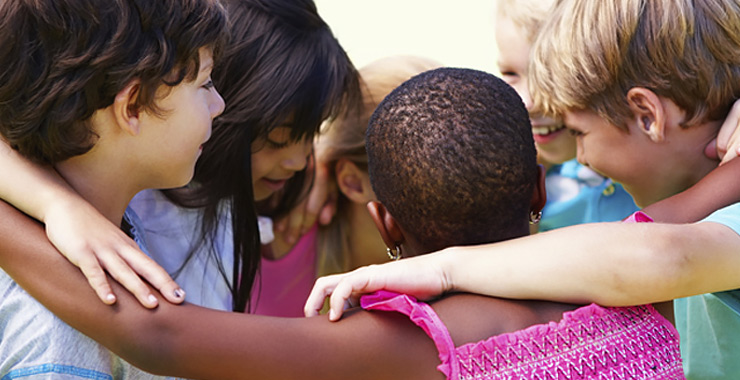
Many people are hesitant to talk to their kids about differences because they don’t want to draw attention to them. But whether you talk about those differences or not, kids notice when someone looks different than they do. They also notice when certain groups seem to be treated differently than others.
Studies show that even infants can distinguish skin tones. By early childhood, kids begin to have more favorable opinions of people they perceive as “the same” as they are–even if the similarities are meaningless. In one study, for instance, researchers randomly assigned 6-year-olds to either a green group or an orange group. Later, the kids were more likely to remember positive things about the kids in their own group, and negative things about kids in the other group.1
When parents avoid talking about differences and discrimination, experts say, children learn that the topic is taboo. Children might come to believe the differences they notice are more important than they really are. And they might be hesitant to ask questions, missing opportunities to challenge and correct stereotypes.
Discussing differences, on the other hand, can help kids appreciate diversity and better recognize discrimination when they see it. In one experiment with 8- to 11-year-olds, researchers read children storybooks that either downplayed racial differences (referred to as a “color-blind” approach) or talked about the value of diversity. Later, when listening to stories that featured examples of racial bias, the children who had read the “color-blind” books were less likely to recognize that bias. Kids who learned about diversity, on the other hand, were better at identifying examples of discrimination.2