Tiffany Yip, PhD, is a professor of psychology at Fordham University. She completed an undergraduate degree at Cornell University, earned her MA and PhD at New York University, and completed a postdoctoral fellowship at the University of Michigan.
Her research on ethnic identity, discrimination, and sleep among ethnic/racial minority adolescents, and young adults has been published in American Psychologist®, Child Development, Developmental Psychology®, and Current Directions in Psychological Science. She serves as an associate editor for Developmental Psychology® and is a former associate editor for Child Development, Cultural Diversity and Ethnic Minority Psychology®, and the Asian American Journal of Psychology.
She is a fellow of the American Psychological Association and the Association for Psychological Science, and her research has been funded by the National Institutes of Health and the National Science Foundation. Her research has been featured in outlets such as The Washington Post, Los Angeles Times, and Psychology Today.
“Sticks and stones may break my bones, but names will never hurt me” is a playground rhyme that has undoubtedly conferred resilience for many children. But a growing and increasingly robust literature may call our folk wisdom into question. Science has found that discrimination is harmful for a host of academic, psychological and physical health outcomes.
Recent reviews of how discrimination stress is implicated in health finds consistent linkages among children, adolescents, and adults (Benner et al., 2018; Pascoe and Smart Richman, 2009; Priest et al., 2013; Slopen, Lewis, Williams, 2016). In fact, scientists are drawing connections between the health detriments of discrimination stress and patterns of ethnic/racial health disparities (Williams and Mohammed, 2009). Using theoretical models focused on allostatic stress, ethnic/racial disparities, and constructs such as “embodiment,” scientists aim to unpack how social experiences of discrimination stress and exclusion are experienced "under the skin" physiologically (Gee, Hing, Mohammed, Tabor, Williams, 2019; Krieger, 1999; Levy, Heissel, Richeson, Adam, 2016; McEwen, 1998).
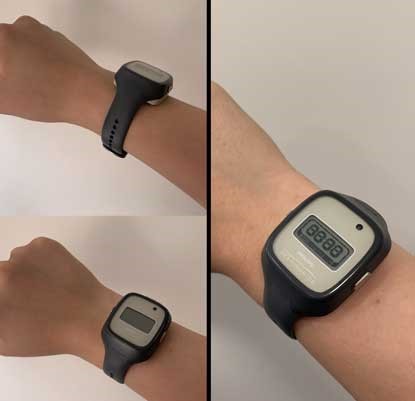
Figure 1. Wrist actigraph to measure sleep.