skip to main content

This page has been archived and is no longer being updated regularly.

Why are we following a 20th century data pedagogy in a 21st century data world?

A call to modernize graduate student data science training.

APA Style leaf logo Cite This Article in APA Style
Pineault, L., Partridge, T., & Bierstetel, S. J. (2020, January 1). Why are we following a 20th century data pedagogy in a 21st century data world? https://www.apa.org/topics/research/data-science

Woman using laptop

The training model for many PhD programs has historically assumed that graduates follow an academic career path. However, advanced degree holders are increasingly targeting careers outside of academia (Woolston, 2020opens in new window). This is in large part due to the limited number of academic jobs available and the substantial barriers to obtaining stable full-time employment within academia (Caterine, 2020opens in new window). This trend has been accelerating over the last decade. In 2011, the Center for Innovations and Research in Graduate Education’s (CIRGE) “5 years + out” survey found that nearly 20% of PhD graduates with the initial goal of being a professor had changed to a non-academic career, and 40% of graduates pursuing an academic career had still not obtained full-time academic employment 6 years postdegree (Morrison et al., 2011). Part of the challenge is a stagnant or shrinking number of faculty positions at many academic institutions and an expansion of the number of PhDs being conferred.

In the era of COVID-19, an already hyper-competitive academic job market has become even more volatile, plagued by hiring freezes, furloughs, and budget cuts (Flaherty, 2020opens in new window), which will likely outlast the COVID-19 crisis for several years. For example, emerging year-over-year job search statistics between 2017 and 2020 from the Academy of Management show a staggering increase in the ratio of applicants to available academic jobs (1.63 in 2017, 1.69 in 2018, 1.36 in 2019, and 6.20 in 2020; Hruskova, 2020opens in new window). The ever-tightening academic job market has put pressure on PhD programs to prepare their students for careers in private and public industry (Pettit, 2019opens in new window; Wood, 2019opens in new window). In their most recent survey findings, CIRGE reported that data analysis and synthesis were top-rated skills for both academic and nonacademic jobs (Nerad et al., 2007opens in new window). As such, one important way graduate programs can support the professional development of all graduate students (not just those with their sights set on a tenure-track position) is by incorporating open-source statistical software training in statistical and research methods curricula. 

Over the last decade, the use of data and data analytics has transformed every sector of the workforce, resulting in data science being one of the fastest growing fields in the United States (LinkedIn, 2020 (PDF, 10.7MB)opens in new window). Even those not working directly in data analytics are required to use and interpret statistical data to a greater extent than ever before. It is not just the corporate, government, and STEM sectors; nonprofit, philanthropy, and human service sectors are incorporating data analysis at an unprecedented level in their work (see Corporation for National and Community Service, 2016; What Works Clearinghouse, n.d. (PDF, 835KB)opens in new window). However, the proprietary statistical software that is commonly used in academia for research and training (e.g., SPSS, STATA, SAS) is often less attractive or feasible in private industry due to its recurring licensing costs. Even in academia, these software packages cannot keep pace with the rapid advances in analytic methods in bio-social sciences that present a substantial cost to universities. While the cost and lagging capabilities of proprietary statistical software packages are becoming increasing barriers to their use, proficiency in open-source coding languages is an in-demand skill for advanced degree holders. To remain competitive in this global job market, graduate programs must modernize their curriculum by incorporating data science, experts say, citing computer programming skills as being an “absolutely necessary” competency for advanced degree-holders pursuing jobs in industry (Aiken and Hanges, 2015opens in new window, p. 540). Learning open-source statistical software, such as R, should not only be a priority for industry-focused graduate students, but also aspiring academics as there are increasing calls for widespread adoption of open-source software in academia to promote open science practices (Calin-Jageman and Cummin, 2019opens in new window).

Although it has become clear that the future of data management and analysis is going to be in the open-source coding realm, there are some substantial institutional and cultural barriers to the widespread inclusion of languages like R in graduate training programs. How do we get ahead of this curve in staunchly traditionalist and slow-changing institutions like academia? Research on technology acceptance provides a useful framework for understanding how and why graduate students might make the decision to learn R (Davis, 1985, 1989; Venkatesh et al., 2003, 2012). A graduate student’s decision to become proficient in open-source coding languages, such as R, may be largely dependent on whether or not these software languages have been widely adopted and taught in their graduate program (e.g., Rode and Ringel, 2019opens in new window). Although formal data on the number of graduate programs that require students to use R or other open-source software (e.g., Python, JASP) in their statistics courses are not available, we can claim with confidence, based on observation and student reports, that these software are not broadly taught to graduate students as part of their formal coursework despite the tremendous demand for such training. Rather, it often seems that both undergraduate and graduate statistics courses are still primarily taught using proprietary software, such as SPSS, STATA, or SAS.

Learning statistics vs. coding in R

One of the major challenges to integrating open-source programming, like R, into graduate training programs is deciding where it fits in the curriculum. While most pedagogical structures build in space for both statistics and research methods, the broader and more encompassing area of data science and coding is often left on the sidelines. Certainly, the ongoing pedagogical debate about conflating teaching statistics with teaching computer programming in R contributes to this. For instance, opponents of incorporating R into graduate coursework argue that easier-to-use software such as SPSS enables students to focus solely on mastering statistics and analysis rather than trying to do so while dealing with the additional demands that R would introduce (e.g., learning commands, troubleshooting technological issues, etc.). On the contrary, supporters of R posit that graduate programs are doing students a disservice by first teaching them SPSS, because students become dependent on a point-and-click interface and are deterred from understanding the under-workings of statistical models. Further, the conventional wisdom among academic statisticians is that the teaching of statistics should be divorced from a particular software package. Independent of pedagogical views about the integration, or lack thereof, of open-source computer programming into formal statistics coursework, the lack of universal graduate training in data science and open-source statistical computer programming languages leads to a critical mismatch between 21st century data science needs and academia’s preparation of graduates to meet that need.

A case study: How we sought to close this training gap

Implementing large scale curriculum reform in graduate research methods and statistics education is a tall order, considering the disruption it would cause in the established structure of higher education, known to be resistant to change. Institutions, such as universities, are by their very nature conservative and hold tight to traditions; we tend to teach with the tools we used when we were trained and structure courses the way “they have always been” structured. With generations of faculty being trained and working in a world with closed proprietary software programs that are often point-and-click, menu-driven systems, we have created a learning environment where the trainer and the trainee are on the same level when it comes to such fundamental changes in data science. Asking professors to redesign their statistics courses to be taught in R can be a hard sell and presupposes their proficiency in the computer programming skills necessary to convert their existing SPSS syntax to R-code.

We, as an authorship team, sought a way to fill this gap in research and statistics training that did not require large scale curriculum reform or widespread buy-in from academic faculty and staff. In summer 2020, our Research Design and Analysis Unitopens in new window at Wayne State University launched a campus-wide online “Introduction to Data Management and Statistical Analysis in R” workshop. We intend to offer the workshop each semester as an opportunity for members of the university community to learn more about R. 

The R workshop is designed for graduate students, postdoctoral fellows, and faculty interested in discovering more about the open-source statistical software R and, more generally, statistical analysis and data management. Prior experience in R is not required, and people from any department or discipline are eligible to enroll. The format of this workshop is a combination of online lectures and demonstrations, hands-on activities, and an independent final project. In the workshop, participants can expect to learn the basics of R, such as importing and exporting data, data structures and R packages, strategies for data manipulation, and basic statistical analyses (e.g., descriptives, correlation, regression, T-test, ANOVA). Although students do not receive formal credit on their transcript for participating in this workshop, they are eligible to receive a certificate of participation for completing the workshop.

The overwhelmingly positive response we have received for this workshop, as measured by enrollment numbers, administrative support, and participant feedback, speaks to the demand for this type of structured, course-based offering. Across the two semesters we have offered the workshop, more than 100 graduate students, fellows, and faculty members from various disciplines across campus have enrolled. The enrollment numbers have exceeded those of any other graduate-level statistics course in our psychology department despite the workload being similar to a traditional course and students not receiving formal credit for workshop completion. Students are eager to learn skills that will give them greater breadth and flexibility as researchers and prepare them for success in a difficult job market, and universities and educators need to provide opportunities to equip them with relevant and cross-cutting data science skills. Prior to the summer workshop, most of our participants had either no or limited exposure to and knowledge about R. After completing the workshop, many expressed that their confidence levels in independently using R surpassed their expectations. 

It is important to note that our training workshop serves as one case example among other programs serving to fill this training gap. Richard N. Landersopens in new window, of the University of Minnesota, offers a self-paced online course in R, “Data Science for Social Scientistsopens in new window,” which covers topics like the fundamentals of R programming, traditional social scientific statistical analyses and visualization, and new data science skills (e.g., machine learning (PDF, 585KB)opens in new window, natural language processing (PDF, 310KB)opens in new window). Additionally, the Consortium for the Advancement of Research Methods and Analysisopens in new window (CARMA), a nonprofit unit at Texas Tech University, offers a wide array of programs to help faculty, graduate students, and professionals learn about current developments in various areas of research methods and statistics. CARMA’s programming is arguably more accessible than ever, having adapted to an exclusively online delivery model during the COVID-19 pandemic, with frequent webcast lecturesopens in new window, topic interest groupsopens in new window, and live online short coursesopens in new window in R.

Conclusion

The ever-growing complexity of data and analyses calls for an increasingly skilled workforce (Sivarajah et al., 2017). With open-source statistical software, such as R, being freely available and supplemented with seemingly endless online materials and self-guided courses (e.g., DataCamp’s Introduction to Ropens in new window; McNulty’s [2020] “Handbook of Regression Modeling in People Analyticsopens in new window”), many graduate curriculum stakeholders ask: Why can’t we just rely on interested graduate students to learn these software on their own time? While there are a tremendous number of resources available, the sheer volume can be paralyzing for those who seek to learn how to use open-source statistical software. They simply do not know where to start. By constructing a shared and structured space, we have provided a pathway for students that alleviates the stress of having to find, decipher, and integrate the plethora of resources available to learn R. In our experience, already over-worked (and underpaid) graduate students are unlikely to devote the time and energy to approach such a seemingly daunting task without formal institution-level programming (see also Perry, 2019opens in new window; Writing Program Administration Graduate Organization, 2017 (PDF, 884KB)opens in new window). Formal coursework or extracurricular trainings hold students accountable for learning the material, encourage them to engage with the content on a deeper level (e.g., through assignments and through applications to their unique research interests), allow them to develop a community of peers motivated to learn the foundations of data science, and prepare them for success in whatever career they ultimately pursue.

About the authors

Laura Pineault is a PhD candidate in industrial-organizational psychology and a consultant in the research design and analysis Unit at Wayne State University. 


Ty Partridge, PhD, is an associate professor in the department of psychology (developmental science area) and director of the research design and analysis unit at Wayne State University. 
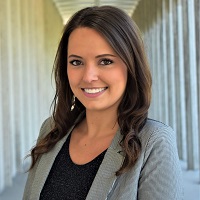

Sabrina J. Bierstetel is a PhD candidate in social-personality psychology and a consultant in the research design and analysis Unit at Wayne State University.

For more information about the authorship team and their R training efforts, visit the RDA websiteopens in new window.

References

Aiken, J., and Hanges, P. (2015). Teach an I-O to fish: Integrating data science into I-O graduate education. Industrial and Organizational Psychology, 8(4), 539–544.

Caterine, C. L. (2020, April 30). Mass exodus. Inside Higher Education. https://www.insidehighered.com/advice/2020/04/30/pandemic-threatens-force-more-phds-leave-academia-ever-and-they-will-need-careeropens in new window

Calin-Jageman, R. J., and Cumming, G. (2019). The new statistics for better science: ask how much, how uncertain, and what else is known. The American Statistician, 73(sup1), 271-280.

Corporation for National and Community Service (2016). Clearinghouses and evidence reviews for social benefit programs: CNCS evidence exchange. https://www.nationalservice.gov/sites/default/files/documents/Clearinghouses%20and%20Evidence%20Reviews.pdf (PDF, 835KB)opens in new window

Davis, F. D. (1985). A technology acceptance model for empirically testing new enduser information systems: Theory and results. Unpublished doctoral dissertation, Massachusetts Institute of Technology, Cambridge. 

Davis, F. D. (1989). Perceived usefulness, perceived ease of use, and user acceptance of information technology. MIS Quarterly, 13(3), 319-340.

Flaherty, C. (2020, April 1). Frozen searches. Inside Higher Education. https://www.insidehighered.com/news/2020/04/01/scores-colleges-announce-faculty-hiring-freezes-response-coronavirusopens in new window

Hruskova, M. [@MisaHruskova]. (2020, August 9). I knew the academic job market was bad, but didn't think it was that bad! Current data from @AOMConnect. [Tweet]. Twitter. https://twitter.com/MisaHruskova/status/1292485178221367298opens in new window

LinkedIn (2020). Emerging jobs report. https://business.linkedin.com/content/dam/me/business/en-us/talent-solutions/emerging-jobs-report/Emerging_Jobs_Report_U.S._FINAL.pdf (PDF, 10.7MB)opens in new window

McNulty, K. (2020). Handbook of regression modeling in people analytics. https://peopleanalytics-regression-book.org/opens in new window

Morrison, E., Rudd, E., and Nerad, M. (2011). Early careers of recent U.S. social science PhDs. Learning and Teaching, 4(2), 6-29.

Nerad, M. E., Rudd, E., Morrison, E., and Picciano, J. (2007). Social Science PhDs-Five+ Years Out. A National Survey of PhDs in Six Fields. Seattle, Washington: Center for Innovation and Research in Graduate Education (CIRGE). https://www.education.uw.edu/cirge/phd-career-path-tracking/2261-2opens in new window

Perry, D. M. (2019, May 19). How universities are failing their grad students. The Week. https://theweek.com/articles/834111/how-universities-are-failing-grad-studentsopens in new window

Pettit, E. (2019, January 6). What the numbers can tell us about humanities Ph.D. careers. The Chronicle of Higher Education. https://www.chronicle.com/article/what-the-numbers-can-tell-us-about-humanities-ph-d-careers/?cid=gen_sign_inopens in new window

Rode, J. B., and Ringel, M. M. (2019). Statistical software output in the classroom: A comparison of R and SPSS. Teaching of Psychology, 46(4), 319-327.

Sivarajah, U., Kamal, M. M., Irani, Z., and Weerakkody, V. (2017). Critical analysis of Big Data challenges and analytical methods. Journal of Business Research, 70, 263-286.

Venkatesh, V., Morris, M. G., Davis, G. B., and Davis, F. D. (2003). User acceptance of information technology: Toward a unified view. MIS Quarterly, 27(3), 425-478.

Venkatesh, V., Thong, J. Y., and Xu, X. (2012). Consumer acceptance and use of information technology: extending the unified theory of acceptance and use of technology. MIS Quarterly, 36(1), 157-178.

What Works Clearinghouse (n.d.). Handbooks and other resources. U.S. Department of Education, Institute of Education Sciences, National Center for Education Evaluation and Regional Assistance. Retrieved December 11, 2020 from https://ies.ed.gov/ncee/wwc/FWWopens in new window

Writing Program Administration Graduate Organization (WPA-GO) Labor Taskforce (2017). Report on graduate student instructor labor conditions in writing programs. https://csal.colostate.edu/docs/cwpa/reports/wpago-gsi-2019.pdf (PDF, 884MB)opens in new window

Wood, L. M. (2019, July 9). Odds are, your doctorate will not prepare you for a profession outside academe. The Chronicle of Higher Education. https://www.chronicle.com/article/odds-are-your-doctorate-will-not-prepare-you-for-a-profession-outside-academe/opens in new window

Woolston, C. (2020, July 6). Seeking an ‘exit plan’ for leaving academia amid coronavirus worries. Nature: Career Feature. https://www.nature.com/articles/d41586-020-02029-6opens in new window

The content I just read:

Recommended Reading

You may also like