skip to main content

Painful shyness in children and adults

This brochure explains the causes and consequences of painful shyness and how loved ones can help.

APA Style leaf logo Cite This Article in APA Style
Henderson, L., Zimbardo, P., & Rodino, E. (2011, July 1). Painful shyness. https://www.apa.org/topics/shyness/painful

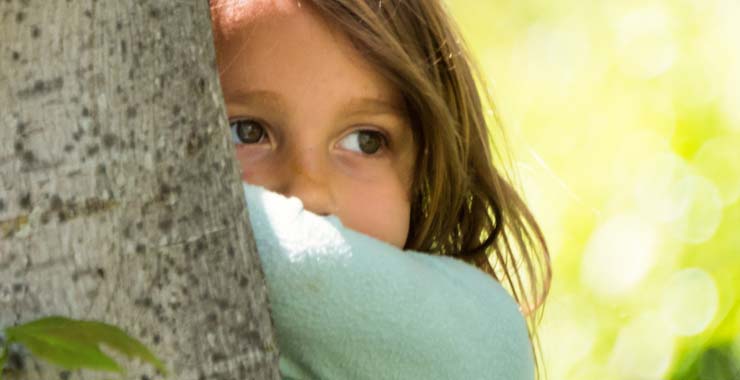
Shy

Avoidance or inhibition creates problems for the painfully shy and for those around them

Avoidance and inhibition include:

  • Canceling social events at the last moment

  • Avoiding situations that provide positive social interaction

  • Few or no friends

  • Avoidance of activities that are otherwise pleasurable

  • Passivity, pessimism, and low self-esteem

  • Friends, family members, teachers, or mentors are concerned

  • Excessive computer use that is not social in nature, and is without face to face contact with others

Causes of avoidance, inhibition, distress

Temperament or Biological Influences

  • Withdrawn, avoidant, excessively emotionally reactive

  • Highly sensitive, when lacking adequate social support

  • Poor emotional "fit" with family members or some environments

Stressful Life Events

  • Shaming experiences

  • Major moves from one school or city to another

  • Abrupt changes or disruptions in family life

Negative Family Interactions

  • Frequent parental criticism and shaming to enforce behavioral compliance, high parental control with little expressed warmth

  • Chaotic family interactions or neglect

Stressful Work or School Environments

  • Highly competitive, critical, or hostile environments

  • Public embarrassment for poor performance

  • Dominance behaviors rewarded, and bullying or teasing ignored or encouraged

How loved ones, friends and mentors can help

Maintain Appropriate Expectations

  • Maintain appropriate expectations while communicating empathy for the shy person's painful emotions.

  • Encourage them to tell you about their daily experiences and how they feel about them.

  • Acknowledge the conflict between needs to belong and fears of rejection.

  • Role play challenging situations with the shy person.

  • Help the shy individual set specific, manageable behavioral goals, and agreed upon reasonable means to attain them.

  • Help challenge the frequent negative thoughts about the self and others, and help them develop constructive alternatives.

  • Avoid negative labels and intense pressures for social performance.

  • Remember that shyness and social anxiety are common and universal experiences at all ages for most people.

A psychologist can help

  • Group therapy provides a place to explore, experiment, test pessimistic hypotheses about the self and social interaction, and develop adaptive interaction styles.

  • Successful therapy lowers barriers to action and increases appropriate risk taking and self-acceptance. Deliberate social "niche picking", or choosing situations that suit one's temperament, also increases.

  • Individual therapy provides a place to explore one's needs, attitudes, beliefs, and behaviors without pressure from others.

  • Group and Individual therapy help clients develop more empathy for others and themselves by reducing negative selfthoughts, self-blame and shame while building positive perspectives and effective behavioral patterns.

  • Medication may help clients enter feared situations.

About this guide

Prepared by:
Lynne Henderson, PhD, Philip Zimbardo, PhD, and Elaine Rodino, PhD

Sponsored by/For more information:
Psychologists in Independent Practice, A Division of the American Psychological Association (APA), Div. 42opens in new window

The Shyness Instituteopens in new window
©2001 Psychologists in Independent Practice, APA Div. 42, and The Shyness Institute

Print design by:
Coda Creative, Inc.
(510) 763-7800

Recommended Reading

You may also like