


Thanks to approval by APA’s Board of Directors, this Presidential Initiative of APA President Debra Kawahara, PhD (2025), will continue through 2026.
Apply for funding
Learn how event hosts can apply to receive $300 to support their event.
Overview and introduction
APA invites high school teachers, educators, and other psychology professionals to team up and participate in the Engaging Psychology’s Future presidential initiative by hosting a Psyched for Success event.
Your participation will be essential to growing, diversifying, and supporting the next generation of psychology professionals.
Fall 2025 kick off webinar
On September 9, 2025, APA President (2025) Debra Kawahara, PhD, and members of the Engaging Psychology’s Future Presidential Initiative Task Force discussed this exciting initiative to grow and support the next generation of psychology professionals. Please note the December 5 deadline has been extended. Approved proposals will continue to be funded until funding runs out.
Growing, diversifying the psychology workforce
Psychology professionals generate and apply psychological science and knowledge across a variety of domains to benefit society and improve lives. A diverse psychology workforce is needed to inspire new ideas, investigate relevant research questions, and apply methods that are inclusive of identities historically marginalized in psychological research (Robinson et al., 2024). Yet the psychology workforce is insufficiently sized to address population health needs (APA, 2018).


Broaden, diversify the pathway through student engagement
Almost one-third of high school student graduates each year have earned psychology credit during high school (U.S. Department of Education, 2022) and an estimated 1.6 million take a psychology course in college each year. Additionally, close to one-third of all undergraduate students (NCES, 2023), 51% of Hispanic undergraduates, and 40% of Black undergraduates in the United States are enrolled at community colleges (Community College Research Center, n.d.).
Psyched for Success events
- Educators and psychology professionals will partner to plan an event in their local community.
- Through conversations about their personal, educational, and vocational journeys, psychology professionals will introduce students to the breadth of the field, encourage them to further their study of psychology, and inspire them to consider a psychology-related career.
- Students will be invited to provide feedback and share the impact of the engagement on their interest and educational and career intentions.
- Potential hosts and speakers can access a host playbook and a collection of resources and handouts to enrich the event. Hosts can also apply to receive $300 to support their event.
- Events must take place at a high school or community college campus in the U.S.
Get started using the playbook
- Access event playbook. See resources to plan the event.
- Select a U.S.-based high school or community college in your local area as the event site. Use our tips to find educational partners, if needed. If preferred, the event may be held at a U.S. 4-year college or university; however, the majority intended audience needs to be high school and/or community college students.
- Assemble your team. Invite 2–5 local psychology professionals to participate in-person at your event.
- Apply to receive $300 in support. Learn about funding eligibility and priorities and complete an application. (Note: We support our international colleagues and their efforts to educate future generations of psychologists and encourage the use of the playbook and resources; however, funding for this initiative is limited to U.S.-based schools.)
Engaging Psychology’s Future: Psyched for Success
Psyched for Success event organizers and attendees share how the “Engaging Psychology’s Future” initiative is helping students connect with psychology professionals to explore career paths they might have never known existed.
Benefits of hosting an event
- Excite students about psychology.
- Connect schools, institutions, and organizations with APA through a presidential initiative.
- Cultivate networks that connect students with psychology professionals.
- Demonstrate commitment to community outreach.

Engaging Psychology’s Future Task Force
Task force members
- Jaye Van Kirk, MA (co-chair), former president of Psi Beta, San Diego Mesa College
- Kathryn Anderson, PhD (co-chair), Psi Chi co-advisor, Our Lady of the Lake University
- Jessica S. Reinhardt, PhD, vice chair of APA Committee of Early Career Psychologists, Temple University
- Heather Schoenherr, MS, APA Committee on Associate and Baccalaureate Education, College of Western Idaho
- Hideko Sera, PsyD, APA Board of Directors, Morehouse College
- Catherine Vieira-Baker, PhD, APA Board of Professional Affairs, South Coast Educational Collaborative
- Virginia Welle, MS, 2024 chair of APA Committee of Teachers of Psychology in Secondary Schools, Chippewa Falls Senior High School
APA staff liaisons
- Sue Orsillo, PhD, head of education
- Beth M. Schwartz, PhD, senior director of precollege and undergraduate education
- Martha Boenau, MS, associate director of precollege and undergraduate education
- Emily Leary Chesnes, MBA, associate director of precollege and undergraduate education
APA President
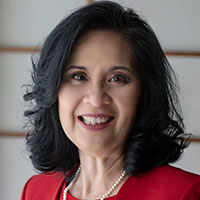
Debra Kawahara, PhD
2025 President of the American Psychological Association
References
American Psychological Association. (2018). Psychologist workforce projections: Report on addressing supply and demand from 2015-30. https://www.apa.org/workforce/publications/supply-demand
Community College Research Center (n.d.). Community College FAQs. https://ccrc.tc.columbia.edu/community-college-faqs.htmlopens in new window
National Center for Education Statistics. (2023). Table 321.20. Associate’s degrees conferred by postsecondary institutions, by race/ethnicity and sex of student: Selected academic years, 1976–77 through 2020–21; In Digest of education statistics. U.S. Department of Education, Institute of Education Sciences. Retrieved October 3, 2023, from https://nces.ed.gov/programs/digest/d22/tables/dt22_321.20.aspopens in new window
Robinson, D., Lee, S., Lazzara, J., Schoenherr, H., Waggoner Denton, A., Taylor, V. C., Bui, N., Boenau, M. E., & Orsillo, S. M. (2024). Fostering equity in two-year college psychology education: Using the APA Guidelines 3.0 as a path for student success. Scholarship of Teaching and Learning in Psychology. Advance online publication. https://doi.org/10.1037/stl0000413opens in new window
U.S. Department of Education, Institute of Education Sciences, National Center for Education Statistics. (2022). National Assessment of Educational Progress (NAEP) High School Transcript Study (HSTS), 2019. https://nces.ed.gov/nationsreportcard/hsts/opens in new window
Questions or suggestions?
Contact us with any questions or suggestions about this initiative.