What is data science, and what does it have to do with psychology? Believe it or not, they have a lot in common. Data science is an interdisciplinary field that uses statistical analysis, data visualization, and computer modeling to understand patterns in various datasets. Given the abundance of data in the world, and the accelerating pace of data generation via digital services, data science often focuses on large datasets, colloquially referred to as “big data.” However, there is no rule for what makes a dataset big. Instead, it’s better to think about data science as a quantitatively-minded approach to answering questions. This is what makes data science special—it can be applied in just about every field of study, from natural sciences like biology and physics, to social sciences like economics and anthropology. More than that, data science also finds a home in the humanities and arts such as literary studies, music, and film. The fact that humans are the creators and consumers of information in each of these fields means that psychology is intimately connected to data science, too. Most questions in psychology can be addressed by looking at behavior across large groups of people—from political or health surveys to TikTok trends—and this means that data science is helping psychology get out of the lab and into the world.
Okay, we get it. The words “data science” might not sound very exciting. And, depending on your confidence in statistics and methods, the term might be downright intimidating. However, there is no need to be intimidated! Data scientists are as diverse as the topics that they study. Perhaps the only thing they have in common is that data scientists are dedicated to making sense of complex information, by transforming complicated data into understandable messages for normal people, including scientists, professionals, politicians, and the public. After all, the fact that data science techniques apply to more than “just” science is why many people refer to the approach as data analytics instead. No matter what you call it, data-driven techniques can be used to address wide ranging psychological questions such as, “Do social media posts predict national trends in mental health?”, “Are political speeches more socioculturally biased than they used to be?”, “Do highly salient emotional experiences in childhood relate to personality traits in adulthood?”, “Can humans with brain implants learn to remotely control computer interfaces?” Of course, data science skills are applicable to your future education opportunities, such as becoming a research assistant, getting into graduate school, or pursuing a postdoc. The point is that by practicing data skills now, you’ll have many more opportunities later.
If you are wisely thinking about your career prospects after graduation, you must consider the growing number of data science-related jobs that are becoming available. Go ahead–do a quick job search utilizing phrases like data scientist, data humanist, data storyteller, and data analyst to find jobs at lucrative businesses like Instacart, Major League Baseball, Spotify, OpenAI, Meta, Disney Entertainment, and APA! As you browse the listings, take a moment to peek at the impressive starting salaries, too. Clearly, data specialists of all kinds are needed to assist companies with their social media content, retail insights, client trends, and product development.
It’s important for you to know that you don’t have to graduate from a “data science” program to become a data scientist. Instead, you can supplement your psychology degree with additional data science skills. As a psychology student, you are required to take courses in research methodology and statistics, both of which offer foundational data science skills. Why not expand on those skills and increase your confidence, efficiency, and career prospects? Better yet, be focused on your skill development by connecting key data science skills to the career of your dreams. A quick review of some posted job openings will reveal skills in analysis, visualization, coding, and the use of software languages and libraries like Python, R, pandas, and seaborn. You can develop these skills in psychology courses that embed additional data science skills beyond those found in your statistics and methods courses. Even if your psychology program doesn’t offer any additional courses that feature data science skills, you still have options. There are many free courses online, several of which are developed by psychologists, and popular online learning platforms such as Kaggle offer self-paced tutorials and fun competitions to encourage learning. Still in doubt? Just ask your professors—they might know of additional resources or, who knows, maybe they have a data science research opportunity for you!
No matter what you think you’ll do with your data science skills in the future, it’s important for you to know that those skills come with practical, immediate benefits as well. For example, learning data science could make your other psychology courses a little easier. Suppose you took a course wherein you learned how to create a data narrative in Jupyter Notebook (a free, online platform that supports various types of programming). With Jupyter Notebook, you can visualize data, conduct analyses, make predictions, and tell your data story, all in one space rather than relying on multiple kinds of software (e.g., Word, SPSS, Jamovi, Excel). This learning experience can ultimately save you a lot of time and reduce errors. For example, perhaps you will smartly choose to use your data narrative as a template to create APA-style visualizations in another course, too. When the semester gets busy and papers are piling up, you’ll be able to easily modify your data narrative template and save yourself the time it would have taken you to make everything from scratch. And, as you practice your data science skills, you will find yourself leveling up in other ways, too. Your confidence will rise, your ambitions will grow, and your career-mindedness will solidify. You’ll start to realize the amazing connections between psychology and data that can land you in an internship, postbac, graduate school, and job of your dreams.
About the authors
 Aileen M. Bailey, PhD, received a BA in psychology and mathematics from Beloit College (Wisconsin) and a MS and PhD in biopsychology from the University of Georgia. As a professor at St. Mary’s College of Maryland, she coordinates the data science minor and teaches courses in research methods, statistics, biological psychology/behavior neuroscience, and the psychology of learning.
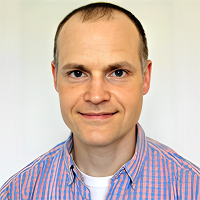 James Mantell, PhD, is associate professor, chair of the psychology department, and current Aldom-Plansoen Honors College Professor at St. Mary’s College of Maryland. Mantell received a BA in psychology and philosophy from Millersville University (Pennsylvania) and an MA and PhD in cognitive psychology from the University at Buffalo. His current research addresses data science pedagogy, auditory perception, and music cognition.
Bailey and Mantell participated in the Council on Undergraduate Research Transformations Project (NSF IUSE 1625354) as psychology program leads for St. Mary’s College, where they worked collaboratively using backward design to scaffold undergraduate research into the curriculum. Aspects of their transformation process were published in the Scholarship of Teaching and Learning in Psychology.
Mantell and Bailey are also PIs on a 2023–2026 National Science Foundation grant, Developing Modernized Data Science Instruction in Psychology Curricula (NSF IUSE 2235645). Bookmark their project at Open Science Frameworkopens in new window.
Sadie Grzymalski, Zachary Payne, Ameila Rhonehouse, and Jayden Washington served as research assistants at St. Mary’s College of Maryland on the 2023–2026 National Science Foundation grant, Developing Modernized Data Science Instruction in Psychology Curricula (NSF IUSE 2235645). Grzymalski is a neuroscience and psychology double major, Payne is a psychology and business double major, Rhonehouse is a psychology major, and Washington is a 2025 graduate of the psychology major at St. Mary’s College of Maryland.