Imagine being accused of a crime you didn’t commit and then confessing to it. Sounds impossible, right? Or think about a witness pointing you out at trial as the person who committed a crime when you know you weren’t even there. Why do these things happen? Questions like these are at the heart of legal psychology.
What is legal psychology?
Legal psychology uses psychological science and practice to examine the intersection of psychology and the legal system (Cantone et al., 2024). Legal psychologists evaluate people to see if they’re fit to stand trial or assess their risk of committing another crime, but also explore how legal decisions are made, how children’s memories work in legal settings, and how police officers decide when to use force. Legal psychologists come from many psychological disciplines including clinical, forensic, social-cognitive, correctional, developmental, and community psychology.
Why study legal psychology?
Legal psychology is exciting! Chances are high you’ve watched a true crime documentary series that uses legal psychology to discuss why people commit crimes; the decision-making processes of police, judges, and juries; or what happens to people mentally while in carceral settings like prisons. However, that Netflix series might rely more on shock value than psychological science. Studying legal psychology will allow you to see how the legal system actually functions and the many ways psychologists can contribute.
Consider the Central Park Five—five teenagers who spent between 7–13 years in prison for a crime they did not commit, as later proved by DNA evidence. Why would an innocent person confess? Many legal psychologists have studied this question, and a 2025 American Psychology-Law Society (AP-LS) scientific review paper offered recommendations to reduce the likelihood of false confessions (e.g., video recording all suspect interviews and interrogations, requiring that defense attorneys be present during interrogations of youthful suspects and vulnerable adults) (see Kassin et al., 2025).
Another example you might have seen in the news is the Larry Nassar case, in which a U.S. gymnastics coach sexually abused hundreds of children over many years. Some of the victims in that case delayed disclosure. Others told their stories and were not supported. Legal psychologists have investigated cases like these to examine why and when victims disclose their abuse and how we can better support individuals who do come forward (see Block et al., 2024 for a review). The work of legal psychologists can inform policy work and legislation and has implications for how systems and organizations can use science to better serve society.
What are some legal psychology careers?
There are many career options in legal psychology. Many legal psychology careers require advanced master’s or doctoral degrees. This includes working as a:
- correctional psychologist helping prisons and other carceral settings manage mental health issues, address what happens to people when they are incarcerated, and prepare individuals for re-entry back into society;
- clinical-forensic psychologist performing competency to stand trial evaluations or risk assessments; or a
- legal psychology researcher investigating countless legal psychology topics such as eyewitness evidence, jury or judge decision-making, or plea bargaining.
However, many legal psychology careers do not require advanced degrees, including working as a victim advocate to provide emotional support, information, and resources to assist crime victims as they navigate the legal system for, perhaps, the first time. Advanced degrees are also not needed to work with or advocate for policymakers to create or revise policies to ensure access to justice, such as making sure that juvenile suspects have access to legal resources during interrogation or that carceral settings meet their rehabilitative goals.
Importantly, we encourage you to go to college with an open mind, as there are many career options out there. We encourage you to check out this article or this APA webinar on careers in law psychology for more ideas. And, if you are thinking about graduate school in legal psychology, the AP-LS guide to current graduate programsopens in new window (AP-LS, 2023) provides free, helpful information regarding minimum GRE and GPA for admission, acceptance rates, and whether stipends, assistantships, or tuition waivers are available.
Conclusion
Studying legal psychology might change the way you think about true crime shows or courtroom dramas, but it also can empower you to think more deeply about how the legal system works and how psychological science can affect real-world legal decisions. We encourage you to seek out classes to learn more about legal psychology and the many career options related to psychology and law.
References
American Psychology-Law Society Teaching, Training and Careers Committee. (2023). Guide to Graduate Programs in Forensic and Legal Psychology (6th Ed.). https://ap-ls.org/resources/training/graduateopens in new window
Block, S. D., Johnson, H. M., Wu, Y., Hartman, D. T., & Goodman, G. S. (2024). Decision-Making Regarding Child Victims and Witnesses. In M. K. Miller, L. A. Yelderman, M. T. Huss, & J. A. Cantone (Eds.), The Cambridge Handbook of Psychology and Legal Decision-Making (pp. 290–306). Cambridge: Cambridge University Press.
Cantone, J.A., Alexander, A., Fountain, E.N., Woolard, J., & Levett, L. (2024). Improving Graduate Education in Psychology and Law: Recommendations on Diversity, Debt, Professional Development, and Real World Application. Law and Human Behavior, 48(4), 299–314. https://doi.org/10.1037/lhb0000573opens in new window
Kassin, S. M., Cleary, H. M. D., Gudjonsson, G. H., Leo, R. A., Meissner, C. A., Redlich, A. D., & Scherr, K. C. (2025). Police-induced confessions, 2.0: Risk factors and recommendations. Law and Human Behavior, 49(1), 7–53. https://doi.org/10.1037/lhb0000593opens in new window
Authors
 Jason A. Cantone, JD, PhD, draws on his applied work experience in the U.S. judiciary and the U.S. Air Force to showcase the many career options open to students interested in legal psychology. He is an adjunct professor, APA Fellow, and currently works as a senior research associate at the Federal Judicial Center. This article was completed outside of his positions and the views expressed herein are those of the author and are not the views of the Federal Judicial Center or its board.
 Stephanie D. Block, PhD, is an associate professor in applied developmental psychology at the University of Massachusetts, Lowell. Her research focuses on psychology, law, and child maltreatment, integrating her training in developmental and applied science, as well as public health. Block is an APA Fellow; a past-president of APA’s Division 37, the Society for Child and Family Policy and Practice; past-president of Division 37’s section on child maltreatment; and an editorial board member of the journal Child Maltreatment.
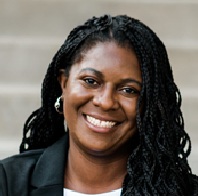 Apryl A. Alexander, PhD, is the Metrolina Distinguished Professor of Health and Policy in the Department of Health Management and Policy at the University of North Carolina at Charlotte. She is also the executive director of the UNC Charlotte Violence Prevention Center and an APA Fellow. Alexander’s research focuses on violence and victimization, human sexuality, and trauma-informed and culturally informed practice.