In November 2023, a new and comprehensive set of resources was published for high school psychology teachers to allow them to infuse issues of diversity and representation into their courses seamlessly. The first set of resources focuses on race and racialized identity.
These new resources will further our understanding of the variety of human experiences. Psychology teachers often examine the complexities, beauty, and science of all behavior and cognition related to humans and nonhuman animals. These new resources highlight information, ideas, and topics from psychologists of color, including brief psychologist profiles and their scientific studies, contributions, publications, and websites. The entire set of resources aligns with the five main content pillars of the revised National Standards for High School Psychology Curricula released by APA in 2022. Both teachers and students can use these resources to enhance their understanding of modern communities of color and their contributions to psychology.
Provided resources include the following.
Research summaries
Research summaries can be incorporated into a lecture or shared with students as a reading to demonstrate how psychological science explores the diversity of human experience. These resources can also encourage students to identify the significant components of a research study (i.e., the hypothesis or study question, sample, method, and findings). Students can be asked to identify potential limitations of the study and encouraged to discuss the implications for our understanding of human behavior. Keywords highlight how concepts within and across pillars are incorporated into a single research study.
Psychologist profiles
Profiles can be shared with students to enhance the visibility of psychologists of diverse backgrounds. As an additional activity, students can be asked to research to learn more about the psychologist and their work. An alternative assignment could be to ask students to find other psychologists of diverse backgrounds whose work falls into this content pillar. Keywords highlight how psychological scientists study concepts within and across pillars.
Guiding questions
These guiding questions can stimulate class discussion, encourage students to deepen their understanding of core concepts and cultivate a culturally informed perspective on studying psychology. After each question are bullet points related to the topic that teachers can consider, prompt for, or share with the class post-discussion.
Additional resources
Additional resources such as charts, graphs, data points, and videos are provided as supporting instructional aids for teachers to use in class.
The APA Committee of Teachers of Psychology in Secondary Schools (TOPSS) has committed to a second set of resources to focus on disability and neurodiversity, which is expected to be published in 2024. The committee will consider how to expand the resources in the future to include additional aspects of human diversity. TOPSS welcomes feedback on these resources.
This set of resources is an APA TOPSS Committee initiative supported by funding from the American Psychological Foundation’s David and Carol Myers Fund to Support Teachers of Psychology in Secondary Schools. These resources were developed by Eric Castro, Shawn C.T. Jones, PhD, Allyn Olsen, and Catherine Sanderson, PhD.
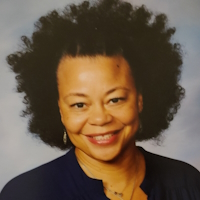 Natasha Alston teaches AP Psychology and AP African American Studies, as well as African American History, in Phoenix, Arizona at Mountain Pointe High School. Although she has taught a variety of high school courses, these three are the ones she believes have the greatest impact on students. She is also a DE teacher for the courses and has served as an adjunct professor of psychology at Rio Salado Community College. Natasha co-created PSY 250: Social Psychology and is presently creating PSY157: African American Psychology for Rio. She also co-authored an e-book lesson plan, titled Promoting Psychology Science: A Compendium of Laboratory Exercises for Teachers of High Psychology, for the Society for Teaching of Psychology, and co-authored High School Psychology is a Science: Strand 1 during the APA Summit on High School Psychology Education. Before moving to Phoenix, Natasha got her BA in sociology from St. Lawrence University and her MPS in Africana Studies from Cornell University. She took several graduate level courses in psychology at ASU and Ottawa University. Natasha loves learning, reading, and traveling, both domestically and internationally. She has been married to her high school sweetheart for 26 years. They have two adult children.
 Antonio E. Puente, PhD, was born in La Habana, Cuba and emigrated to the U.S. in 1960. Puente received his PhD from the University of Georgia. He has taught at the University of North Carolina, Wilmington (UNCW) since 1981, where he is professor of psychology. His primary teaching activities include brain and behavior, clinical neuropsychology, and history of psychology. Puente is founding director of UNCW’s Centro Hispano, and his research focuses on the interface between culture and neuropsychology. Puente founded and edited the journals Neuropsychology Review and Journal of Interprofessional Education & Practice, as well as a neuropsychology book series. He has published 10 books, 93 chapters, and 123 scientific articles in several languages. Puente served as president of the North Carolina Psychological Association, North Carolina Psychological Foundation, Hispanic Neuropsychological Association, National Academy of Neuropsychology, Society for Clinical Neuropsychology (Division 40 of APA), Society for Behavioral Neuroscience and Comparative Psychology (Division 6 of APA), International Psychology (Division 52 of APA), as well as president of APA.