skip to main content

How challenging is it to find a high school psychology research mentor?

High school students interested in research experiences struggle to find mentors and opportunities.

APA Style leaf logo Cite This Article in APA Style
American Psychological Association. (2021, December 15). How challenging is it to find a high school psychology research mentor? https://www.apa.org/ed/precollege/psychology-teacher-network/introductory-psychology/high-school-research-mentor

Many gifted students are among the hundreds of thousands of U.S. high school students who studied psychology in 2021. What happens when many of them seek a psychology research mentor? This report is in three parts: 

  • background information on mentoring,
  • our survey of 95 students, who describe their diverse experiences in seeking a research mentor, with some surprising results, and 
  • our conclusion.

Background

The Oxford English Dictionary defines research as “the ability or inclination to carry out scholarly investigation, learning, and academic achievement.” Whether it be about astrophysical phenomena occurring lightyears from our planet, the analysis of modern linguistics, or the intricacies of human behavior, research is a deep dive into a particular topic of interest with the purpose of elucidation and obtaining applicable knowledge.

High school is when students begin to explore their own unique passions and interests. Some may indulge in the many niche clubs and organizations within their schools, from chess club to Red Cross volunteering. Some students go the extra mile to obtain out-of-school professional experiences, whether it be a job in sales or becoming a certified EMT. Especially in STEM-related fields, students may come to learn about the amazing extracurricular of high school research.

Participating in research allows students to deeply explore their interests, create a paper/presentation end-product that may even be published, and gain experience to help them in college and later on in their careers. Many outstanding scientists begin their careers in high school. For example, just one school (Bronx High School of Science) has produced eight Nobel Laureates, two Turing Awards and six medalists of the U.S. National Medal of Science (Kong, 2012). Each year, the Regeneron STS (Science Talent Search) presents national awards to many of 1,900 high school research nominees. But students remain “on their own” to find a mentor, with no help from Regeneron, or other outside groups.

However, it may be difficult to get involved in research in the first place. One of us (Brian) used an APA Center for Education in Psychology online roster to contact dozens of possible mentors, without success. One of these faculty (Professor Harold Takooshian) asked Brian two questions:

  • Are you struggling to find a mentor?
  • If so, how common is your experience? 

Within 10 days, Brian could find no data on this question, and designed and conducted his own straw poll using social media. The results were surprising.


Survey

Regeneron, at 20:54

An anonymous survey was posted for high school students, via social media, on the challenges of doing high school research (N=95). This survey examined if high school students currently lack an adequate amount of research opportunities, which was especially clear through the experiences of Professor Harold Takooshian, who has served as a mentor for hundreds of students (Takooshian, 1993), and recently encountered an overwhelming number of students looking for research mentors and opportunities.

This survey posed six questions:

  • Which state are you in? 55 respondents were from 21 of 50 U.S. states. Surprisingly, the remaining 40 respondents were from 10 other nations: Bangladesh, Canada, Mauritius, Morocco, Nepal, Philippines, Russia, Saudi Arabia, Sweden, and United Arab Emirates. The need for a research mentor is apparently a global challenge.
  • What high school year are you in? 11.6% year 1, 24.2% year 2, 22.1% year 3, and 42.1% year 4.
  • Are you interested in a workshop on doing research? An overwhelming 98.9% said Yes.
  • Have you struggled to find a mentor in the past year? 94.7% said Yes.
  • To find a mentor, have you had to reach out beyond your local community? 83.2% said Yes.
  • Do you think a workshop would be beneficial to your learning about research? 94.7% said Yes.

Overall, these findings show the current dire state of high school research opportunities not only across the nation, but across the world, as students are pushed to make drastic communicative efforts in attempts to obtain opportunities—a shortage exacerbated by the COVID-19 pandemic.

In addition to these quantitative findings, many respondents offered revealing comments through an optional short-response prompt in the survey. One student noted, “It's very hard for high schoolers to obtain research opportunities during high school. There are almost no opportunities.” Additionally, an international participant said, “A workshop would be beneficial of course […] Unlike the U.S., my country doesn't offer any research opportunities for high schoolers, and that's why I struggle finding research opportunities at a local level.” Another student commented, “I haven't tried reaching out, but I feel like I don't have enough qualifications.” Students should not feel discouraged based on their lack of experience or opportunities—they are high school students after all. With such a high demand for research opportunities, it is an unsaid academic responsibility to continually encourage young minds and to make research more accessible.

Conclusion

A few points are clear here.

  • Many high school students are wise to seek a mentor for their research, but are struggling with this process.
  • Surprisingly, this seems a global issue, in need of remedy.
  • Over 95% of students welcome some sort of workshop to guide their efforts.

Fortunately, in the process of assembling this PTN article, we have met several experts across different organizations who are ready to collaborate to create a practical video and article to guide high school students to gain a positive mentor experience. With luck, we can soon create a useful video and article to post on the internet, to benefit these talented and determined high school student researchers.

About the authors

Brian Caballo Brian Caballo is an author, researcher and student at the Bronx High School of Science. 
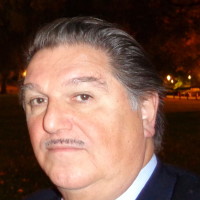
Harold Takooshian, PhD Harold Takooshian is an author, mentor and professor of psychology at Fordham University. 

For any inquiries, contact Brian via email.

References

Kong, B (2012). Is elitism a myth? A Study of NYC specialized high schools. Honors Program Capstone Project, Syracuse University. Retrieved: https://surface.syr.edu/honors_capstone/100/opens in new window

Takooshian, H. (1993, Spring). Involving students in report-worthy research. Psi Chi Newsletter, pp. 4-5.

Recommended Reading

You may also like