“How can high school psychology teachers help their students to find a research mentor?” In this concise and practical article, the two of us—a college professor and a high school student—join to address this question by posting a new 30-minute video with four parts:
- the value of high school student research
- the challenge of high school student research
- two strategies for success
- several specific resources to help students
We welcome students’ anonymous comments on this video, so we can expand this video in the coming year.
The value of high school student research
High school student research is invaluable, for both personal development and career success. When the Society for Science marked its 100th anniversary in 2021, it released an impressive study that found this: Most Nobel Laureates and outstanding scientists today began their STEM careers with research in high school (Society for Science, 2022). How wonderful when students find a mentor to go beyond reading others’ research, to engage in their own.
The challenge of high school student research
Sadly, the great majority of high school student researchers today struggle to find a mentor, often unsuccessfully. A recent online survey of 95 students revealed some alarming facts: 95% “struggled to find a mentor,” 83% had to go beyond their community, and 95% would welcome a video or workshop to assist in their search (Caballo & Takooshian, 2021).
There are an estimated 17,880,000 students in U.S. high schools. The number of these who completed Advanced Placement (AP) psychology has risen sharply by 6,700 percent in 29 years—from 3,914 in 1992 to 288,511 in 2021 (Keith et al., 2013; College Board, 2022). Moreover, what incentive have college professors or other scientists to mentor this huge number of high school students? As a result, even the most gifted students may fail to find a mentor. (It should be noted that high school teachers themselves can serve as outstanding mentors to their students. The resource section below provides several resources to support teachers in mentoring students conducting research projects.)
Two strategies for success
Two strategies can reduce this challenge.
First, seek labs, not individuals. In many universities, each professor heads a lab to research a specific topic—like smoking, emotions, or memory. Students can ask for details to join that lab and work with others on common projects. For example, students who check Fordham University can find a roster of 19 psychology labs that promote student researchopens in new window in their quest for new knowledge. There is also the Fordham Institute, which encourages student research on diverse “social issues” (Takooshian, 2013), and can result in student presentations (Bhatta, Oo, & Takooshian, 2020) or publications (Takooshian & Weis, 2021).
Second, distinguish between two very different types of research: “student-based” (where the student starts with a specific question) and “faculty-based” (where the student is open to the mentor’s topics). While some students seek an expert on their chosen question, this is more challenging than asking to work with a mentor on a new aspect of the mentor’s topics (Takooshian, 1993).
Resources for students
Emily Leary Chesnes, an APA staff member whose portfolio focuses on high school psychology, shared several helpful resources for high school researchers and their teachers. Several of these resources support high school teachers in mentoring their students.
- Regeneron Science Talent Searchopens in new window (STS): Each year, nearly 1,900 students enter this competition, submitting original research in critically important scientific fields of study. Unique among high school competitions, the Regeneron STS focuses on identifying, inspiring, and engaging the most promising scientists among the nation’s high school seniors.
- Regeneron International Science and Engineering Fairopens in new window (ISEF): This annual precollege competition brings together over 1,800 students from across the globe to compete for almost $8 million in total awards. ISEF is the largest global precollege STEM competition. APA participates in ISEF as a Special Awards Organization each year to recognize outstanding projects in psychological science.
- Science fairs, clubs, and student research: This APA site provides resources on science fairs and psychology clubs.
- Conducting Psychological Research for Science Fairs: A Teacher’s Guide and Resource Manual (PDF, 242 KB)opens in new window: This guide was written to empower psychology teachers to mentor their students in conducting original psychological research that could be entered into a local, regional, or national science fair competition.
APA guidelines on student research
- Ethical conduct of behavioral projects involving human participants by high school students: These guidelines address the ethical conduct of behavioral projects for high school students; they also review ethical principles underlying human research participant protections and federal regulations related to student research.
- Use of nonhuman animals in behavioral projects in schools (K–12opens in new window): This resource, which is currently pending revision, provides educators with guidelines for how to supervise and teach ethical research practices for experiments involving nonhuman animals.
- APA’s Online Psychology Laboratory (OPL): OPL provides both students and educators with highly interactive resources to cultivate interest and understanding of psychology and psychological research.
- APA high school student affiliate membership: High school students can join APA and receive benefits including APA’s Monitor on Psychology magazine.
- Why should I take high school psychology?: This video and website feature the benefits of studying psychology in high school.
- Psychology Student Network (PSN) newsletter: This biannual newsletter features articles, announcements, and book reviews for high school and undergraduate students. You can subscribe to the newsletter for free online. In addition, you can also subscribe to PSN, a new listserv that offers time-sensitive announcements about news and opportunities.
In August of 2022, after consulting with several experts on student research, we three created and posted a new 30-minute video to benefit high school researchers (Takooshian & Caballo, 2022). You can watch this video onlineopens in new window. If you watch this video, we invite your feedback through this surveyopens in new window. Based on viewers’ anonymous comments, we hope to find funding for a more in-depth video or online workshop to assist high school researchers and their teachers. With luck, high school research will flourish, when students are better able to find a mentor.
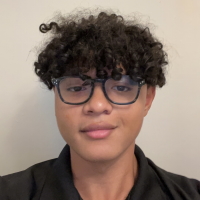 Brian J. Caballo was a student at the Bronx High School of Science who is now exploring the intersections of science and engineering at the University of Michigan.
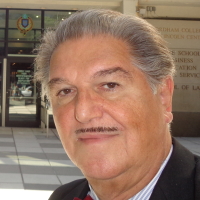 Harold Takooshian is a professor of psychology and director of the Fordham Institute for Research, Service, Teaching (FIRST). FIRST promotes excellence in research by students at all levels, from high school through the doctorate.