Why are social context, interpersonal relationships, and emotional well-being important to children’s well-being? Principles 13–15 relate to the social context and emotional dimensions that affect learning.
Principle 13: Learning is situated within multiple social contexts
Learners are a part of families, peer groups, and classrooms that are situated in larger social contexts of schools, neighborhoods, communities, and society. All of these contexts are influenced by culture, including shared language, beliefs, values, behavioral norms, and understanding of special needs. Appreciating the potential influence of these contexts on learners can enhance the effectiveness of instruction and communication across contexts (e.g., between teachers and parents/guardians).
Tips for teachers
Teachers’ awareness of the potential influence of the classroom’s social context on learners and the teaching–learning process can facilitate effective interpersonal relationships and communication with and between students, and thereby affect learning.
Teachers can relate the curriculum to students’ cultural backgrounds.
It is critical that the teacher facilitates a “classroom culture” that ensures shared meanings, values, beliefs, and behavioral expectations, and provides a safe and secure environment for all students, including students with disabilities.
Seek opportunities to participate in the local community (e.g., attending local cultural events) to help connect the relevance of learning to students’ everyday lives and enhance teachers’ understanding of the cultural background and experiences of their students.
Principle 14: Interpersonal relationships and communication are critical to both the teaching-learning process and the social-emotional development of students
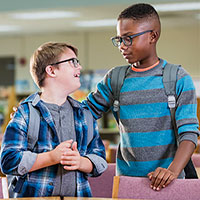
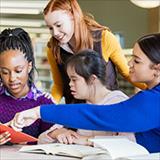
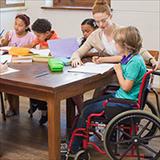
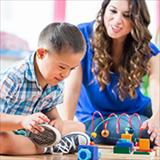
When students with and without disabilities experience authentic and supportive friendships, they are happier, healthier, and safer. Just as students with disabilities may need to learn a range of social skills, such as social awareness and relationship skills, students without disabilities often need to learn how to be patient, respectful, and inclusive. In special education, social skills help promote fully inclusive classrooms that enable positive and engaging relationships between students with disabilities, students without disabilities, and their teachers.
Tips for teachers
Provide clear behavioral expectations related to social interactions (e.g., respect for others, use of clear and direct communication, nonviolent conflict resolution) and opportunities for all students to experience successful social exchanges.
Model the social skills that create a positive and inclusive social climate by engagingin active listening, demonstrating empathy and appreciation for diversity, and providing strategies for conflict resolution.
Model effective verbal and nonverbal communication by using active listening, matching facial expression with verbal messages, using questions effectively, providing elaboration in response to student questions, and seeking student perspectives.
Teachers can work with special education teams to write social goals (e.g., social skills, social interactions with peers) into the Individualized Education Programs (IEPs) of students with disabilities.
Principle 15: Emotional well-being influences educational performance, learning, and development
Students receiving special education services in their school have the same social and emotional needs as their peers, but often have additional needs, as well.
Tips for teachers
Teachers can help facilitate the well-being of students receiving special education services in the following ways:
Specifically assess social and emotional needs of students, even when these are not the basis of the special education referral.
Consider using inclusive curriculum design such as Universal Design for Learning (UDL) and explicit instruction to teach social and emotional skills, in the same way that students would be taught academic material.
Monitor expectations to ensure equal encouragement to all students, regardless of past performance or disability.