

Depressive and Bipolar Disorders
Mental Health Essentials: Mood, Eating, Sleep, and Stress
Psychology of Anxiety, Mood, Substance Use, and Addictive Behaviors
Psychology of Substance Use, Depressive Disorders, and Trauma
PsycLearn Essentials
May 2024
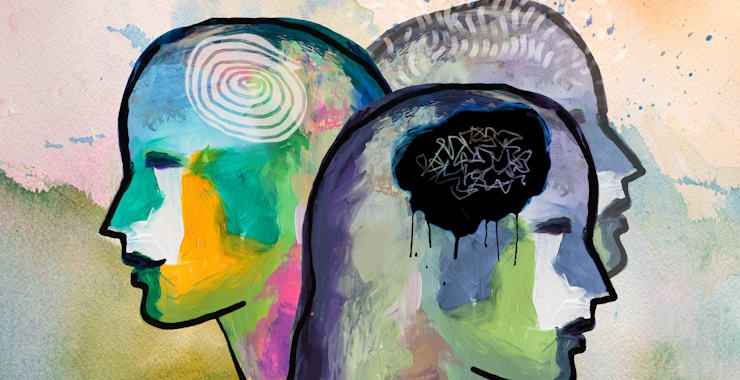

Depressive and bipolar disorders are a global health problem affecting more than 400 million people. This course is relevant to anyone suffering, or who knows someone who is suffering from depression or bipolar disorder. This course will discuss diagnostic criteria and global prevalence for common depressive and bipolar disorders, including dysthymic disorder, premenstrual dysphoric disorder, peripartum depressive disorder, as well as bipolar I disorder, bipolar II disorder, and cyclothymic disorder.
The course begins with an introduction to psychological mood disorders and explains the process of diagnosis before describing the two dominant diagnostic schemes, ICD-11 from the World Health Organization and DSM-5-TR from the American Psychiatric Association. The course will also explain how clinicians take culture into account in diagnosis and treatment.
The course will then cover the biological contributing factors for depressive and bipolar disorders, including genetics, epigenetic, and neurobiological factors. Following this, psychological contributing factors will be introduced. These factors include feelings of helplessness and hopelessness, environmental conditions, childhood trauma, poverty, prejudice, and discrimination.
The next part of the course addresses biological and psychological treatments for depressive and bipolar disorders. These treatments include pharmacological therapies, brain stimulation, and various cognitive-behavioral therapies, as well as integrated approaches that combine biological and psychological treatments.
Finally, this course includes comprehensive review material and self-paced assessments to help you excel in your study of these mood disorders.
Learning objectives
- Compare and contrast common mood disorders.
- Discuss options for treating mood disorders.
- Explain cultural influences on treatment for mood disorders.
- Evaluate how treatments for mood disorders are related to suicide prevention.
This program does not offer CE credit.
Presented in collaboration with

Coursera works with universities and other organizations to offer online courses, certifications, and degrees in a variety of subjects.
More in the series
Learn the signs, causes, and treatments of eating and sleep disorders. Gain vital insights into mental health, nutrition, and the science of rest
March 2026 On Demand Training
After detailing the effects of stress on your mind and body, this course will teach you evidence-based ways to cope with stress and build resilience
January 2024 On Demand Training
This course covers substance use disorders and addictive behaviors and discusses their diagnostic criteria, contributing factors, and treatments.
May 2024 On Demand Training
This course covers disorders for which anxiety is a component and discusses their diagnostic criteria, contributing factors, and treatments.
May 2024 On Demand Training
Explore PTSD, ASD, and dissociative disorders stemming from trauma. Covers reactions, differential effects, resilience, and treatments
October 2025 On Demand Training
This course covers substance use disorders and addictive behaviors and discusses their diagnostic criteria, contributing factors, and treatments.
May 2024 On Demand Training
Introduces the importance of ethical practice in scientific research for undergraduates, high school students, and professionals.
August 2023 On Demand Training
A concepts-focused introduction to basic descriptive and inferential statistics
January 2023 On Demand Training
Principles of design and ethics for research in psychology
January 2023 On Demand Training
Basic qualitative methods like narrative inquiry and ethnography are introduced
January 2023 On Demand Training