A photograph of one suffering child can transform public opinion about an issue. A photo of two suffering childrenopens in new window, not so much. And it's really difficult for humans to connect with the death of more than a quarter of a million people, the toll of COVID-19 in America alone so far.
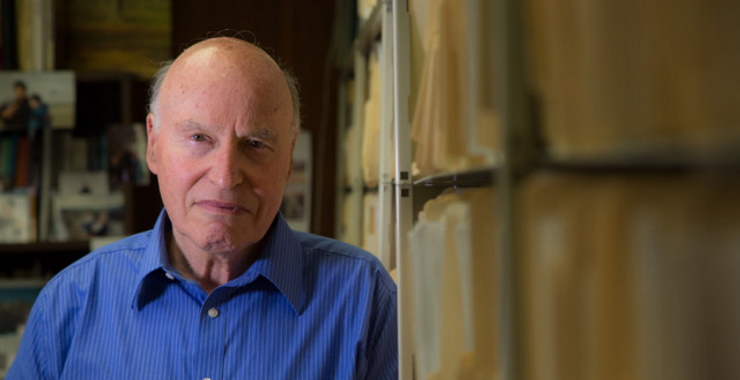
“One life is valuable, but that life loses value, perceptually, if it is part of a larger tragedy,” says Paul Slovic, PhD, a longtime researcher in decision science.
The phenomenon is called “psychic numbing,” indifference that sets in when we are confronted with overwhelming calamity, and it's only one of the glitches in our emotional makeup that keep us from working to change circumstances that harm other people (or the environment), Slovic says.
A “false sense of inefficacyopens in new window,” which can lead us to think that our efforts will be so puny that we're better off doing nothing, is another. “We don't feel we can help, but that's not correct. We can help,” says Slovic, professor of psychologyopens in new window at the University of Oregon in Eugene, and a co-founder and president of Decision Research,opens in new window a nonprofit organization that investigates judgment and risk, also in Eugene.
A third common response to catastrophe, the “prominence effectopens in new window,” comes into play when an event threatens our security, Slovic says. Our reflex then is to protect what is ours. To do that, we will leave other people, even people who are suffering and dying, to fend for themselves.
“The first step in confronting these abuses of people or the environment is awareness. We lack insight into the way our minds deceive us into thinking that things are okay when they really aren't,” he says. “Step away from the numbers. Think about the individuals behind those statistics.” Decision Research has a website, The Arithmetic of Compassionopens in new window, to help people with this process.
Slovic has studied “gambles”—how humans assess and manage risk—for sixty years. He was among the first researchers to show that we are not the rational creatures we like to think we are, pondering the evidence and unfailingly choosing the best course of action. Emotions play a big role in the decisions we make when we consider risk, and as a result, the outcomes are often terrible.
‘We're better than this'
COVID-19 handed the world a high-stakes gamble this year, and only a few leaders handled it well,opens in new window responding early and aggressively with evidence-based tracking, quarantining and social distancing. People in many other areas have had the unsettling opportunity to see psychic numbing in action. Even as the number of deaths from the coronavirus in the United States has climbed to the equivalent of eight passenger jetsopens in new window crashing and killing everyone on board, every single day, since mid-March, some people have refused to wear masks or avoid gathering in large groups, and have angrily pushed to open businesses, schools and venues. Now, as a result of that risky behavior, new cases are spiking around the country.
And the pandemic is only one of the enormous threats facing humanity in 2020, Slovic notes, including the climate crisis, police brutality, the continued development of nuclear weapons, wars and other disasters around the globe that have driven huge numbers of people from their homes and left them with no place to go. We watch as some leaders and ordinary people alike respond with heedlessness and even cruelty.
“We're better than this,” Slovic says.
So learning how to act effectively when things spiral out of control is vital for individuals and societies both. Slovic says he is “very much in sync with” Daniel Kahneman'sopens in new window notion of “fast and slow thinkingopens in new window.” Kahneman received a 2002 Nobel Prize in economics for the psychological insights into decision-making his work made available to economics. According to Kahneman, we all have two modes of thinking—fast, intuitive, and emotional; and slower, logical, more given to consideration. Neither is better; each is simply better suited to different situations. The challenge is to understand the difference and deploy them appropriately.
When it comes to COVID-19 and other similar crises, “We need to think slowly and carefully, and focus hard on what the science is telling us. We can't expect to grasp what's going on intuitively,” Slovic says.
Studying society's gambles
Psychology always interested Slovic, but many of his career choices came down to circumstances, he says. His professors at Stanford University in Palo Alto, California, included Lewis Goldberg, a researcher in personality assessment, who became a mentor. Goldberg suggested Slovic attend the University of Michigan in Ann Arbor, his alma mater, for graduate school. A t Michigan , Slovic found another mentor, Clyde Coombsopens in new window, and later, Ward Edwardsopens in new window; both studied gambles, and he was part of a student cohort that included Amos Tverskyopens in new window, who went on to be an influential researcher in decision-making.
In the mid-1960s Slovic joined Goldberg at The Oregon Research Instituteopens in new window in Eugene, and later co-founded Decision Research there. He and collaborator Sarah Lichtensteinopens in new window to explored various aspects of gambles, including preference reversalopens in new window,” one type of systematic inconsistency in people's decision-making. They found that, while people should be willing to pay more for something they prefer, other variables often intervene.
Slovic researched gambles for 10 years, he says, before Gilbert Whiteopens in new window, a University of Colorado geographer who studied human response to floods, asked him the question that would resonate through his career: When people are forced from their homes by a natural disaster that could easily recur—a flood in a floodplain, for example—“Why do they go back?”
Why indeed? Slovic says, “White got me interested in society's gambles.”
Recently, he joined in research on “virtuous violenceopens in new window,” a recent take on gambles that asserts that some people accept hurting and even killing others because they believe that, in the circumstances in question, it's the morally right thing to do.
Slovic's team took off from a surveyopens in new window that proposed, hypothetically, dropping a nuclear bomb on Iran, killing 100,000 to two million Iranian civilians to save the lives of 20,000 American soldiers on the ground. In the original study, 60 percent of respondents approved of the nuclear option; Republican Party identification, older age, and approval of the death penalty for convicted murderers significantly increased the likelihood of support for the nuclear option.
Slovic's subsequent studyopens in new window was a deep dive into the emotions behind that stance. Respondents who favored the nuclear option in his survey, he says, “felt socially distant from the enemy, dehumanized them, and believed that the victims were to blame for their fate.”
Slovic says, “There is a real syndrome in our society. When we feel threatened by others, we are willing to support actions that are harmful—and we feel virtuous doing the harm.”