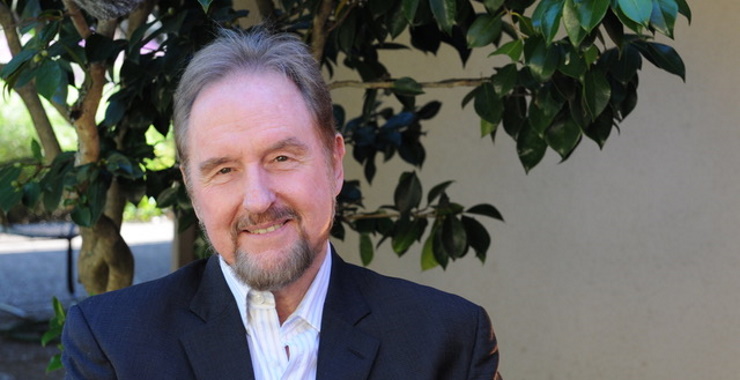
Craig Haney, PhD, has researched solitary confinement extensively as part of the larger project of his career, which is using psychology to effect meaningful, humane reform of the criminal justice system.
“Everybody in prison is treated like a throwaway person. The larger society rarely thinks about those individuals’ well-being,” says Haney, a social psychologist, longtime researcher, and psychology professor at the University of California at Santa Cruz.
The social isolation many Americans have experienced during the COVID-19 pandemic has given us a sample of how hard forced solitude can be.
“We've been deprived of personal freedom and social contact, en masse, to a degree we have never experienced before, and that is being recognized as a public health crisis,” he says.
However, the isolation we feel as a result of the pandemic is on a continuum with, but nowhere near, what prisoners undergo in solitary confinement, he says.
Solitary confinement is punishment, for one thing, marked by harshness and dehumanization.
“You're among the population the prison system considers the worst of the worst,” says Haney, the author of a number of books, including, most recently, Criminality in Context:The Psychological Foundations of Criminal Justice Reform.
Prisoners in solitary confinement may live for months or years in “a cell the size of a parking space”—dirty, smelly, noisy—“and you can't control any of it,” he says. Outside exercise is often limited to an hour, sometimes spent in restraints in another tiny space.
Prisoners are forced to devise inventive strategies to survive, but “for many, survival comes at a price,” says Haney. Most people are damaged by the experience, some of them “in ways they may not fully understand until later.” Descent into mental illness is a common risk, and so is suicide. A 2014 study of the New York City jail system showed that although only 7% of the nearly 134,000 prisoners studied had been subjected to solitary confinement, 53% of the “acts of self-harm” occurred among those who had had that experience.
Many have a hard time readjusting to normal human interaction once their time in solitary confinement is over, he says. A 2019 studyopens in new window found that those individuals were 24% more likely to die in the first year after their release, especially from an opioid overdose, suicide, or homicide.
Mass incarceration
At the beginning of his career in the late 1970s, Haney says he was optimistic, part of a cohort that planned to use psychology to significantly improve the criminal justice system, “to make it more just and fair. But other forces were at work.”
For largely political reasons, prisons were transformed over the next decades, but not in the way Haney and his fellow reformers had hoped. President Richard Nixon's “war on drugs” began the precipitous riseopens in new window in the prison population, from about 200,000 in 1972 to a peak of 1.6 million in 2009. Most prisoners are poor, and African Americans are incarcerated at more than five timesopens in new window the rate of Whites.
“The reach of the criminal justice system into poor communities was relentless,” Haney says.
Mass incarceration led to severely overcrowded prisons and wretched conditions, which in turn led to unrest. That's when solitary confinement was resurrectedopens in new window on a widespread basis, a 19th century practice that had been largely discarded as inhumane.
When he first began interviewing prisoners who had been held in solitary confinement, “I wondered if some saw it as a respite from the horribly overcrowded conditions,” Haney says. “I was quickly disabused of that notion.”
Making an impact
Researchers like Haney have compiled “a massive amount of research” that shows how harmful our present punitive system is, and there are signs that times are changing. Support for the death penalty is on the wane. In March, Virginia became the first Southern state to outlaw the death penaltyopens in new window; the last execution there was in 2017. That’s all for the good, Haney says, but he adds that it may be the sheer financial expense of mass incarceration that brings it down in the end, not science or regret over all those ruined lives.
“There are a lot of good sentiments being expressed but we have still hardly reduced the extraordinary numbers” of incarcerated people in the United States, he says. “It would be great to have the reality match the rhetoric.”
Haney says testifyingopens in new window is one of the best ways to have an impact—in individual cases, class action lawsuits and constitutional challenges to specific prison conditions and legal practices. He has testified in the U.S. Congress more than once, and his work has been cited by the U.S. Supreme Court.
In Criminality in Context, Haney argues that institutions and social settings shape our lives in very different ways, and that the deck is stacked against some people from childhood. Poverty is a “massive determinant” of who starts down the path to prison; racism is another. African Americans face obstacles at almost every turn, including in the criminal justice system, that Whites simply do not, he says.
How does he deal personally with the demoralizing conditions, and forms of mistreatment, he sees firsthand?
“I honestly don’t know how well I do deal with them sometimes,” Haney says. He relies on the support of family members, friends, and colleagues for emotional support.
“I also draw inspiration from some of the people I encounter in some of the worst places I go,” he says, witnessing their resilience in “environments that seem intent on depriving them of their humanity and hope.”
Haney grew up on the East Coast, and went to the University of Pennsylvania in Philadelphia for his undergraduate studies. He got his PhD and law degree at Stanford University in Palo Alto, California.
Stanford Prison Experiment
While at Stanford, in 1971, Haney studied a death penalty case in New Jersey involving a man whose mother contended that her son's confession had been psychologically coerced.
Haney was given access to records and interviewed lawyers who'd been involved, and he visited the convicted man at the New Jersey state prison in Trenton. Haney concluded that many powerful psychological influences were at work that contributed to the man’s conviction and death sentence.
“I realized then, in a way that has affected me throughout the rest of my career, that psychology was at work in every aspect of that man's case—in how the police identified him as a suspect, in the interrogation, in the eyewitness identification, in the jury selection and the verdict they reached,” he says. “At the time, it was a revelation to me, and it eventually inspired me to go to law school.”
In 1971, Haney was one of the graduate students who worked with Philip Zimbardo, PhD, on the Stanford Prison Experimentopens in new window (SPE), a famous role-playing study of the dynamic between prisoners and guards. The planned two-week experiment was shut down after six days when it became evident that the “guards” were behaving cruelly, and that the “prisoners” were truly suffering.
“In retrospect, perhaps it should have been shut down at the end of the first day,” Haney says.
The experiment has drawn criticism over the years for its methodology, most recently in 2019. In a study published in American Psychologist, Thibault LeTexier, a French academic and filmmaker, purported to debunk it, challengingopens in new window its validity and arguing it should not be taught to psychology students.
Haney defended (PDF, 136KB)opens in new window the SPE against Le Texier's charges at the time, contending that the SPE revealed a fundamental truth about “the destructive dynamic that is created when one group of people is given near-total power over another group of derogated others.”
He says today, “The study will be remembered long after Le Texier’s criticism is forgotten and, in my opinion, that’s as it should be.”