skip to main content

Angela Neal-Barnett collaborates with Black communities to help women overcome anxiety

APA Style leaf logo Cite This Article in APA Style
O'Hara, D. (2024, October 11). Angela Neal-Barnett collaborates with Black communities to help women overcome anxiety. https://www.apa.org/members/content/overcome-anxiety-black-communities

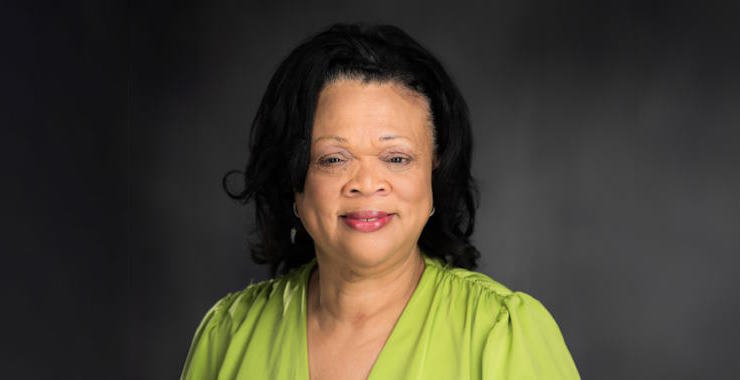
Angela Neal-Barnett, PhD
(Photo: Kent State University)

Angela Neal-Barnett, PhDopens in new window, professor of psychological sciences at Kent State University (KSU) in Kent, Ohio, works to bring relief to Black people, and especially Black women, who deal with anxiety disorders and trauma. Neal-Barnett develops inexpensive, enjoyable, culturally sensitive interventions; evaluates their effectiveness; and gets them out to as many people as she can.

“If I was going to give any one message to Black Americans, it’s that anxiety is treatable. People can reclaim their lives,” Neal-Barnett says.

It’s a simple message, brimming with hope, but the road to treatment is full of obstacles, the first one being that many Black Americans aren’t even aware they’re anxious, Neal-Barnett says. They assume the way they feel is normal. However, when Black people do report anxiety, it tends to be severe and last a long timeopens in new window. “Racism in all its forms plays a role in anxiety among Black people,” she says.

Neal-Barnett has done extensive research on the accusation of “acting Whiteopens in new window,” usually by a peer, which can make a Black adolescent tremendously anxious, striking at a young Black person’s very identity, and possibly affecting them for a long time. She has also studied trichotillomaniaopens in new window, or “hair-pulling disorder,” which can be associated with anxiety.

Neal-Barnett says she saw a lot of anxiety disorders growing up in Hubbard, Ohio. She decided in the sixth grade that she would become a psychologist and help Black people, and majored in psychology at the University of Mount Union in Alliance, Ohio. She trained as a clinical community psychologist at DePaul University in Chicago, Illinois, and was a postdoctoral fellow in clinical research at the University of Pittsburgh in Pennsylvania.

An APA fellow in Division 45 (Society for the Psychological Study of Culture, Ethnicity, and Race), Neal-Barnett directs the Program for Research on Anxiety Disorders among African Americans (PRADAA) lab at KSU. PRADAA’s mission is “transforming Black American communities…through education, innovation, intervention,” and conducting meaningful research that can improve the lives of Black Americans.

Neal-Barnett is the author of Soothe Your Nerves: The Black Woman’s Guide to Understanding and Overcoming Anxiety, Panic, and Fear (Simon & Schuster, 2003),opens in new window and she frequently talks about her work in the mediaopens in new window.

Supporting pregnant women and new mothers

Trauma and stress are associated with adverse outcomes for pregnant womenopens in new window, preterm birthopens in new window and increased risk of infant mortalityopens in new window. Most of Neal-Barnett’s research now focuses on treatments for anxiety and trauma in perinatal women. Her team in the PRADAA lab develops, implements, and assesses interventions for anxiety for pregnant Black women, new mothers, and children in Cleveland, Akron, and Canton, Ohio, and rural areas in between.

Black women have access to fewer and poorer health care resourcesopens in new window than White women in this country, and have markedly worse outcomes in pregnancy, both for themselves and for their babies. Three times more Black womenopens in new window die while pregnant or giving birth than White women, yet they are half as likely to receive timely prenatal care.

One of PRADAA’s interventions is Spirit of Motherhood, funded by the Anthem Blue Cross and Blue Shield Foundation (now the Elevance Health Foundationopens in new window). This intervention aims to address anxiety and posttraumatic stress disorder (PTSD), which often goes undiagnosed and untreated in Black women, Neal-Barnett says. Spirit of Motherhoodopens in new window treats PTSD with a brief course of written exposure therapy, which uses structured writing to work through disturbing experiences from the past. Women who do not have PTSD take part in a Sisters Offering Support talk group. Everyone then proceeds to a four-session class, led by community-based doulas, to learn skills for handling common parenting stressors and setting realistic goals for themselves and their children. The program follows mothers for a year after they finish, and has been shown to dramatically lower PTSDopens in new window, Neal-Barnett says.

Collaborating with communities

Understanding the nuances of Black culture and partnering with community members are critical prerequisites for effective outreach with the Black community, particularly with women, Neal-Barnett says. For decades, she has used community-based participatory researchopens in new window, a collaborative approach to mental health care in underserved communities, to help identify or develop strategies that will be suitable to use in Black communities, with an eye to delivering effective care to more people. Collaborating with the community “is not easy, but is well worth it,” she says. “These aren’t classic random controlled studies. You have to figure out different designs. The community informs what you do.”

A common theme throughout the literature on Black American women is the importance they place on having the support of other Black womenopens in new window. Neal-Barnett uses “sister circlesopens in new window,” groups modeled on the organic cohorts of Black community life — family members, friends, fictive kinopens in new window, co-workers, people from church, and service organizations. She believes that “every Black woman in this country has been part of a sister circle, whether that’s been a sorority, or sitting on your front porch playing forty-fives with your friends,” she says. She takes “what’s naturally occurring,” and uses it to develop “this very nice psychological intervention.”

As interventions, sister circles can take a number of forms, and may be led by mental health, health care, or educational professionals. Neal-Barnett also uses groups of peers who all experience anxiety and fear.

She says the PRADAA team works with the communities to get those conversation going, “breaking down barriers,” reducing stigma, and making therapy more accessible to Black Americans.

“Everything we do we develop in conjunction with the community,” she says. “We’ve built up trust, and we don’t take that for granted.”

Role model

In 2020, Neal-Barnett received KSU’s Outstanding Research and Scholarship Award. Recently, “Living For Weopens in new window,” a podcast about the challenges encountered by Black women who live in Cleveland, which she was part of, won both the Web People’s Voice Awardopens in new window (the “Webby”) and a regional Edward R. Murrow Awardopens in new window. Neal-Barnett also teaches an undergraduate psychology class at KSU.

She makes a point of visiting PRADAA project outposts in northeastern Ohio every month or so, in part so young Black team members and psychology students can see someone “who looks like them doing what they believe they want to do for a career. Representation matters.”

Recommended Reading

APA Member Benefits

Connect with peers

APA Community


Save 35% off pay now rates

Avis and Budget


New products available

APA Merch Store opens in new window


Competitive low rates

Student Loan Refinancing

You may also like