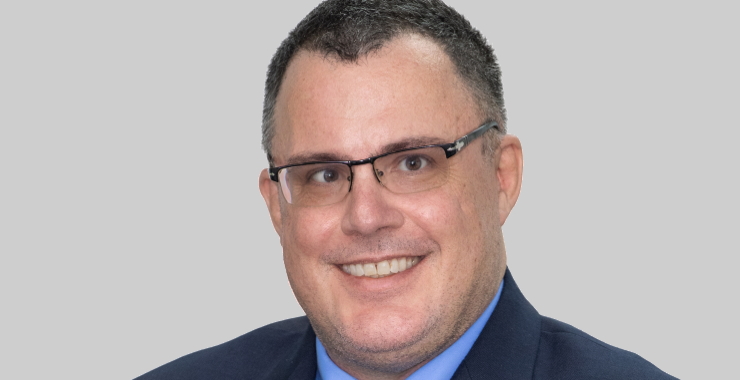
Photo credit: Xquizit Digital Photos
Seventeen years ago, in hopes of getting back to academic work, Michael Campbellopens in new window, PhD, went to Barbados to teach clinical behavioral science to residents and medical students at The University of the West Indiesopens in new window at Cave Hill (UWI-Cave Hill). He’s still there, but the work he does has moved beyond teaching to helping people in the Caribbean deal with the stressors that can go along with living in a tropical paradise.
Those stressors include hurricanes and other natural disasters, chronic diseases, poverty, inequity, and discrimination. “People in the Caribbean live in an environment in which these vulnerabilities are present,” says Campbell, a senior lecturer at the UWI, a publicly supported university system for residents of 17 English-speaking countries and territories across the region. He is also a researcher, clinician, and 2021 APA fellow for Division 52, International Psychologyopens in new window.
Such hazards can take a significant toll on mental health, but most tools for measuring and treating depression and anxiety were developed in the United States or other countries with different cultures. So Campbell has helped assess those toolsopens in new window, which have for the most part turned out to work well in the region. In the future, though, he’s hoping to develop some psychometrics “designed and normed for Caribbean people.”
Campbell is also a lecturer in psychiatry at Yale Universityopens in new window in New Haven, Connecticut, and research scholar at New College of Floridaopens in new window in Sarasota, his alma mater. He received an APA Citizen Psychologist Presidential Citation in 2019, for his service and leadership across the Caribbean.
Before he went to Barbados, Campbell, already a counseling psychologist, served for more than 4 years as director of residential life at New College. At the time, he was concerned that his administrative role was taking him on a tangent away from psychology, but in hindsight, he says the job gave him invaluable training for his present situation. Not only was it a many-faceted job, but it also introduced Campbell to disasters as a fact of life—how to prepare for them and respond to the damage they can do, including the psychological havoc they can cause among the people whose lives they touch.
Lessons from 9/11
One memorable month for Campbell, as for the country, was September 2001. When terrorists attacked New York City and Washington, D.C., on 9/11, President George W. Bush was visiting Emma E. Booker Elementary School in Sarasota. “Air Force One was about 200 yards from the campus,” at the airport next door to New College, Campbell recalls, and for the dozens of minutes before the plane carried the president to safety, the campus was alive to the possibility of a terrorist strike on Sarasota. In addition, many New College students and staff members were from areas that had come under attack.
“Psychological first aid wasn't formally conceptualized yet, but that’s really what we were doing,” Campbell says.
Then, 3 days later, Hurricane Gabrielleopens in new window struck Sarasota (as a tropical storm), causing power and water outages, and extensive damage. Campbell was involved in the campus response to that emergency as well. And in his last semester at New College, in 2004, four significant storms hit the campus within 6 weeksopens in new window.
“My New College days were definitely when crisis-slash-disaster response became a big part of my professional life,” he says.
Fast forward a couple of decades, and Campbell is still putting that experience to use. Barbados is not as likely to get hurricanes as the northern Caribbean, but Elsaopens in new window did come ashore there last year and do some damage, he notes. “And on the heels of that, we got covered in volcanic ash from the Soufrière volcanoopens in new window on the nearby island of St. Vincent,” he says.
Cave Hill, Barbados, outside the capital of Bridgetown, is home to one of five campuses of The UWI, a regional university that stretches from Belize in Central America to Trinidad and Tobago off the coast of Venezuela. He has done some crisis and disaster response in Barbados and in nearby St. Vincent and the Grenadines. He has supported other responders like the Barbados Defence Force and civilian crisis teams. He also does psychological first aid, recently in Barbados and Montserrat, and has worked with a group in Barbados developing community-based psychological first-aid training with the support of the Pan American Health Organization.
Hurricanes and HIV-AIDS
Climate change appears to exacerbate extreme weather, but when a crisis like a hurricane hits one of these island societies, helping is a delicate balance, Campbell notes. “You have to be really thoughtful and aware of how you change what's going on just by being there,” he says.
He does much of this work pro bono, in part thanks to the fact that he has an academic “day job,” he says. “Most disaster and crisis mental health work is done on a volunteer basis—for everybody, not just me.” Campbell has also provided trauma education to Caribbean governments and nonprofit organizations.
Natural disasters are not the only stressors in the Caribbean. HIV-AIDS, sickle cell, and diabetes—as well as dengue fever and other mosquito-borne diseases—are major challenges to public health, affecting different areas to different degrees. “The psychological dimensions of chronic disease burden are a big issue in the Caribbean,” he says.
HIV is more prevalent in the Caribbeanopens in new window than anywhere else outside of Africa. Although Caribbean countries have achieved significant successes in prevention and treatment, HIV remains a significant public health threat, Campbell says. He has also served with a regional HIV stigma and discrimination advisory group., has chaired the UWI-Cave Hill HIV and AIDS Response Program since 2010, and has participated in researching attitudes that medical students hold toward transgender peopleopens in new window, with an eye to informing curriculum at Cave Hill.
“This has real implications for patient care,” he says.
Campbell specialized in counseling psychology in his PhD program at the University of Florida in Gainesville. He trained in inpatient psychiatry as a PhD student and did an internship in the counseling center at the University of Wyoming in Laramie. After college, he went back to New College as a staff psychologist in the counseling center, before serving as the school’s director of residential life. He also worked as a consulting psychologist in inpatient crisis stabilization for more than 3 years in Sarasota. He says his Latin American studies major in college and a master’s degree he obtained in geography are useful, too, in his career as a psychologist in the Caribbean.
To a certain extent, “I’ve wound up merging psychology, geography, and international work together, but it evolved, rather than being completely intentional,” says Campbell, who is a Barbadian citizen but also maintains a home in Sarasota. “People were very kind to me and engaging when I arrived, so that I didn't feel like a visiting foreigner. They have helped me see ways I could do something useful.”