skip to main content

Clair Reynolds Kueny researches rural health care during COVID-19

 
APA Style leaf logo Cite This Article in APA Style
O'Hara, D. (2020, May 26). Clair Reynolds Kueny researches rural health care during COVID-19. American Psychological Association. https://www.apa.org/members/content/rural-health-care-covid-19

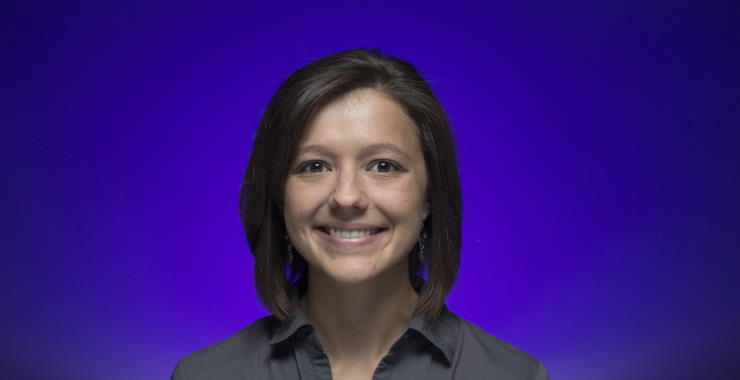
Clair Reynolds Kueny

Clair Reynolds Kuenyopens in new window, assistant professor of psychology at Missouri University of Science & Technology (Missouri S&T) in Rolla, Missouri, had some structures in place before COVID-19 appeared on the scene. Those structures have made her jobs easier during the crisis, both as a teacher and as a researcher in industrial/organizational (I/O) psychology.

For example, very soon after she came to Rolla in 2016, Kueny established a research relationship with a local health care provider that allowed her to get a COVID-19/health crisis research study up and running by mid-April, with funds from Missouri S&T.

Workplaces are or will be looking to I/O psychologists for help in figuring out how to deal with the pandemic, and with getting back in business in the aftermath. Kueny anticipates that her two chief areas of investigation — rural health care and the effects of employees' optional behaviors in the workplace, such as taking initiative — will both be of great interest to researchers in the coming months and years.

What lessons will be learned from the pandemic?

"I've been thinking a lot about this," Kueny says. "There is so much change going on already, I don't know that this is the time for mass initiative from employees. That's part of what I'm trying to capture with the research I'll be doing with the health care organization: Which is more important to people, that their team members are taking that initiative, or that their team members are adapting effectively?"

A fruitful relationship

Missouri S&T, in rural southern Missouri, is not affiliated with a medical school, but Kueny realized it would be invaluable to study a health care organization as it responded to the COVID-19 outbreak. None of the rural health care facilities she approached wanted to get involved, mostly because of the uncertainties the pandemic posed for them, she says. She ended up working with the provider with which she had done previous projects, where she was known even by top management.

"Having built that relationship is the only reason they let me in," she says.

For eight weeks this spring, 250 employees in all areas of the organization (which she doesn't name in order to protect patients' and employees' privacy) will be asked to assess how well they and their co-workers responded to the crisis in their midst — what has worked, what hasn't, and what they wished they had done differently, Kueny says.

The survey has 50 items, some with more than one question, and takes about 10 minutes to complete. Among other questions, the survey asks whether taking the initiative, adapting to established strategies or cooperating with others yielded the best results. Kueny says she suspects those answers may change somewhat as the hospital travels through the two-month time frame. The survey also asks about employees' levels of burnout, and whether they feel capable and valued at work.

Kueny says her hypothesis is that being adaptive will be shown to have been most important in the early phases of the pandemic, but as time goes on, the value of both cooperation and initiative may come to the fore. For the institution, "Initial findings suggest that frequent communication, quick provision of personal protective equipment (PPE), and offering flexible work arrangements" were helpful in the first phase, she says.

The outbreak has provided a rare opportunity to look at what happens when additional stressors heighten the stakes, and the intensity, in a workplace.

Striking a balance

Employers tend to value people who think for themselves, Kueny says, but the present situation is "so dynamic and uncertain" that encouraging initiative across the board might not be the best strategy. "I'd probably instead encourage them to put mechanisms in place so employees can offer suggestions," she says.

Kueny found in past research that socially adept people are more likely to find favor with their co-workers when they take the initiative than are "socially unaware" people. Still, employers need to create a mechanism to allow all their employees to express their ideas and "not be shot down."

Rural health care providers like the one she is studying aren't getting much attention in the pandemic, compared with big-city hospitals, she says.

"Rural providers get fewer COVID-19 cases, but they're less equipped to handle them. They may only have 50 cases, which doesn't sound that bad, but when you're a 180-bed facility, that's nearly one-third of capacity," says Kueny, who herself lives in a different rural community near Rolla.

Rural providers are likely to take the pandemic very seriously, but the relatively light caseload in their areas, at least at first, may cause the local population to view COVID-19 as "not as bad as it has been made out to be. It can seem like nothing is happening." Test kits are not always available, and even when people get sick, "they may have that mindset, 'I'll tough it out,'" Kueny says.

Missouri opened back up from lockdown in early May, even as public health experts warned that that policy could result in a spike of cases. Kueny says she hopes her survey will help capture some information about what works with a COVID-19 outbreak in a rural setting. In the event of subsequent outbreaks, she says, "Hopefully, we will have some informed data about how to respond."

Pros and cons of the rural health care setting

Kueny has found some distinctive characteristics of working in a rural setting that may impact those providers' experience, both positively and negatively. 

In a new study of oncology professionals now in press with Occupational Health Science,opens in new window Kueny's team found that, even though providers may enjoy more flexible work schedules, the ability to spend more time with patients and stronger senses of both teamwork and autonomy — not to mention the personal benefits of living the more relaxed and nature-centric rural lifestyle — the challenges of rural health care may outweigh the benefits. Those include staff shortages, a dearth of professional support, inappropriate referrals and longer on-call shifts.

Rural health care providers are often integral and recognizable members of the community. Again, while that has very positive aspects, Kueny has found that role conflictopens in new window can be a notable stressor for oncology providers in a rural setting.        

Kueny herself grew up in rural central Illinois, but she says she only became interested in studying rural health care during a human-resources internship with a health care provider in Kirksville, Missouri, where she earned her bachelor's degrees in psychology and political science from Truman State University. She followed that with graduate school at St. Louis University (SLU) in St. Louis, Missouri, along with an assistantship in SLU's Center for Interprofessional Education and Researchopens in new window.

"That's where my interest in health care really grew," she says.

At Missouri S&T, Kueny has taught graduate courses in I/O psychology in "blended" classes, which combine online components for distance learners with traditional classroom methodology for students on campus. That experience has helped her move all her courses, even her traditional undergraduate I/O course, smoothly online beginning in mid-March.

It helped that the university announced right away that they were closing down the campus for the entire spring term. But in addition, "We had the structures in place to make that transition," she says.      

Recommended Reading

APA Member Benefits

Member Benefits

Connecting with peers

APA Community


Find Your Perfect Gym

Active&Fit Directopens in new window


New products available

APA Merch Storeopens in new window


Competitive low rates

Student Loan Refinancing