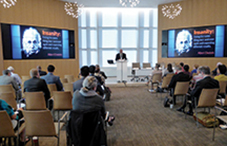
Integrated care is not only important for improving Americans' health, but also as a worldwide goal, according to leaders from nine countries who gathered at APA Nov. 3–5 for talks and working groups on the topic. APA 2015 President Barry Anton, PhD, convened the global meeting to address the challenges of providing integrated care and to learn from each other.
"We brought together very unlike-minded people from professions like epidemiology, business, sociology, technology, geography, public health and mental health to find out what we could learn from each other," says Anton. "Some countries do integrated care not only differently, but also better than we do."
In addition to the 85 attendees, more than 400 viewers from 42 countries tuned in via live Web stream, and dozens of participants tweeted from the meeting.
Keynote speaker Reynaldo Holder, MD, of the Pan American Health Organization, launched the summit by pointing out that many nations are facing similar health challenges, such as rising costs, aging populations, climate change, a growing urban-rural divide, and unequal access to health and mental health care. For example, in the Americas, though many countries have seen economic growth, "when you look at the distribution of that wealth, the poor are consistently left behind."
Adewale Troutman, MD, associate dean for health equity and community engagement at the University of South Florida, urged participants to look closely at root causes of inequity.
"Social justice is a matter of life and death," he said. "Downstream are things that continue to happen like school [dropouts] and poverty. We have to go upstream and find causal pathways" including racism and discrimination, he said.
Other barriers to care include fragmented health care systems, competing provider groups and the high cost of services, participants said. One way to provide more access to care is through digital care and telehealth, said John Fortney, PhD, of the University of Washington. A number of innovative health-care delivery vehicles can help patients, he said, such as waiting-room kiosks or hand-held devices that help record and rate symptoms, which make for a more efficient visit and may encourage more honest, "guilt-free" answers, he said.
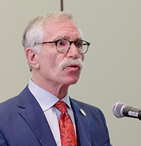
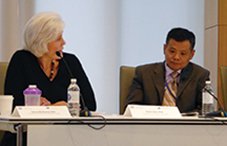
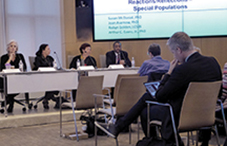
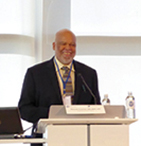
Several countries and organizations are making notable strides in integrated care. Among the best known organizations is Cherokee Health Systems, which has 14 clinical sites in Tennessee. Behavioral health consultants are key members of primary-care teams and behavioral health and prevention are part of every well-child checkup and prenatal care visit, said Parinda Khatri, PhD, chief clinical officer. The group also screens for and offers preventive treatment for diabetes, a big problem in the community.
In the United Kingdom, the National Association of Primary Care is helping to test the model of community-based primary-care homes that offer highly coordinated and personalized care to as many as 50,000 patients each, said its chairman, Nav Chana, MD. Another summit theme Chana noted was the need to quantify well-being and the value of preventive care, per the World Health Organization dictum that good health is not simply the absence of disease.
"We get excited about factors that cause disease but very little about the factors that cause health," he said.
"In Norway, having psychologists in primary-care teams will now be mandated by law, and will lead to more psychologists on staff throughout the country's public health system and in more schools and communities. You need to be where people are," said Tor Hofgaard, PhD, president of the Norwegian Psychological Association. "I often joke that we should have psychologists at IKEA."
Other nations' integrated-care efforts are less established. In China, for example, primary-care providers need more training on how to provide mental health care for older people in the country, which has just 25,000 psychiatrists to treat more than a billion people, said Shulin Chen, MD, PhD, of Zhejiang University.
Reforming payment models is critical as well, and will help achieve provider satisfaction along with the "triple aim" of better patient experience and care quality and reduced cost, said Marci Nielsen, PhD, of the Patient-Centered Primary Care Collaborative, an organization in Washington, D.C., that promotes patient-centered medical homes within primary care. Several speakers advocated for bundled payments based on the effectiveness of the treatment versus current fee-for-service payments, as well as more equal pay for providers of primary services versus specialists.
But before that can happen, more research is needed to show that integrated care is improving patient outcomes. James Witter, MD, chief science officer of the Patient-Reported Outcomes Measurement Information System (PROMIS), an initiative of the National Institutes of Health's Roadmap for Medical Research, explained that the payment system is based on how patients view their symptoms and quality of life. It is being tested in a dozen clinical sites.
"There are common core health outcomes that can be measurable in all patients," he said. "We focus on domains like physical function, pain, anger and anxiety."
Ultimately, patients are the main stakeholders in their care. To that end, providers should help patients educate themselves, helping people use such tools as Web information and online forums so that they can be "equipped, engaged, empowered and enabled," said Dave deBronkart — also known as "e-Patient Dave" — an author and advocate for patient engagement. "Googling [a disease] is a sign of patient engagement. If they're not good at it, do we smack them down and say, 'Stop that,' or do we coach them?" he asked.
A number of attendees called for APA to lead future efforts, including crafting a global mission statement for integrated health. Summit conveners are now working on recommendations from the meeting's working groups that they hope to share in interdisciplinary journals. In addition, there are plans to develop continuing-education materials such as webinars, and possibly hold future meetings that also involve stakeholders outside of health, such as professional and labor groups.
"Some of the work has to be done at the visionary level and some of it at the boots-on-the-ground level. If we can pursue both, that would be ideal," said Mary Ann McCabe, PhD, associate clinical professor of pediatrics at George Washington University and chair of the summit's planning committee.
"We brought together very unlike-minded people from professions like epidemiology, business, sociology, technology, geography, public health and mental health to find out what we could learn from each other."