
As of Jan. 1, APA's Disaster Response Network (DRN) has been renamed the Disaster Resource Network to more accurately reflect the group's effort to help communities and individuals prepare, respond to and recover from disaster. In addition to offering direct support, the program shares research-based resources for communities that experience tragedy, such as how APA supported the French National Committee for Psychological Science following November's terrorist attacks in Paris.
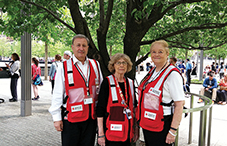
"The DRN does not respond as a separate unit — we are more of a resource than a response organization because we recruit psychologists to be of use to other organizations," such as the Red Cross, says Donna M. Hastings, PsyD, disaster mental health advisor for the New Hampshire Red Cross and the DRN chair for New Hampshire. "We train, we pass on information, we communicate and we organize."
To do that, DRN taps its 2,500 trained psychologist volunteers from state and Canadian provincial psychological associations to offer support and share resources after disasters of all types, including October's college shooting in Roseburg, Oregon, the California wildfires, Typhoon Soudelor in Saipan and the killings of three Muslim students in Chapel Hill, North Carolina, in February.
When working on relief operations, psychologists need to be registered with the Red Cross or another official response entity and licensed in their states. But not all DRN roles require fieldwork or Red Cross credentials, says APA's DRN Director Margie Bird.
Researchers, for example, track disaster mental health data to inform best practices. Academics develop online training modules for DRN responders on such topics as disaster ethics. Volunteers also help update evidence-based resources that the DRN shares with responders. Thanks to a strong partnership with the Red Cross, the research the DRN shares can be used to directly support disaster communities that need it most, says Bird.
"When there is a catastrophic disaster, APA is in the loop, at the table, and in a position to inform and incorporate psychological research and licensed psychologists as part of the response effort," she says.
Other DRN volunteers teach psychological first aid training courses through the Red Cross and can offer offsite support to peers in the field through a DRN program called DASH — Disaster Assignment Support from Home. DASH volunteers bolster DRN volunteers in the field in various ways, such as by texting them messages of support and being available to talk, Hastings says. "They are the safety net under our volunteers."
To volunteer to serve in any of these roles, contact Disaster Resource Network staff.
— Jamie Chamberlin