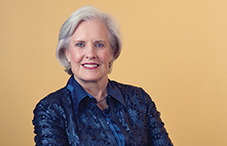

I am a leadership development junkie. I read leadership books, observe leaders at work, consult with leadership experts, and provide leadership workshops and coaching myself. I'd like to share some of what I've learned that's relevant to psychologists as the leadership landscape shifts.
"Task-shifting." In institutional practice, the need to increase access for patients and cut costs in the face of some health professional shortages are leading to "task-shifting" from one health-care team member to another.
For example, any task that can be done by a nurse is no longer done by a nurse practitioner; any service provided by a masters-level clinician is no longer done by a psychologist. Instead, psychologists function as supervisors, consultants, clinicians for complex cases, innovators, evaluators, and administrators of clinical or research teams or institutional units. For these reasons, all our educational programs should provide leadership training.
Mission, vision and values. I've come to see that writing personal mission and vision statements is very useful because it allows me to articulate my core values and refer back to them when I need to make important decisions. I revise these commitments each January, and examine my actions to see if they align with my values. As Robert Mager wisely said, "If you're not sure where you are going, you're liable to end up someplace else."
One of my values is diversity, which is why I like interprofessional teamwork. Work groups have the best outcomes when they surface different perspectives and develop a shared mental model. As Gloria Steinem said, "One of the simplest paths to deep change is for the less powerful to speak as much as they listen, and for the more powerful to listen as much as they speak."
Communication. In a period of rapid change, we need to "overcommunicate" new information. How often have you told a partner something and he or she later says: "You never told me that!" This also happens repeatedly at work and at APA.
Repeating new information is different from arguing about old information. Lewis Carroll said of having the last word: "How many a controversy would be nipped in the bud, if each was anxious to let the other have the last word! … Remember, speech is silver, but silence is golden."
New forms of leadership. Collaborative leadership is a radical change for areas dominated by hierarchy, such as the military and health care. I recently discussed leadership with six military family physicians, ranging from a resident to the Navy's highest ranking family physician. These physicians uniformly advocated leveling the hierarchy for teams to work well. All were opposed to saying the leader of a health-care team had to be the physician. They valued mission over control: They wanted their patients to have the best possible outcomes and would yield to anyone, independent of rank or discipline, who might help that happen.
Gen. Stanley McChrystal expressed the same ideas in a talk on leadership: "No one is omniscient or omnipotent. Things are way too interconnected to run an organization that way. Leaders today facilitate the process. They are less decision-makers than decision-facilitators."
Back with the family physicians, I commented that the military has good leadership training and one said they were good leaders because they knew how to be good followers. That reminded me of a 1988 paper by Robert Kelly in the Harvard Business Review, "In Praise of Followers," in which Kelly suggested redefining leadership and followership as equal but different activities, based on roles rather than hierarchy.
Finally, while our training as critical thinkers is a great asset, sometimes we focus too much on what needs improvement. Publicly rewarding good work is another important element of intentional leadership.
As Edith Wharton said, "There are two ways of spreading light: to be the candle or the mirror that reflects it." Let's recognize and reward good work as part of spreading light and inspiration.