
Joshua Correll, PhD
 "Police and Racial Bias: Lessons from the Lab for the Street"
As concerns about racial bias among law enforcement increase, Correll's research offers insights into how better officer training might reduce bias.
The University of Colorado at Boulder psychologist uses a video game simulation to study how people's racial bias affects their decision shoot a "suspect" in a police encounter. Correll has typically found that participants are faster and more likely to shoot black suspects than white suspects on a task in which participants must use split-second judgment to decide whether a suspect is carrying a cellphone, wallet or handgun, and whether to fire. He has also used the simulation to study racial bias among police officers — who make fewer mistakes than civilians but are not free of racial bias — and at how better training could reduce racial bias. In his talk, he'll summarize his 15 years of research on this topic and describe efforts to look at how attention, categorization and face-processing may promote racial bias and whether cross-race contact in childhood can reduce bias.
Bella DePaulo, PhD
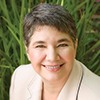 "What No One Ever Told You about People Who Are Single"
Americans today spend more years of their life unmarried than married and there are more single people in the United States than ever before, says DePaulo, of the University of California, Santa Barbara, and author of the book "How We Live Now: Redefining Home and Family in the 21st Century."
DePaulo will discuss what makes single life meaningful and fulfilling, and will critique claims that getting married makes people happier, healthier and less isolated.
"Single people are second-class citizens in society, and are stereotyped and stigmatized," she says. "Yet they still go on to make their lives happy and meaningful and satisfying — to live ‘happily ever after.'"
Alison Gopnik, PhD
 "Against ‘Parenting': What Science Tells Us about Caring for Children"
Modern parents often think of themselves as "carpenters," building and shaping their children to turn out in a particular way, says Gopnik, a psychology professor at the University of California-Berkeley who has spent three decades studying child development.
But research suggests a better way to look at childhood and parenting, she says. In her convention talk, she will discuss why parents should instead be "gardeners," preparing a stable and nurturing environment so that their children — designed by evolution to be unpredictable and diverse — can flourish in unpredictable ways.
"You can't anticipate how the garden will come out," she says. "But what you want to do is create an ecosystem that's resilient and can deal with unexpected change."
Rick Hanson, PhD
 "Mindful Cultivation: Turning Passing States into Beneficial Traits"
People draw on psychological resources such as grit and compassion for coping, well-being and helping others. We develop these strengths by turning passing experiences of them and related factors into lasting changes of neural structure and function. But the brain's evolved "negativity bias" acts as a bottleneck in this process, so that people tend to over-learn from negative experiences and under-learn from positive ones. To address this, we can deliberately and mindfully increase the depth of engagement with beneficial experiences in psychotherapy, trainings, and everyday life, says Rick Hanson, PhD, a senior fellow of the Greater Good Science Center at the University of California, Berkeley, and the New York Times best-selling author of "Hardwiring Happiness" and "Buddha's Brain." He will share ways to enrich and absorb beneficial emotions, thoughts, sensations, and motivations — potentially increasing their encoding in the brain — and then use these methods to grow strengths for individual needs.
Sari M. van Anders, PhD
 "Testosterone, Intimacy, and Gender/Sex: Surprising New Findings from Social Neuroendocrinology"
The evolving field of social neuroendocrinology gives scientists a new way of looking at hormones. It takes social context seriously and seeks to ask questions without the biological determinisms that often accompany bioscience, says van Anders, who focuses on that field as well as feminist science, sexuality and gender diversity at the University of Michigan. Her talk will focus on how better understanding testosterone challenges the assumption that it drives masculinity, among other social constructions.
"Testosterone gets dismissed or celebrated as the bad boy of hormones, but I'll discuss how research on it and intimacy from my lab complicates the simple gendered story we have," she says.
Wei-Jen Huang, PhD
 "Emotional Intelligence and Relationship Enhancement Training for Therapy-Avoidant Asian Populations"
An internationally known relationships expert, Huang will discuss his work offering evidence-based psycho-education to underserved Asian families worldwide. At the request of governments of China, Taiwan, Singapore, Malaysia and the Qatar Foundation, Huang has trained more than 20,000 counselors to offer his 12-session "Journey to Intimacy" relationship skills curriculum, which has helped more than 100,000 Asian families strengthen their relationships when they are strained, such as by boundary and control issues. Huang is clinical psychologist and an assistant professor at Northwestern University Feinberg School of Medicine.
John Ioannidis, MD, DsC
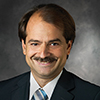 "Reproducible Research: Current Status and Prospects"
The past several years have seen a surge of interest among psychologists and the public in the validity and reproducibility of psychological research. Ioannidis, co-director of the Meta-research Innovation Center at Stanford University and author of the landmark paper "Why Most Published Research Results Are False," (PLOS Medicine, 2005), has spent the past two decades studying those issues in biomedical research and other fields. He will discuss issues including reproducibility, data sharing, open access to data, and incentives and rewards in research.
"Psychology clearly is going through a lot of soul searching right now," he says. "A lot of the debates in psychology have been debated in biomedicine for 20 years, and have arrived at some consensus and even more debates. Conversely, there are some aspects where psychology has taken the lead.
Kelley J. Slack, PhD
 "Deeper Space: Behavioral Risks on Mars and Asteroid Missions"
NASA is aiming to send humans to Mars within the next 20 years. Because a round-trip journey to the Red Planet could take as long as three years and put an unprecedented strain on the crew, behavioral scientists will be crucial to the mission's success.
Slack, a senior researcher in Johnson Space Center's Behavioral Health and Performance group, will discuss how NASA is quantifying human risks associated with long-duration space missions and how the agency plans to mitigate cognitive, behavioral, sleep and other risks for astronauts. An industrial-organizational psychologist, Slack is helping to select NASA's astronaut class of 2017.
J. Scott Tonigan, PhD
 "12-Step Spirituality: Is It Worthwhile to Pray for Recovery?"
With more than 110,000 meetings worldwide and an estimated 2 million members, Alcoholics Anonymous (AA) is remains a popular intervention, but some AA meetings are diminishing the group's spiritual roots. Tonigan, a research professor at the University of New Mexico, will discuss his research on the factors that increase spirituality among AA members and how such gains may explain increased abstinence from alcohol. He has conducted 20 studies on behavior change among AA participants and how substance abusers benefit from participating in 12-step programs.
Tonigan has served as co-director of the university's Center on Alcohol, Substance Abuse, and Addictions and has participated in the National Institute on Alcohol Abuse and Alcoholism's largest clinical trials, including Project MATCH and the COMBINE Study, the largest pharmacotherapy trial for alcohol dependence in the United States.
Sex and sexuality
Several APA convention talks will look at how current social standards and prejudices influence the study of human sexuality.
 Studying sex is fraught with controversy. J. Michael Bailey, PhD, a Northwestern University professor, has been attacked by transgender activists and social conservatives, among others, for his research on sexual orientation and his 2003 book "The Man Who Would Be Queen: The Science of Gender Bending and Transsexualism." At convention, he will talk about those experiences as well as why it is so important to study and teach about sexuality despite controversy.
"Politically motivated research, as well as politically safe research, are both too common," he says. "What we need to do more is to let those who disagree with us speak, and to understand what is true."
 Tania Israel, PhD, of the University of California, Santa Barbara, studies interventions to support lesbian, gay, bisexual, transgender and queer individuals and communities. Her TED Talk about bisexuality led to her participation in the first White House Bisexual Community Policy Briefing in 2015. At the convention, she will discuss the stigma, invisibility, stress and negative mental health outcomes associated with bisexuality.
Even though there are more bisexuals than lesbians and gay men combined, she says, most psychology training programs pay little attention to bisexuality. "This reflects a marginalization of bisexuality that is present in the larger society, which limits our theory, practice and research regarding this population," she says.
Through her talk, she hopes to demonstrate the potential of bisexuality to shed light on understudied areas of psychology, such as invisible minorities, polyamory and nonbinary gender.
 Esther Perel is a couples and family therapist whose work explores the tension between the need for security and closeness in relationships and the need for freedom to explore erotic desire. She is the author of "Mating in Captivity: Unlocking Erotic Intelligence" (2006).
Contrary to popular belief, sex problems are not always the result of relationship problems, and improving an emotional relationship may do little to improve sex, she says. Reconciling intimacy and sexuality in modern couples requires us to consider the overwhelming expectations placed on adult intimacy, including that partners be best friends and confidants as well as lovers. Our longer life spans mean trying to stay romantic longer, too.
Perel will discuss why imagination, self-confidence and an element of surprise lead to desire. Using a multicultural lens, she will show how to help couples unlock sexual blocks, take emotional risks and enhance their erotic bond.
Marijuana: A tale from two researchers
As Colorado assesses the results of legalizing medical and recreational marijuana in the state, two speakers will offer evidence-based perspectives on how rethinking marijuana policy would improve health and society.
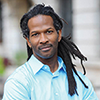 In his plenary address, "How Pot Can Cure Racism," Carl Hart, PhD, will weigh the potential harms of marijuana against the drawbacks of penalizing it. Doing the latter has vast effects on vulnerable populations, who are more likely to be criminalized for using or having the drug, he says.
Every year, more than 700,000 people are arrested for marijuana violations, 80 percent of which are for possession. The vast majority of these people are black or Hispanic. Reevaluating the regulation of marijuana — decriminalizing and legalizing it as in Colorado — would get rid of this form of racial discrimination, Hart says. "On the East Coast, there is not even a discussion about changing the way we regulate marijuana, in part because it serves as a tool for marginalizing minorities."
Hart is the author of "High Price: A Neuroscientist's Journey of Self-Discovery That Challenges Everything You Know About Drugs and Society," (2014), a memoir of his path from childhood in an impoverished Miami community to his appointment as the first African-American tenured professor of the sciences at Columbia University. He researches the interactions between neurobiological factors and environments and recreational drug use and abuse.
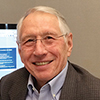 In terms of its medicinal properties, cannabis has been both debunked and deified. Igor Grant, MD, director of the Center for Medicinal Cannabis Research at the University of California, San Diego, will share evidence on marijuana's therapeutic efficacy, usage risks versus benefits, and potential future treatment for such conditions as neuropathic pain, muscle spasticity in multiple sclerosis, epilepsy, anxiety and psychosis.
"Progress in understanding the place of cannabis as therapy has been hampered by the mixing up of concerns regarding overall social policy — recreational use, legalization of marijuana, etcetera — with its possible use as a medicine. To the extent we can separate discussion of medical issues from the more general social debate we shall have less heat and more light on medicinal cannabis," he says.
Washington University in St. Louis: "Varieties of Superior Memory: The Study of People Who Deliberately Memorize"
Henry L. Roediger, III, PhD
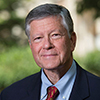 For more than four decades, Henry "Roddy" Roediger, PhD, has studied how humans retrieve knowledge, from middle-school students to "memory athletes" who can memorize a deck of cards in seconds. His research has led to insights on the benefits of quizzing to enhance memory, how false memories happen, the relationship between confidence and accuracy in memory, and individual versus collective memory.
At the convention, Roediger will discuss his research on the ways superior memorizers help themselves remember vast quantities of data.
"Over the past century, psychologists have shown only scattered interest in mnemonic devices, often referring to them as ‘tricks' with no serious interest to understanding learning and memory. That situation is beginning to change," says Roediger, a professor at Washington University in St. Louis.
In particular, Roediger will talk about his research on participants in the annual World Memory Championships. These people show unusually high abilities on memorization tasks, including digit span and face-name pairs, as well on the Stroop color and word naming tasks, which measure attention rather than memory, he says. He will share early results from an ongoing study that tests experts in different types of memory tasks to find commonalities and differences in their abilities.
The Society of Experimental Psychologists gave Roediger its Howard Crosby Warren Medal for his work on illusory memories. APA's Div. 3 (Society for Experimental Psychology and Cognitive Science) will give him its Lifetime Achievement Award at convention.