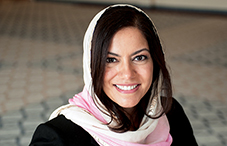

The morning of Aug. 5, 2012, Puni Kalra, PhD, was in her Colorado home preparing for the week ahead. While she was scrolling through Facebook, a news report shattered her peace: A gunman with white supremacist ties had stormed the Sikh Temple of Oak Creek, Wisconsin, killing six of its leaders and wounding several others.
The horrific incident was particularly charged for Kalra, who herself is Sikh and knew people at the temple. "It was utterly heartbreaking," she says.
As an executive and leadership coach who has also spent 20 years working with traumatized communities, Kalra felt a strong need to help.
"My community had been attacked, and my life's work is to empower others," she says. "Turning away simply wasn't an option."
Kalra spent the next year helping community leaders, members and youth shore up their strengths through a culturally sensitive crisis intervention, a youth mentorship program, and more.
Four years later, her efforts have borne lasting fruit. Bonds have grown stronger, and young people who might have floundered — including those who lost parents in the tragedy — are heading off to college and meaningful careers.
"Much of this would not have been possible without Puni," says Navi Gill, 22, who mentored community teens with Kalra's guidance. "Our entire model was to turn tragedy into triumph."
The aftermath
 During that first year, Kalra flew to Oak Creek every other weekend. She developed a team of nearly 50 mental health professionals from 10 states, including members of the Asian American Psychological Association, or AAPA, and others from a wide variety of ethnic and religious backgrounds.
She also organized and led a smaller team of mental health professionals from nearby Milwaukee and Chicago who came on a regular basis.
"It quickly became clear to me that in order to heal and build trusting relationships, the community needed to see the same mental health professionals each week," she explains.
In the six weeks following the tragedy, the team launched a mental health crisis response that took place every Sunday at the Sikh temple. For adults, that meant an approach that did not provoke shame or stigma — a major issue for many South Asian immigrants, who see emotional problems as signs of weakness. Instead of holding traditional support group meetings, the team built relationships with adults more informally, making themselves available if people just wanted to chat while avoiding words like "counseling" and "therapy."
The team also distributed hundreds of customized bilingual information sheets each week at Sunday services, thanks to efforts by the AAPA's Division on South Asian Americans, who received topics from Kalra, then compiled the latest research information into simple, lay-friendly formats. Topics centered on symptoms of post-traumatic stress disorder (PTSD), survivor guilt, intrusive thoughts and insomnia. The team also provided a brief presentation in Punjabi elaborating on the handouts.
During the same six weeks, young people received counseling from local mental health professionals in three groups of about 20 members each: children younger than 11, teen boys and teen girls. For these sessions, Kalra's team partnered with trauma therapists from Children's Hospital of Wisconsin, providing them with language translation and cultural context. The children's teachers and school counselors soon became involved, too, meeting with the team to learn about Sikh culture and about specific challenges these kids faced upon returning to school, such as bullying and increased symptoms of anxiety and PTSD.
"This kind of collaboration was wonderful because it made the entire Oak Creek community stronger," Kalra says.
Ripple effects
Kalra knew that for the efforts to last, she had to empower the community to help itself. One solution was launching the Sikh Brother Sikh Sister mentorship program, where she trained young adult members of the temple to continue and grow the groups that had already started. While the effort was originally intended just for the group of younger children, it soon became apparent the teens wanted to continue to meet, too.
Kalra worked with the mentors each week to nurture their leadership skills and to help them plan activities that would meet each group's developmental needs and interests. There were ice-breaking activities so kids could get to know each other better, and team-building activities, such as navigating ropes courses, rock climbing and playing outdoor games. The kids also joined together to work in soup kitchens and learned more about their own Sikh history. With Gill's mentorship, for instance, the teens put together posters looking at influential men and women in Sikh history, which they later presented to the congregation.
Mentors also coached the teens on next steps, in particular on how to apply to colleges and for student loans.
The mentorship program ran formally for about two years, but it continues to have ripple effects. Every August, the community comes together for a 6K race to honor the six people who were killed. The mentorship continues, just in a more organic way, Gill says.
These days, Kalra visits Oak Creek four times a year to check in. "They have become my family," she says. "This is an inspiring community of people who embody the spirit of resilience. It's been a highlight of my life to be a part of their healing journey."