Smells Like Purple
 People with odor-color synesthesia are better at identifying both odors and colors compared with nonsynesthetes, finds a study in the
Journal of Experimental Psychology: Human Perception and Performance
opens in new window
. Odor-color synesthetes see colors when they smell particular odors—smelling vinegar, for example, might evoke the color orange. In the study, researchers asked six synesthetes and 17 control participants to complete a battery of color and odor identification tasks. Synesthetes were significantly better, on average, at naming common odors and discriminating between two similar odors, and were also better than controls at discriminating between two similar colors.
DOI: 10.1037/xhp0000469
Head in the cloud
 People who spend more time aimlessly checking their email or surfing the web on their smartphones are more absentminded in other areas of their lives as well, finds a study in
Psychology of Consciousness: Theory, Research, and Practice
opens in new window
. Researchers asked 435 participants about their smartphone habits and their absentmindedness (with questions such as "How often do you go into a room and then forget why?"). Overall, people who used their smartphones more often were also more absentminded. However, when the researchers analyzed the data by type of smartphone use, they found that only "absentminded" phone use—such as checking the phone "for no good reason" or losing track of time while using it—was associated with absentmindedness in general.
DOI: 10.1037/cns0000131
Teaching tenacity
Toddlers can learn the value of hard work by watching adults persevere at a difficult task, finds a study in
Science
opens in new window. Researchers showed more than 250 15-month-old children short videos of adults doing two tasks: removing a toy from a container and taking a key chain off a metal ring. Half the children saw videos in which the adults quickly and easily completed the tasks; half saw videos in which the adults struggled before managing them. Later, the researchers gave the children a new toy and showed them that it played music, but not how to turn the music on. Those children who had watched the persevering adults pressed a promising-looking (but nonworking) button twice as many times before giving up, on average, compared with the children who had watched the adults complete their tasks on the first try.
DOI:10.1126/science.aan2317
Don't worry, be happy
 Encouraging a "culture of happiness" may unwittingly promote depression instead by causing people to ruminate on their failures, suggests a study in
Emotion
opens in new window
. Researchers asked 120 participants to solve difficult anagram puzzles. One half worked on the puzzles in a plain room while the other half worked in a room containing "happiness paraphernalia" such as motivational posters and self-help books. Afterward, the participants did a breathing exercise for five minutes while the researchers asked them what they were thinking about. Participants in the "happy room" were three times more likely than participants in the plain room to think about their failure to solve the anagrams.
DOI: 10.1037/emo0000322
Football risk
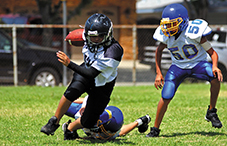 Football players who start the sport before age 12 are at increased risk for mood and behavior disorders later, finds a study in
Translational Psychiatry
opens in new window
. Researchers studied 214 former high school, college and professional football players, administering a battery of cognitive tests as well as measures of depression, behavioral regulation, apathy and executive functioning. Players who took up the sport before age 12 had twice the risk of problems with behavioral regulation, apathy and executive functioning and three times the incidence of depression as players who started after age 12—regardless of how long they played football or how many concussions they reported suffering.
DOI: 10.1038/tp.2017.197
Yaawwwn
Yawning after seeing someone else yawn is a common kind of "echophenomenon," or involuntary imitation. Now research in
Current Biology
opens in new window suggests that some people are more likely to "catch" yawns than others. Researchers used transcranial magnetic stimulation to measure baseline levels of motor cortical excitability in 36 participants. Then the participants viewed videos of people yawning. Half the time the participants were instructed to resist yawning, the rest of the time they were allowed to yawn. Researchers videotaped the participants, counted the number of yawns and stifled yawns, and found that people with higher levels of motor cortical excitability had the urge to yawn more often.
DOI: 10.1016/j.cub.2017.07.062
Facing your sex drive
Men and women with squarer faces have a stronger sex drive and may be more likely to cheat on their partners than people with longer, thinner faces, suggests a study in the
Archives of Sexual Behavior
opens in new window. Researchers surveyed 314 college students in Canada about their sex drives, sexual orientations and thoughts on infidelity, among other questions. They also measured the students' facial width-to-height ratio (FWHR). Both men and women with a larger FWHR (squarer, wider faces) had stronger sex drives and more positive attitudes toward casual sex; men with a larger FWHR were also more likely to consider cheating. The researchers hypothesize that both face shape and adult sex drive and attitudes may be related to variations in hormone levels during puberty.
DOI: 10.1007/s10508-017-1070-x
Sick leave
 Workers without paid sick leave are more likely to experience psychological distress than those who can take time off work when they become ill, finds a study in the
American Journal of Orthopsychiatry
opens in new window
. Researchers examined data from nearly 18,000 respondents to the National Health Interview Survey, 41 percent of whom did not have paid sick leave. Those workers were more likely to experience sadness, hopelessness, nervousness and other distress symptoms than were workers with paid sick leave, even after controlling for physical health, alcohol use, sleep and other variables.
DOI: 10.1037/ort0000293
Post-cancer workouts
 Physical exercise could help breast cancer survivors retain their mental acuity, suggests research in
Cancer
opens in new window
. Eighty-seven breast cancer survivors, who were on average 2.5 years postsurgery, took part in the study. Researchers assigned half of them to a 12-week personalized exercise program, with a wearable activity tracker to track their progress; the control group was encouraged to exercise but only received generic emails on health topics, such as stress reduction and healthy eating. After 12 weeks, women in the exercise group scored significantly higher on a test of processing speed compared with the control group. There were no significant effects on other cognitive measures.
DOI: 10.1002/cncr.30987
Binge drinking
Students who binge drink in college are less likely to land a job upon graduation, finds research in the
Journal of Applied Psychology
opens in new window. Researchers studied 827 college graduates from four universities. They found that a student's pattern of drinking was more important than how much they drank overall. Students who reported binge drinking (four or more drinks at one time for a woman; five or more for a man) four times per month had a 6 percent lower chance of finding a job after graduation than students who did not binge drink. Those who reported binge drinking six times per month had a 10 percent lower chance of landing a job.
DOI: 10.1037/apl0000244
Chock full o'nuts
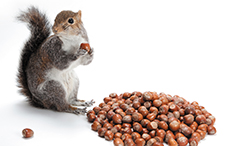 Squirrels use complex cognitive strategies to organize the thousands of nuts that they store each year, including a "chunking" strategy that is similar to how humans remember information, finds a study in
Royal Society Open Science
opens in new window
. In multiple trials, researchers offered 45 wild fox squirrels 16 nuts from four different species—hazelnuts, almonds, pecans and walnuts. Then, they used GPS to track where the squirrels buried the nuts. They found that when they gave the squirrels the nuts from a central location, the squirrels buried them in groups organized by type and size—similar to human chunking. But when they gave the squirrels nuts in multiple locations, the squirrels made sure to avoid burying them in places they'd already buried nuts, rather than organizing by type.
DOI: 10.1098/rsos.170958
Shared custody matters
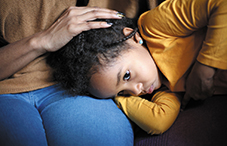 After their parents' divorce, preschool-age children who are able to alternate living with both parents fare better, on average, than those living primarily with one parent, suggests a study in
Acta Paediatrica
opens in new window
. Researchers examined data from a Swedish national survey that included parent and preschool teacher evaluations of 136 children in joint physical custody, 152 living primarily or only with one parent, and 3,369 in nuclear families. They found that children living mostly or only with one parent had more psychological problems, as measured by a standard screening questionnaire completed by parents and teachers, than those in joint physical custody or in nuclear families. The study belies the common assumption that young children would fare better with just one parent because that is presumed to be more stable, the researchers say.
DOI: 10.1111/apa.14004
Gender norms
Around the globe, children as young as 10 to 14 begin to internalize rigid stereotypes about the roles of men and women, finds research in the
Journal of Adolescent Health
opens in new window. World Health Organization researchers conducted comprehensive interviews with 450 early adolescents and their parents in 15 countries: Belgium, Bolivia, Burkina Faso, China, the Democratic Republic of Congo, Ecuador, Egypt, India, Kenya, Malawi, Nigeria, Scotland, South Africa, the United States and Vietnam. Across these countries, the early adolescents all had, to varying degrees, received the message that girls are vulnerable while boys are strong and independent, and that boys are predators and girls are potential victims. Such gender norms and beliefs create risks for both boys and girls and point to the need for societal changes to support greater gender equity, the researchers say.
DOI: 10.1016/j.jadohealth.2017.07.009
Sleep-deprivation therapy
Controlled sleep deprivation can be an effective, though temporary, antidepressant for about half of people who suffer from depression, finds a meta-analysis in the
Journal of Clinical Psychiatry
opens in new window. Researchers reviewed 66 sleep-deprivation studies that spanned four decades. They found that both partial sleep deprivation (20 to 21 hours of wakefulness at a time) and total sleep deprivation (36 hours of wakefulness) could reduce depression. Sleep deprivation helped 45 percent of depressed patients in the randomized controlled trials included in the meta-analysis and 50 percent of patients in the other studies. However, the antidepressant effects were temporary: 80 percent of patients relapsed after a full night's sleep. More research is needed to understand the neurobiological mechanisms underlying the effect, the researchers say.
DOI: 10.4088/JCP.16r11332
Dads' hormones
 New fathers with low testosterone levels may be more likely to experience postpartum depression, finds research in
Hormones and Behavior
opens in new window
—but their partners may experience less depression. About 150 heterosexual couples with new babies answered questions about their levels of stress and depression when their children were ages 2, 9 and 15 months old. Researchers also measured testosterone in the fathers' saliva at nine months. Men with low testosterone reported more depressive symptoms, but these men's partners reported less. The link was mediated by relationship satisfaction—women with lower-testosterone partners reported greater relationship satisfaction, which reduced their depressive symptoms. Also, fathers with high testosterone reported more parenting stress, and their partners reported more relationship conflict.
DOI: 10.1016/j.yhbeh.2017.07.014
High expectations, high pressure
Telling children that they're smart may induce them to cheat when stakes are high, suggests research in
Psychological Science
opens in new window. Researchers asked 150 3-year-old and 150 5-year-old children to play a guessing game in which they had to guess whether a hidden playing card had a value higher or lower than six. In a "practice" trial, the researcher told the children they had guessed correctly. They also told one-third of the children "You are so smart," one-third "You did very well this time" and one-third were given no extra feedback. Later, the experimenter left the room and instructed the children not to peek at the hidden card. In both age groups, the children who had originally been praised for their smarts were more likely to cheat than the children who had been praised for "doing well this time" or not praised at all.
DOI: 10.1177/0956797617721529
Emotional range
The full range of human emotional experiences can be captured in 27 overlapping categories, according to a study in the
Proceedings of the National Academy of Sciences
opens in new window. Researchers asked 835 participants to view a random sample of 30 5- to 10-second video clips taken from a pool of 2,815 clips that depicted emotion-inducing images, including babies, deaths, spiders, nature scenes and much more. They found that using three self-report measures, participants reported similar or the same reactions to the videos. The researchers then used statistical modeling to create a "mapopens in new window" of 27 emotional categories that could encompass all emotional responses, with proximity representing the overlap between the emotions—admiration, awe, aesthetic appreciation and joy clustered together on the map, for example, and were far from the cluster of anxiety, fear, horror and disgust. The researchers argue that this mapping more accurately and comprehensively captures emotional experiences than previous approaches.
DOI: 10.1073/pnas.1702247114
Delayed adulthood
 Many of today's teens are delaying sex, drinking, working, driving and other rites of passage that previous generations used to mark adulthood, finds a study in
Child Development
opens in new window
. Researchers analyzed data from seven large nationally representative surveys that spanned the years from 1976 to 2016, with more than 8 million total respondents. They found that teens in the 2010s were less likely to participate in such behaviors compared with teens in previous decades. These declines were found across demographic groups, including gender, race/ethnicity, socioeconomic status and geographic region.
DOI: 10.1111/cdev.12930
Scent memory
A simple smell test could help clinicians detect Alzheimer's disease early, suggests research in
Neurology
opens in new window. Researchers studied 274 people (average age 63) at increased risk of developing Alzheimer's disease because they had a parent with the disease. The participants completed scratch-and-sniff tests to identify scents such as lemon, gasoline and bubble gum. Participants who had the most trouble identifying the scents also had higher levels of the Alzheimer's disease biomarkers tau and beta amyloid in their cerebrospinal fluid.
DOI: 10.1212/WNL.0000000000004159
Sleep and justice
People are less likely to make false identifications in a police lineup if they get a night's sleep beforehand, finds a study in
PLOS ONE
opens in new window. Researchers asked about 400 participants to watch a video of a man planting a bomb on a rooftop and then, 12 hours later, to view a lineup of six suspects. Half of the participants watched the video in the morning and viewed a lineup that night. The other half watched the video at night and viewed a lineup the next morning, after getting a night's sleep. When the lineup did not include the perpetrator, 66 percent of participants who had not slept identified an innocent person, compared with just 42 percent of participants who had gotten a night's sleep. However, when the lineup did include the perpetrator, sleep didn't affect the participants' performance. In that case, both the sleep and no-sleep groups identified the right person about half of the time.
DOI: 10.1371/journal.pone.01829
Race bias
 During economic downturns, African-Americans and other minority groups often suffer disproportionately greater reductions in income. Now a study in the
Journal of Personality and Social Psychology
opens in new window
suggests one possible explanation: When resources are scarce, people may be more likely to let prejudice influence their actions. Researchers asked 129 non-black participants to distribute $100,000 in art fellowship funding among three white and one black fictional applicants. In a "scarcity" condition, participants read that the funding would be less than usual because of an economic downturn; in an "abundance" condition, they read that it would be higher than usual. Participants were also assessed on their "internal motivation" to avoid prejudice. In the abundance condition, both high- and low-motivation participants distributed the money relatively equally, on average. But in the scarcity condition, low-motivation participants gave significantly less to the black applicant.
DOI: 10.1037/pspi0000112.supp
For direct links to the research cited in this section, visit our digital edition at www.apa.org/monitor/digitalopens in new window .