
Fiction’s real-world benefits
People who read fiction are better at understanding social cues, finds a meta-analysis in the Journal of Experimental Psychology: General. Researchers analyzed 53 effect sizes from 14 published and nonpublished studies. They found that fiction readers scored somewhat higher on tests of social-cognitive ability—the ability to perceive, respond to and interpret social information—compared with people who read nonfiction and those who don’t read at all. The authors note the need for further research on the effects of reading fiction on behavior in the real world. DOI: 10.1037/xge0000395opens in new window
Depression disparities
 Depression is becoming more common in the United States, while disparities in its prevalence and treatment are increasing between the most and least educated Americans, finds a study in the American Journal of Orthopsychiatry. Researchers analyzed data from participants in the National Health and Nutrition Examination Survey between 2005 and 2014. During that time, the prevalence of depression increased, but there were differences by gender and education level. Among the least educated participants, the likelihood of experiencing moderate to severe depressive symptoms increased during that time; for the most educated, that likelihood remained stable (women) or decreased (men). During the same time, among people who were depressed, the likelihood of receiving treatment declined (women) or remained stable (men) for the least educated group but stayed steady (women) or increased (men) for the most educated. DOI: 10.1037/ort0000370opens in new window
Not-so easy reading
Much of the mental health information available to the public online is written at too high a reading level, suggests a study in American Psychologist. The Centers for Disease Control and Prevention and the American Medical Association recommend that online health information be written at the sixth- to eighth-grade level so that it is broadly accessible to the public. Researchers examined the grade-level readability of mental health information on six popular websites, including PsychCentral.com, MayoClinic.org and WebMD.com. Overall, they found, the reading levels were aimed at about 12th grade or higher across the different websites. DOI: 10.1037/amp0000324opens in new window
Generosity pays off
Unselfish people make more money and have more children than selfish people do, finds a study in the Journal of Personality and Social Psychology. Researchers analyzed data from four large panel studies with a total of more than 60,000 participants in the United States and 23 European countries. Overall, people with higher levels of prosociality—as measured by both their actions and their motivations—had higher incomes and more children than people with lower levels of prosociality. In a follow-up study with 400 online participants, the researchers tested whether people’s beliefs about generosity lined up with the research findings. On average, participants correctly predicted that more generous people would have more children, but incorrectly believed that generous people would make less money. DOI: 10.1037/pspp0000213opens in new window
Smoking's effects, down the generations
 Fathers who smoke may raise their children’s and perhaps even grandchildren’s risk for attention-deficit hyperactivity disorder, suggests a study with mice published in PLOS Biology. Researchers exposed male mice to nicotine in their drinking water, then bred them with female mice that had not been exposed to nicotine. The offspring of the nicotine-exposed mice were more likely to show signs of hyperactivity and cognitive deficits compared with offspring of mice not exposed to nicotine. Among the grandchildren of the original nicotine-exposed mice, the effects were more subtle: The researchers found significant cognitive deficits in this group, but only among male offspring of the original mice’s female children. The researchers also found changes in DNA methylation (an epigenetic mechanism) in the nicotine-exposed mice that could explain the link. DOI: 10.1371/journal.pbio.2006497opens in new window
Gender disparities
 In more prosperous, egalitarian countries, women and men show greater differences in their traits and preferences, finds a study in Science. Researchers analyzed data on about 80,000 women and men from 76 countries who participated in the Global Preferences Survey, in which participants answered questions about scenarios that measured characteristics such as their patience, altruism, trust and willingness to take risks. Then, the researchers compared those data with country-level information on GDP and gender equality. Overall, women and men responded to the survey most differently in countries that had higher levels of economic development and gender equality. The researchers suggest that more advanced economic and social conditions facilitate the formation and expression of gender-specific characteristics. DOI: 10.1126/science.aas9899opens in new window
SES and health
People of lower socioeconomic status (SES) have more markers of systemic inflammation in their bodies, finds a study in Molecular Psychiatry. Researchers conducted a meta-analysis of 43 papers with a total of 111,156 participants, all of which looked at the relationship between SES and one or both of two common markers of systemic inflammation: C-reactive protein and interleukin-6. Overall, people with lower SES had higher levels of these inflammatory markers, a finding that held true whether the studies characterized SES in terms of income or education. The results support the idea that inflammation is a possible biological mechanism linking low SES to poorer health, the researchers conclude. DOI: 10.1038/s41380-018-0259-2opens in new window
Good memories, good health
People who can look back fondly on their childhoods have better health later in life, suggests a study in Health Psychology. Researchers examined data from two nationally representative longitudinal studies in the United States, with more than 22,000 total participants. One study followed adults in their mid-40s for 18 years, and the second followed adults over age 50 for six years. Both surveys included questions about how participants remembered their childhood relationships with their parents, as well as questions about their health, chronic conditions and depressive symptoms. Overall, participants who remembered higher levels of affection from their mothers in early childhood experienced better physical health and fewer depressive symptoms as adults. Those who remembered more support from their fathers also experienced fewer depressive symptoms. DOI: 10.1037/hea0000694opens in new window
Bargaining while black
 African-American job seekers end up with less money after salary negotiations because of hiring managers’ racial prejudice, suggests a study in the Journal of Applied Psychology. In the study, 218 participants (of different races and ethnicities) were randomly assigned to be “job candidates” or “ hiring evaluators” and each pair was asked to negotiate a salary ranging from $82,000 to $90,000. Although white and African-American candidates did the same amount of negotiating, on average, racially biased hiring evaluators believed that the African- American candidates had negotiated more. Also, African-American candidates ended up with $300 less in their final salary offers, on average, for each time they were perceived to make an offer or counteroffer. DOI: 10.1037/apl0000363opens in new window
Walk the walk
Actions can speak louder than words in convincing people to have solar panels installed on their homes, finds a study published in Nature. Researchers analyzed data on a residential solar panel program in 58 Connecticut towns. The program recruited volunteer community “ambassadors,” many of them local political leaders and activists, to encourage homeowners to install solar panels. The researchers found that setting an example mattered—ambassadors who had solar panels installed on their own homes recruited 62.8 percent more people to take part in the program compared with ambassadors who did not. That held true whether the ambassadors said they installed solar panels for environmental or economic reasons. DOI: 10.1038/s41586-018-0647-4opens in new window
Drugs or friends?
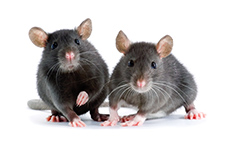 When rats are given a choice between using an addictive drug and socializing with other rats, they generally choose to socialize, finds a study in Nature Neuroscience. Researchers trained the rats to press one lever to spend time with another rat or a different lever to receive a dose of heroin or methamphetamine. Across multiple conditions (including different drugs and dosages, sex of the rats and the rats’ previous level of addictive responses to the drugs), the rats consistently chose social time over the drugs; they only turned to the drugs when the researchers punished them for choosing the social time (with electric shocks) or delayed their access to the other rats. The researchers say the results suggest a role for promoting social interactions in efforts to prevent and treat substance use disorders in humans. DOI: 10.1038/s41593-018-0246-6opens in new window
Colorful language
In both Greek and Russian, “light blue” and “dark blue” are separate colors: There are words for “light blue” and “dark blue” but no word for simply “blue.” German, on the other hand, like English, has one word for the category blue. Now, a study in Psychological Science suggests that this difference among the languages can affect speakers’ visual perception. In a study with 103 native Greek, Russian and German speakers, researchers found that Greek and Russian speakers were more likely to notice a light blue triangle imposed on a darker blue background, compared with a light green triangle on a darker green background. Native German speakers, however, were no more likely to see the blue triangle than the green one. DOI: 10.1177%2F0956797618782181opens in new window
Screen time and sleep
 Screen time with digital devices doesn’t appear to interfere with children’s sleep all that much, finds a preregistered cohort study in The Journal of Pediatrics. Researchers analyzed data on more than 50,000 children in the United States who took part in the 2016 National Survey of Children’s Health. They found that while more screen time was associated with slightly less sleep, the impact was modest: Each extra hour of screen time was associated with eight minutes less sleep per night for children under age 5 and three minutes less sleep per night for children older than 5. This effect is much smaller than other contextual factors shown to affect sleep, such as early school starting times, the researchers say. DOI: 10.1016/j.jpeds.2018.09.054opens in new window
Patient choice
 Patients with post-traumatic stress disorder (PTSD) do best when they can choose their treatment—therapy or medication—finds a study in The American Journal of Psychiatry. Researchers asked 200 PTSD patients (all military veterans or sexual assault survivors in the United States) to choose whether they preferred prolonged exposure therapy or medication (sertraline). Half were given their preferred choice, while the other half were randomly assigned to one or the other treatment. Two years later, 70 percent of those given therapy were PTSD-free, as were 55 percent of those who received medication. But choice made a difference: Among patients who wanted and received therapy, 74 percent were free of PTSD, compared with only 37 percent of those who wanted therapy but received medication. And 75 percent of patients who were given their preferred treatment completed the full treatment program, compared with under half of those who got the treatment that they didn’t want. DOI: 10.1176/appi.ajp.2018.17090995opens in new window
Cetacean personality
 Killer whales share a similar personality structure with humans and chimpanzees, finds a study in the Journal of Comparative Psychology. Researchers asked trainers and other staff to rate the personality characteristics of 24 killer whales at SeaWorld Orlando, SeaWorld San Diego and a zoo in Spain. The trainers rated the whales on 38 characteristics, including playfulness, independence, stubbornness, bravery, sensitivity and protectiveness. They found that the evaluations had good inter-rater reliability—the trainers and staff tended to agree with one another about the whales’ characteristics. Further, when the researchers analyzed the whales’ characteristics according to the five-factor personality model commonly used to describe humans (extraversion, openness to experience, agreeableness, conscientiousness and neuroticism), they found that they were organized similarly to the personality characteristics of both humans and chimpanzees. They suggest this may be because whales, like humans and chimps, live in complex social groups. DOI: 10.1037/com0000146opens in new window
Race and the EPPP
Racial and ethnic-minority applicants for psychology licensure pass the Examination for Professional Practice in Psychology (EPPP) at lower rates than white exam-takers do, finds a study in The Journal of Psychology: Interdisciplinary and Applied. Researchers used a Freedom of Information Act request to the New York State Board for Psychology to obtain demographic information and exam pass rates for 25 years of licensure applicants in the state. They found significant differences in EPPP failure rates for first-time test-takers among different groups: a 38.5 percent failure rate for African- American applicants, 35.6 percent for Hispanic applicants, 24 percent for Asian applicants and 14.1 percent for white applicants. The researchers argue that given these discrepancies, and the limited amount of research into the exam’s validity, more psychometric investigation into the exam is warranted. DOI: 10.1080/00223980.2018.1504739opens in new window
Boys linked to postpartum depression
Women who give birth to boys are more likely to suffer from postpartum depression, suggests a study in Social Science & Medicine. Researchers asked 296 women—average age 59, and primarily from the United Kingdom—to complete online surveys on their reproductive histories, including the number of children they had, those children’s birth histories, the children’s sex and their own histories of depression. Overall, the odds of experiencing depression following the birth of a child were 71 to 79 percent higher after giving birth to a boy compared with a girl. The researchers hypothesize this may be because women carrying male fetuses experience more systemic inflammation. DOI: 10.1016/j.socscimed.2018.10.008opens in new window
Sex on the brain
Nearly 9 percent of people in the United States experience distress caused by having difficulty controlling their sexual urges, feelings and behaviors, finds a study in JAMA Network Open. Researchers analyzed responses from a nationally representative sample of 2,325 adults who took the Compulsive Sexual Behavior Inventory (CSBI-13) as part of the 2016 National Survey of Sexual Health and Behavior. In what the researchers say is the first national study to document this, they found that 10.3 percent of men and 7 percent of women reported clinically relevant levels of distress and/or impairment associated with controlling sexual feelings, urges and behaviors. DOI: 10.1001/jamanetworkopen.2018.4468opens in new window
Physical grief
 Extreme grief can increase sufferers’ risk of serious physical illness, suggests a study in Psychoneuroendocrinology. Researchers tested blood samples from 99 people whose spouses had recently died. They found that those who suffered from “elevated grief”—an inability to accept the loss, a sense that life is meaningless and other symptoms—showed higher levels of markers for bodily inflammation than widows and widowers without elevated grief. Inflammation is a risk factor for many illnesses, including stroke and heart attack. Those who had the most severe grief showed 53.4 percent more inflammation than those who had the least severe grief. DOI: 10.1016/j.psyneuen.2018.10.006opens in new window
New parent exhaustion

Pediatricians and sleep experts often tell parents to expect infants to sleep through the night by around 6 months old, but many babies haven’t yet hit this milestone even at 1 year, finds a study in Pediatrics. And while the parents may be tired, the babies don’t appear to suffer any ill effects. Researchers analyzed data from a cohort study of 388 babies in Quebec and Ontario, Canada. They found that at 6 months, 38 percent of typically developing infants were not yet sleeping six consecutive hours and 57 percent weren’t sleeping eight consecutive hours. At age 1, 28 percent of infants weren’t yet sleeping six hours straight and 43 percent weren’t sleeping eight consecutive hours. The researchers also found no association between whether the babies were sleeping through the night at age 1 and their later cognitive and motor development. DOI: 10.1542/peds.2017-4330opens in new window