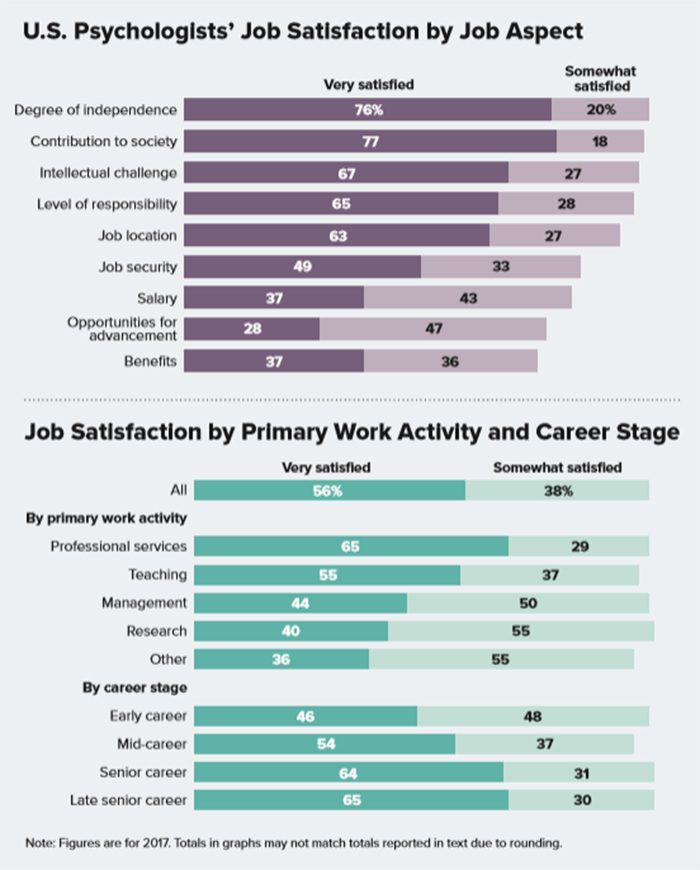
- In 2017, 93 percent of the approximately 187,000 psychologists in the U.S. workforce reported they were “somewhat satisfied” or “very satisfied” with their jobs.1 That percentage is comparable to the satisfaction reported in science and engineering fields overall (92 percent).
- Psychology doctorate and professional degree holders were most likely to report they were “somewhat” or “very satisfied” with their jobs’ degree of independence (96 percent) and contribution to society (95 percent).
- Psychology doctorate and professional degree holders whose primary work activity involved professional services and teaching were most likely to report being “very satisfied” with their jobs (65 percent and 55 percent, respectively).2
- The percentage of psychology doctorate and professional degree holders who were “very satisfied” with their jobs was highest at later career stages.3
For more information, contact APA’s Center for Workforce Studies at cws@apa.org.
1National Science Foundation (NSF), National Center for Science and Engineering Statistics. (2017). National Survey of College Graduates Public Use Microdata File and Codebook. Retrieved from https://ncses.nsf.gov/pubs/nsf22310opens in new window. The use of NSF data does not imply NSF endorsement of the research, research methods or conclusions contained in this report. Respondents were asked to rate their satisfaction (very satisfied, somewhat satisfied, somewhat dissatisfied or very dissatisfied) with the principal job they held (job on which they spent the most hours during a typical work week). Psychologists included those in the workforce whose highest degree is a doctorate or professional degree in psychology.
2Primary work activity refers to the activity in which the individual worked the most hours at the principal job. Professional services includes health-care activities, but may also include other professional services, such as financial services. Other work activity includes computer applications, production and work activities not otherwise specified.
3Career stages were coded into four categories based on years since receiving highest degree: early career (1 to 10 years), mid-career (11 to 20 years), senior career (21 to 30 years) and late senior career (31 or more years).