
Primary colors
Many toddlers can understand color terms as early as 19 months, finds a study in Developmental Psychology. Researchers showed 146 children, ages 1 to 4 years, a screen with pairs of objects in two different colors—for example, a red car and a blue car. Then, the researchers said either “Look, red” or “Look, a red car” and used eye-tracking technology to record which of the two objects the children looked at. At 12 months and 16 months, children looked at both objects at chance levels, but beginning at 19 months they looked at the target-color object at greater-than-chance levels, on average. The researchers also found that the children’s accuracy improved when the color word was used as an adjective (e.g., “Look, a red car”) rather than by itself (“Look, red”). DOI: 10.1037/dev0000609opens in new window
Lucky day

When the sun is shining or your hometown sports team has just won a game, you’re slightly more likely to take risks such as buying a lottery ticket, finds a study in PLOS ONE that examined how population-level variables that affect a city’s mood could change its residents’ risk-taking behaviors. Researchers examined more than 5 million Twitter posts (tweets) from residents of Boston, Chicago, Dallas, Los Angeles, New York and San Francisco from 2012 to 2013. They cross-referenced those data with information about daily weather, sports team win-loss records and state lottery-ticket sales during the same time period. The researchers found that when the sun came out after days of rain and when local sports teams had recently won, a city’s mood was happier (as reflected in tweets) and people spent more money on lottery tickets—up to 2.5 percent more in some neighborhoods. DOI: 10.1371/journal.pone.0206923opens in new window
Seasons of illness
Hospital admittance rates for mental illness vary seasonally, suggests a study in Canadian Psychology/Psychologie canadienne. Using administrative records from the Canadian province of New Brunswick, researchers analyzed 57,730 mental health-related hospital admissions from 41,690 patients between 2004 and 2014. They found that admission rates regularly varied over the course of the year, peaking at the same times each year. The highest rates of admission for children and teenagers were in February; adult admissions peaked in May. DOI: 10.1037/cap0000156opens in new window
Take a (far) seat
Stigma against mental illness is expressed through people’s concrete behaviors as well as their attitudes, finds a study in Stigma and Health. Researchers told 114 U.S. undergraduates that they would be meeting a man with an illness—some were told the man had Type 2 diabetes, while others were told he had schizophrenia. Participants then moved to a room where the man was sitting and were told to sit in any one of several available seats. On average, participants who were told the man had schizophrenia chose to sit farther from him than did participants who were told he had diabetes. The researchers also found that participants who expected to meet someone with schizophrenia had greater self-reported fear and higher appraisals of the man’s dangerousness and unpredictability. DOI: 10.1037/sah0000156opens in new window
International adoptees

Asian children adopted from overseas by non-Asian parents experience more racial discrimination than their parents realize, suggests a study in the Asian American Journal of Psychology. Researchers interviewed 95 teenage adoptees who lived in the Midwest, along with a parent of each teen. Overall, the researchers found that parents underestimated the degree to which the adoptees had experienced racism from schoolmates, acquaintances and family. Parents also overestimated their teenagers’ openness to discussing these racist experiences and the teenagers’ positive attitudes toward activities related to ethnic heritage. DOI: 10.1037/aap0000128opens in new window
Bigger brains are smarter
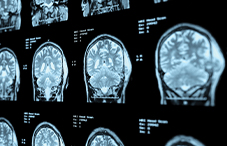
People with physically larger brains are slightly smarter than those with smaller brains, on average, finds a preregistered study in Psychological Science. Researchers analyzed data on brain size (from MRI scans) and cognitive test performance for 13,608 participants in the United Kingdom. Brain size accounted for about 2 percent of the variance in cognitive performance among the participants, the researchers found. Some previous research had suggested a connection between brain size and intelligence, but the new study more systematically controlled for potentially confounding factors, including sex, age, height and socioeconomic status. DOI: 10.1177/0956797618808470opens in new window
Power dynamics
Sexist men underestimate their power in romantic relationships, finds a study in the Journal of Personality and Social Psychology. In four experiments with 1,096 heterosexual men and women (mainly in New Zealand and the United States), participants completed surveys that assessed their sexist attitudes, perceptions of autonomy, aggression, the influence of their partners’ behavior or opinions, and their relationship satisfaction and security.
One experiment included video-recorded conversations with couples about their most serious conflicts. Across all four experiments, men who expressed more hostile and sexist attitudes thought that they had less power in their relationships compared with their partners’ reports of that power. They were also more likely to be aggressive toward their partners, as measured by partner report and in the video-recorded conversations. DOI: 10.1037/pspi0000167opens in new window
Football risk
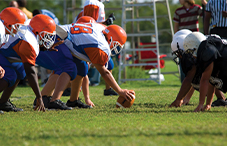
Teenagers who play just one season of high school football show changes in their brains afterward, finds a study in Neurobiology of Disease. Researchers fitted the helmets of 16 football players, ages 15 to 17, with accelerometers to measure head impacts over the season. At the beginning and end of the season, the researchers used a type of MRI called diffusion kurtosis imaging to examine the structure of the gray matter in the players’ brains. They found that the microscopic organization of the gray matter in players’ brains changed by the end of the season, and the changes correlated with the number of impacts and their locations on the players’ heads as measured by the accelerometers. None of the players experienced a concussion, and they did not show any differences on tests of cognitive function before and after the season, but the researchers say more research is needed to understand how these structural changes will affect the players as they get older. DOI: 10.1016/j.nbd.2018.07.020opens in new window
Insect culture
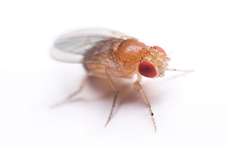
Even the lowly fruit fly has a “culture”: The insects can learn preferences and behaviors from other fruit flies around them and pass those preferences and behaviors on to others, finds a study in Science. In one experiment, the researchers placed observer female fruit flies where they could watch demonstrator flies pick between two males that had been colored either pink or green. Later, the observers chose the same color of mate that the demonstrators had preferred more than 70 percent of the time. In another experiment with groups of flies, the researchers found that these preferences could trickle down to the eighth generation of flies descended from the original observer group. DOI: 10.1126/science.aat1590opens in new window
Appendix linked to Parkinson's disease
People who have had their appendixes removed are nearly 20 percent less likely to develop Parkinson’s disease, finds a study in Science Translational Medicine. Previous research has linked Parkinson’s disease to the gut: The proteins that accumulate in the brain and are associated with symptoms such as tremors and stiffness are also found in the gut and may travel from gut to brain via the vagus nerve. To find out whether the appendix, which extends from the large intestine, might play a role, researchers analyzed the health records of nearly 1.7 million people from a Swedish national health registry. They found that people who had appendectomies at some point in their lives had a 19.3 percent lower chance of developing Parkinson’s disease than those who still had their appendixes. Researchers also analyzed appendix tissue from volunteers without Parkinson’s disease and found protein clumps similar to those found in the brains of Parkinson’s patients. DOI: 10.1126/scitranslmed.aar5280opens in new window
Genetic knowledge
Learning about your genetic propensity toward obesity can change how your body reacts to food and exercise,suggests a study in Nature Human Behaviour. Researchers tested the DNA of 223 people for a gene variant associated with obesity and for another associated with exercise capacity. Afterward, about half the participants ate a meal while researchers measured the level of a fullness-signaling hormone in their bloodstreams; the other half engaged in an exercise test on a treadmill. A week later, the researchers gave the participants either true or false results from the genetic tests. Then, the participants ate the same meal or performed the same exercise task that they had the week before. The genetic information participants received affected how their bodies responded to the tasks: Those who were told they had a gene variant that made them less prone to obesity produced more of the fullness hormone than they had the week before, whether or not they actually possessed that variant. And those who were told they had the lower-exercise-capacity gene variant performed worse on the treadmill task, regardless of whether they actually had that variant. DOI: 10.1038/s41562-018-0483-4opens in new window
Changing gender roles

When young women are primed with the idea that more men are becoming stay-at-home dads, they are more likely to imagine themselves becoming primary breadwinners for their families, finds a study in Personality and Social Psychology Bulletin. Researchers asked 645 single female college students in the United States and Canada to answer questions about their lives 15 years in the future. Before answering, the students saw one of two charts depicting the percentage of stay-at-home parents in the United States who were dads. All students saw accurate numbers (the percentage increased from 4 percent to 12 percent over 25 years), but in one chart the graph was tweaked to make the increase appear steeper and the title was changed to “Rapidly increasing prevalence of stay-at-home dads” from “Low prevalence of stay-at-home dads.” On average, participants who saw the chart suggesting a sharper increase in the number of stay-at-home dads were more likely to see themselves becoming primary breadwinners someday. DOI: 10.1177/0146167218797294opens in new window
Learn to code, learn to think?

Many parents and educators believe that teaching children how to program computers can improve their cognitive skills and school performance. Now, a meta-analysis in the Journal of Educational Psychology supports that claim for some skills but not others. The researchers analyzed 105 studies with 539 total effect sizes. Overall, they found that children who learn to code have improved performance on tasks that require creative thinking, mathematical skills and metacognition and, to a lesser degree, on tasks that require spatial skills and reasoning. But learning computer programming skills affects literacy and overall school achievement the least. DOI: 10.1037/edu0000314opens in new window
Rewarding memories
The human brain is more likely to store memories that are associated with high-reward events, finds a study in Nature Communications. In six experiments with 174 total participants, researchers asked participants to explore a computer maze with hidden gold coins, each worth $1. While navigating the maze, participants also encountered pictures of everyday objects, such as tomatoes and paintbrushes. Immediately after the task and 24 hours later, the researchers gave participants a surprise memory test about those objects. When the test was given 24 hours later, participants were more likely to remember the objects that were closer, in number of steps in the maze, to the gold coins. However, no differences in memory were observed when the test was given immediately after the task. The researchers suggest that this is because when the brain consolidates memories overnight, it prioritizes memories associated with rewards. DOI: 10.1038/s41467-018-07280-0opens in new window
Online therapy

Self-guided internet cognitive-behavioral therapy (iCBT) can help people who have severe depression, according to a meta-analysis in the Journal of Internet Medical Research. Researchers reviewed 21 studies of iCBT for depression, with 4,781 total participants. In addition to examining the outcomes of the studies (whether the treatment worked), they looked at the studies’ entry criteria (which patients were allowed to take part) because they suspected that iCBT studies might be more likely than studies of traditional face-to-face psychotherapy and medication treatments to exclude patients with severe depression. However, they found that iCBT studies were overall no more likely to exclude people with severe depression or other conditions such as substance use disorders or personality disorders. DOI: 10.2196/10113opens in new window
Transmissible Alzheimer's?
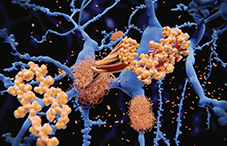
The amyloid proteins that are associated with Alzheimer’s disease may be transmitted from one person to another during some medical procedures, suggests a study in Nature. Researchers examined brain tissue from eight patients who had died in their 30s and 40s of Creutzfeldt-Jakob disease. All of the patients had been treated as children with a human growth hormone derived from the pituitary gland of another person. The researchers found that in addition to the protein that caused the Creutzfeldt-Jakob disease, all of the patients had an unusually large buildup of the Alzheimer’s-related amyloid plaque in their brain tissue. The researchers then tested the decades-old preserved growth hormone the patients had been given and found that it contained the amyloid protein. They injected samples of the hormone into mice and observed that it caused amyloid plaque buildup in the mice’s brains. The growth hormone used today is derived synthetically, but the researchers say that the study points to the need for more research on whether other surgeries and medical procedures could possibly transmit Alzheimer’s-related proteins. DOI: 10.1038/s41586-018-0790-yopens in new window
Antipsychotics in children
Children and youth who do not have psychotic symptoms but are prescribed high doses of antipsychotic medication for attention-deficit/hyperactivity disorder, depression and other conditions are at increased risk of death in ensuing years, according to a study published in JAMA Psychiatry. Researchers examined the medical records of nearly 250,000 children, adolescents and young adults, ages 5 to 24, enrolled in Medicaid in Tennessee between 1999 and 2014. They compared those who were prescribed antipsychotic medications at higher doses with those prescribed them at lower doses, as well as with a control group prescribed medications other than antipsychotics. On average, those prescribed high doses of antipsychotics had a 3.5 times greater risk of death over the course of the study compared with those prescribed other medications. According to the researchers, these results highlight the need for careful prescribing and monitoring of antipsychotic medications in young patients, and for further studies of the safety of these medications for children and youths. DOI: 10.1001/jamapsychiatry.2018.3421opens in new window
Tired and irritable

Losing just a couple of hours of sleep makes people more likely to react angrily to frustrating situations, finds a study in the Journal of Experimental Psychology: General. Researchers asked 142 people in the United States, ages 18 to 79, either to maintain their normal sleep routine for two days or to sleep two to four fewer hours than usual each night. Then, participants came into the lab to rate different products while listening to an annoying noise. On average, sleep-deprived participants reported more anger during the task than normal-sleep participants. Also, while normal-sleep participants reported becoming accustomed to the noise and less angry over time, sleep-deprived participants reported increasing levels of anger over time. The results indicate that sleep deprivation may cause angry responses rather than reduce them because of fatigue. DOI: 10.1037/xge0000522opens in new window
Break the cycle

Having an abusive boss does not mean that one is destined to someday abuse one’s own employees, finds a study in the Journal of Applied Psychology. Instead, some managers learn from bad experiences to become better bosses themselves. In two online experiments with more than 700 participants, and in a field study with 500 employees and bosses in various industries in India, the researchers explored how people reacted to bad bosses in both hypothetical and real-life situations. They found that people who had abusive managers but purposefully disidentified from them and distanced themselves from the abusive behavior, demonstrated more ethical behavior as leaders themselves and treated their own employees more respectfully. DOI: 10.1037/apl0000360opens in new window