Overview
CE credits: 1
Learning objectives: After reading this article, CE candidates will be able to:
- Discuss the key findings of APA’s new clinical practice guideline for treating obesity and overweight in children.
- Describe the research that is still needed in the area.
- Discuss the work that still needs to be done to change unhealthy environments, including schools and communities.
For more information on earning CE credit for this article, go to www.apa.org/ed/ce/resources/ce-corner.
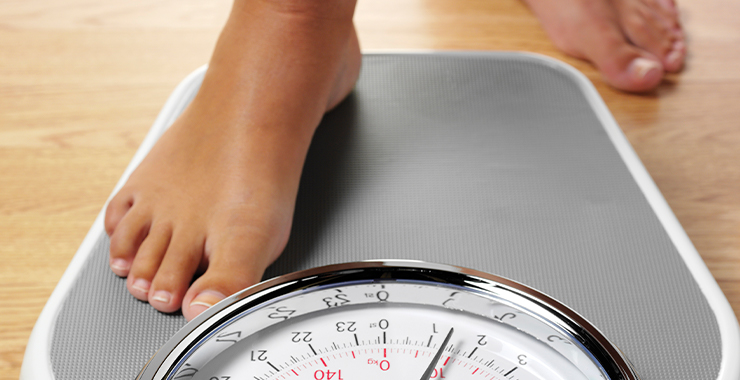
The rate of child obesity in the United States has been triggering alarm bells for years. Nearly one in five children had obesity in 2015–16, according to the most recent data from the National Health and Nutrition Examination Survey (NHANES). The rate of child obesity, defined as having a body mass index (BMI) equal to or greater than the 95th percentile for children and teens of the same age and sex, has more than tripled since the 1976–1980 NHANES. Among teens, the rate quadrupled, from 5 percent to more than 20 percent.
Even more alarming: “What the rates alone don’t show is that more children today have severe obesity,” says Denise Wilfley, PhD, a psychologist at Washington University in St. Louis who studies the causes, prevention and treatment of eating disorders and obesity. Children are considered to have severe obesity when their BMIs are greater than the 99th percentile for their age and sex. And the consequences of severe obesity are significant.
Those kids are at increased risk of a host of chronic health problems, including asthma, sleep apnea and Type 2 diabetes.
Children with overweight are also more likely to become adults with obesity, at greater risk of heart disease and many types of cancer. And obesity’s toll isn’t merely physical. People with obesity face significant stigma and bias throughout their lives. Children with obesity are more likely to suffer from depression, social isolation and low self-esteem, and are bullied more often than their peers.
The more we learn about obesity, the more complex we realize it is. Behind the number on the scale is a complicated equation that involves genetics, behavior, and powerful social and environmental forces. “You have an individual who has genetic vulnerabilities to obesity, and they’re living in a country where everything is set up to work against them,” Wilfley says. To turn the corner on child obesity, we’ll need to take action at many levels, including intervening in schools, implementing policies to create healthier communities and improving access to treatments at the individual level.
“As experts in behavior change, psychologists have a big part to play in designing, testing and delivering obesity treatments,” says Hollie Raynor, PhD, RD, LDN, a clinical psychologist and professor of public health nutrition who studies child obesity interventions at the University of Tennessee, Knoxville. “We need people who are strongly trained in behavior-change principles and who understand how to engage in parent skills training,” she says. “The field of psychology is critically important for delivering these interventions and doing research to move the field forward.”
Family first
Both Wilfley and Raynor were among a panel of obesity experts who developed a new APA clinical practice guideline to provide recommendations on treatment of overweight and obesity in children and adolescents ( Clinical Practice Guideline for Multicomponent Behavioral Treatment of Obesity and Overweight in Children and Adolescents opens in new window , March 2018.)
After reviewing the literature, the guideline panel found evidence to strongly recommend family-based multicomponent behavioral interventions to treat obesity in children ages 2 to 18 years old. Rather than focusing solely on the children with obesity, these treatments encourage the entire family to engage in healthier behaviors—improving diet, increasing physical activity and reducing sedentary behavior. The interventions also draw heavily from the science of behavior change, teaching parents strategies for goal-setting, problem-solving, monitoring children’s behaviors and modeling positive parental behaviors. These skills are typically taught both in family sessions with children and their caregivers attending together, and in individual sessions designed for children or for adult family members to attend alone.
Family-based behavioral treatments for pediatric obesity have been around for more than three decades, and were originally developed by psychologist Leonard Epstein, PhD, a leading pediatric obesity expert at the University at Buffalo’s Jacobs School of Medicine and Biomedical Sciences. These programs work, and researchers are finding new ways to make them even more effective.
In one recent example, Epstein, Wilfley and colleagues conducted a multisite, randomized controlled trial to study whether adding a social intervention to family-based behavioral treatment could improve long-term outcomes for 7- to 11-year-old children with obesity. All of the participants completed a four-month family-based weight-loss program. Then two groups of the families participated in a social facilitation maintenance (SFM) program, in which they developed strategies to enlist social supports and to maintain healthier habits in social contexts such as at school, when dining out at restaurants and while hanging out with friends. One group participated in 32 sessions of SFM, while the other attended 16 sessions of SFM. A control group received additional information on diet and exercise, without social facilitation training or skills instruction.
Twelve months later, 64 percent of the children in the 16-session SFM program had reached clinically meaningful weight-loss targets. In the 32-session group, 82 percent of kids achieved that goal. Just 48 percent of the children in the control group had reached the weight-loss targets a year later ( JAMA Pediatrics opens in new window , Vol. 171, No. 12, 2017).
It can be tough for families to stick with such intensive programs, but there is no quick fix for changing lifestyle habits that are often deeply ingrained. APA’s clinical practice guideline recommends a minimum of 26 contact hours for family-based behavioral weight management interventions. Unfortunately, such programs can be costly. Insurance coverage varies from state to state, but in many places, pediatric obesity treatments are not covered, either by Medicaid or private insurance. Even when the programs are covered, they may not be widely accessible. Many are offered in specialty clinics, which are often affiliated with academic medical centers or children’s hospitals.
For many children with obesity and their families, the cost, geography and time investments are barriers to getting help. “The biggest problem with these intensive interventions is that many health-care settings aren’t set up to deliver them, both in terms of insurance coverage or in the amount of contact required with providers,” Raynor says.
So, researchers are working to translate these programs to be delivered in more settings to reach more children. Epstein and colleagues adapted a family-based behavioral treatment for children and parents with obesity that could be delivered in primary care offices. Parents attended 12 months of group sessions with other families at the pediatrician’s office. Trained health coaches led the sessions and counseled families by phone in between. One group received family-based therapy in the group sessions, which included detailed advice on nutrition and physical activity for both parents and children. Those participants also received training in behavior modification and parenting skills. A control group received diet and exercise education that focused on the children alone and did not include self-monitoring or parent skills training.
Twelve months after the intervention ended, children in the family-based therapy group had lost weight, on average, while those in the lifestyle education group had gained weight. The researchers did an economic analysis and concluded the family therapy program was not only beneficial for children, but also a cost-effective way to provide treatment outside of specialty clinics ( Pediatrics opens in new window , Vol. 140, No. 2, 2017).
It’s a good start, but there are still a lot of children who are not receiving treatments that could set them on a course toward a healthier adulthood. “We need to find a way to change health-care policy,” Wilfley says, so that more behavioral treatments are recognized for their effectiveness, covered by insurance and made available to families.
Research gaps
Meanwhile, there’s always more work to be done. Most research on family-based interventions has focused on school-age children—an age when parents can still significantly influence habits around diet and physical activity. But when those kids become teens, their parents have a lot less control over their children’s choices. Obesity researchers still need to clarify how—and how much—parents should be involved in treating adolescents, says Melanie Bean, PhD, a clinical psychologist who studies pediatric obesity treatment and school food policy and co-directs the Healthy Lifestyles Center at the Children’s Hospital of Richmond at Virginia Commonwealth University. “We’ve grown a lot in understanding younger kids, and that’s appropriate because early intervention is so important,” she says. “But adolescence is the last opportunity for family-based care before they’re launched into early adulthood.”
There’s also a need to better understand how to treat children from specific racial or ethnic populations. While 18.5 percent of U.S. children overall have obesity, 22 percent of black children and 25.8 percent of Latino children fit that category. “Often, those families have a lower socioeconomic status [SES], and that component alone can impede a family’s ability to engage in these very high-intensity contact programs,” Raynor says.
But there are efforts to domore research with these groups. To better reach children from lower-SES populations, in 2018 the Centers for Disease Control and Prevention offered fundingopens in new window for researchers to package and disseminate proven pediatric weight-management interventions that can be used by health-care, community and public health organizations to serve low-income children and their families.
Making schools healthier
As some psychologists and their colleagues in medicine, nutrition and public health continue to fine-tune treatments for children and their families, others are setting their sights on changing the world around them. Individual treatment is important, says Wendy Ward, PhD, ABPP, a psychologist at the University of Arkansas for Medical Sciences who studies pediatric obesity prevention and treatment. “But there are just so many environmental factors a treatment program can’t control.”
School is a logical place to take on those factors. Some 31 million children a day eat school lunches, so changes in the lunchroom can have wide-ranging effects. Passed by Congress in 2010, the Healthy, Hunger-Free Kids Actopens in new window championed by Michelle Obama made notable changes to the federal school meal program. The act set nutritional standards for all foods sold in schools, including lunches as well as snacks and drinks from vending machines, school stores and à la carte lunch lines.
“While the old standards only set calorie minimums for school meals, the new regulations also set calorie limits,” says Marlene Schwartz, PhD, a research psychologist and director of the Rudd Center for Food Policy and Obesity at the University of Connecticut.
Many states had taken steps to remove sodas and other unhealthy foods from schools, but the 2010 law made sure children in every state have access to healthier options, she says. “Before, the focus was on making sure there was enough food. Now there is a greater focus on the nutritional quality and variety of that food, such as offering a variety of fruits and vegetables each week and increasing whole grains.”
Some school districts in low-income communities have also expanded their meal programs to provide free breakfasts and lunches to all students. According to an analysis by NHANES epidemiologist Cynthia Ogden, PhD, and colleagues, obesity is significantly associated with food insecurity in children ages 6 to 11, though not in younger children ( Journal of the Academy of Nutrition and Dietetics opens in new window , Vol. 115, No. 5, 2015). “[Dietary] patterns and fullness cues are established early, and children with food insecurity might be more likely to overeat when food is available,” Bean explains. “Having consistent access to healthy meals can make a real difference for maintaining a healthy weight.”

As schools take action, there’s a lot of opportunity for research psychologists to discover how students make choices about what foods to put on their plates, and how to make nutritious options more appealing. Bean, for instance, is currently studying how the introduction of salad bars affects eating patterns among children in low-income school districts, and what factors encourage the kids to actually take a bite of the unfamiliar produce they may put on their plates. “We need to understand what the messages should be in schools to help foster the selection and consumption of healthier food,” she says.
Meanwhile, Schwartz says, health advocates must keep pressing the food industry to stop marketing sugary cereals, soda and other unhealthy foods to kids. “We feel strongly that we have to change the environment,” she says. “It’s not fair to put all the pressure on families to fight this themselves.”
Battling obesity stigma
The unhealthy environment we live in is also a contradictory one. While there are countless cues to overeat and sit around staring at screens, there are also significant stigma and bias around obesity.
“The public health crisis is not only in terms of the medical concerns [associated with obesity], but also the emotional and psychological impact on families,” Bean says. “In health-care settings, and even within obesity treatment programs, weight bias is powerful. As psychologists, we can be real leaders in training other health-care providers to talk appropriately to families about obesity, and to help take away the stigma and overemphasis on personal responsibility.”
Child obesity is an issue that all psychologists should be aware of, whether or not they work in a specialty treatment center, Ward adds. “To the extent that obesity is correlated with depression, anxiety, low quality of life, poor physical functioning and social withdrawal, it’s relevant to psychologists across settings.”