Math, science and gender equality
In countries where more women work in science, math, engineering and technology-related jobs, girls are more likely to believe in their own math abilities, finds a study in the Journal of Educational Psychology. Previous research has found that, on average, girls perform as well as boys do in math but that they score lower in "math self-concept"—the belief that they are good at math. In this study, researchers looked at data from an international education survey of more than 120,000 15-year-old students from 23 countries. They then compared those data with UNESCO data on women’s representation in the workforce in those countries. They found, on average, that in countries with more gender diversity in the STEM workforce, girls scored higher on a measure of math self-concept. DOI: 10.1037/edu0000340opens in new window

Small teams, big ideas
Small teams of scientists are more likely to produce new concepts and discoveries than larger teams are, while larger teams more often build on existing ideas, finds an analysis of more than six decades of science, published in Nature. Researchers analyzed 65 million papers, patents and software products produced between 1954 and 2014, using a metric that measured whether and how the research built on previous work. Overall, they found that teams of 10 people or fewer were more likely to produce new and "disruptive" ideas, while larger teams were more likely to expand upon existing ideas and approaches. Both types of work are important for advancing science and technology, the researchers say. DOI: 10.1038/s41586-019-0941-9opens in new window

Birth weight linked to mental health
Children born small for their gestational age are at slightly increased risk for mental health disorders later in life, finds a study in JAMA Psychiatry. Researchers analyzed birth and medical records from a Swedish registry of more than 500,000 pairs of siblings born between 1973 and 1998. As virtually all sibling pairs shared the same biological parents and grew up in the same household, genetic and environmental influences were controlled for. In within-sibling comparisons, individuals born at a lower birth weight were on average more likely to go on to develop depression, autism, attention-deficit/hyperactivity disorder and obsessive-compulsive disorder. DOI: 10.1001/jamapsychiatry.2018.4342opens in new window
Corporate morality
If you want to convince your employer to address a social issue—such as improving energy efficiency or expanding health care—then you may get further by appealing to your boss’s moral compass rather than the bottom line, suggests a study in the Journal of Applied Psychology. In several field surveys, researchers asked more than 500 employees and employers to recall times when employees advocated for social change, and the successes or failures of those requests. Employees had more success when they framed their requests in moral terms rather than explaining how they would save the company money, the researchers found. Employees were most successful when they explained how the moral argument aligned with the company’s own professed values. In contrast, in one lab experiment, when the researchers asked people to imagine themselves to be bosses and rate the persuasiveness of an employee request, participants reacted best to economic arguments. The researchers suggest that in responding to hypothetical situations, people call on assumptions about how bosses should make decisions rather than how they actually do. DOI: 10.1037/apl0000388opens in new window

Take the cake
When diners choose an indulgent dessert at the beginning of a meal, they’re more likely to make healthier choices for the rest of the meal, finds a study in the Journal of Experimental Psychology: Applied. Researchers observed 134 patrons (faculty, staff and graduate students) at a university cafeteria in Mexico as the diners chose their meal from a buffet line. Dessert choices were offered at the beginning of the line—either cheesecake or fresh fruit. Later in the line, there were healthier (fajitas) and less healthy (fried fish and french fries) main dish options. People who chose the cheesecake for dessert ended up consuming 30 percent fewer total calories on average than those who chose the fresh fruit, even though the total included the calories in the dessert itself. DOI: 10.1037/xap0000210opens in new window
Friends like me
Young children prefer friends who talk with the same local accent that they do, finds research in Developmental Psychology. In three experiments, researchers asked nearly 150 5- and 6-year-olds in Toronto to look at photos of two other children and listen to recordings of those children speaking. One child from each pair spoke with the local Canadian accent; the other spoke with either a British or Korean accent. Because Toronto is a multiethnic city, most of the participants reported that they had some contact with non-native English speakers (family, day-care providers, friends) who spoke accented English. Nonetheless, when asked which of the children in the photos they’d like to be friends with, more children chose the one with the familiar Canadian accent. The effect was stronger when comparing the Canadian and Korean accents than when comparing the Canadian and British accents. DOI: 10.1037/dev0000659opens in new window

Girls' pain
Adults take young girls’ pain less seriously than boys’ pain, finds a study in the Journal of Pediatric Psychology. Researchers asked more than 500 online participants to watch a video of a 5-year-old child with a gender-neutral appearance reacting to a finger stick. Half the participants were told the child was a boy ("Samuel"), and half were told the child was a girl ("Samantha"). When asked how much pain they thought the child was experiencing, participants who believed "he" was a boy rated the pain significantly higher than those who believed "she" was a girl—and women were more likely to underestimate girls’ pain than men were. The researchers suggest the effect may be driven by the stereotype that boys are stoic, and girls are more emotional. DOI: 10.1093/jpepsy/jsy104opens in new window
Using e-cigs to quite smoking
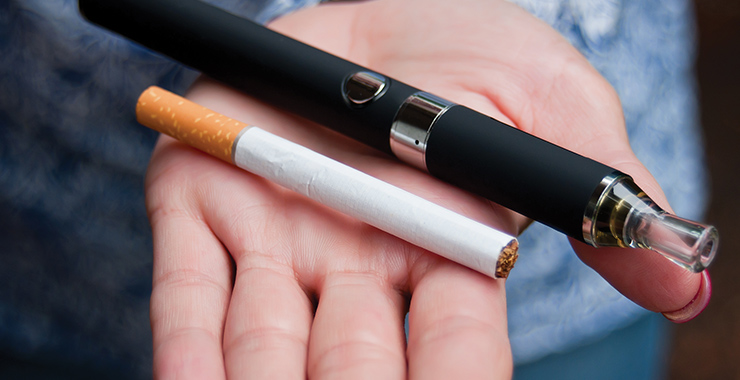
E-cigarettes are nearly twice as effective as traditional nicotine-replacement therapies at helping smokers to curb cravings and quit smoking, finds a study in the New England Journal of Medicine. Researchers assigned 886 British adult smokers—all of whom wanted to quit—to two groups: One received up to three months of their choice of nicotine replacement therapy (patches, gum, lozenges, etc.), while the other group received a starter pack of e-cigarettes. Participants in both groups also received at least four weeks of counseling. After one year, 18 percent of the e-cigarette group remained abstinent from cigarettes, compared with 9.9 percent of the nicotine-replacement group. DOI: 10.1056/NEJMoa1808779opens in new window
Detecting consciousness signals
A complex pattern of brain activity that is detectable by fMRI underlies human consciousness, suggests a study in Science Advances. Researchers used fMRI to scan the brains of 125 people—47 healthy controls, and 78 either with unresponsive wakefulness syndrome (a vegetative state) or in a minimally conscious state (they could follow simple instructions such as moving their eyes). The researchers also scanned 23 healthy participants under anesthesia. In conscious participants, the researchers identified a complex pattern of brain activity indicating communication among distant parts of the brain. That pattern did not show up in the nonconscious participants (healthy participants under anesthesia and patients in a vegetative state) but did appear to a lesser degree in minimally conscious patients. The researchers suggest the finding could offer a new method to define and detect human consciousness. DOI: 10.1126/sciadv.aat7603opens in new window

Facebook, Snapchat and depression
Frequent social media use does not cause depression in teens, suggests a study in Clinical Psychological Science. Some previous research has found an association between the two, but that research has generally been cross-sectional rather than longitudinal, so it did not address causation. In this study, conducted in Canada, researchers followed 594 middle-school students for two years beginning in sixth grade, and 1,132 undergraduate students for six years beginning in their first year of college. The researchers found that participants’ social media use at the study’s outset did not predict later depressive symptoms among either the young teens or the college undergraduates. Depressive symptoms at the beginning of the study, however, did predict more social media use later, but only among the middle-school-age girls. DOI: 10.1177/2167702618812727opens in new window
Dark secrets
People dwell on shameful secrets more than they do on guilty ones, finds a study in Emotion. In a series of experiments, researchers asked 1,000 online participants—both men and women—to fill out surveys about the secrets they were keeping, how they felt about those secrets and how often they thought about them. Overall, when people were keeping secrets that evoked feelings of shame (such as "I am a worthless person"), the secrets were more likely to intrude upon their thoughts at irrelevant times than when they were keeping secrets that evoked feelings of guilt ("I feel remorse about something I’ve done"). DOI: 10.1037/emo0000542opens in new window
Sensing depression through motion
A machine learning system that analyzes data about body movements gathered by a wearable sensor can identify anxiety and depression in children in less than two minutes, according to research in PLOS ONE. Researchers tested 63 children, ages 3 to 7, 42 of whom were controls and 21 of whom had been diagnosed with anxiety or depression. Children wore the sensor on belts during a 90-second "mood induction" task. First, they were brought into a dimly lit room with a terrarium covered in a blanket and told, "Let’s be quiet so it doesn’t wake up." Then, the experimenter pulled up the blanket to reveal a fake snake. Finally, the experimenter reassured the child that the snake was fake and encouraged him or her to play with it. Using statistical analyses of the direction and timing of the children’s movements, the machine learning system was able to distinguish the children with anxiety or depression from the controls with 81 percent accuracy. In particular, those with anxiety and depression were more likely to turn away from the terrarium when they had come close to it and it was still covered by the blanket. DOI: 10.1371/journal.pone.0210267opens in new window

"Aha!" moments
In fields as disparate as writing and physics, people come up with their most creative ideas and solve their thorniest problems when they let their minds wander off-topic, according to a study in Psychological Science. Researchers asked 185 professional writers and physicists to report on their most creative idea of the day, the quality of the idea, and what they were thinking about and doing when it occurred. The researchers found that about one-fifth of the ideas came while participants’ minds were wandering—they were engaging in an activity other than working and were thinking about something else when the idea popped up. Also, ideas that arose during mind wandering were more likely to be experienced by participants as "aha" moments, associated with overcoming a problem, than were ideas that arose while they were working on the problem. DOI: 10.1177/0956797618820626opens in new window

Sibling bullying
Children from larger families are more likely to be bullied by their siblings, according to a study in Developmental Psychology. Researchers followed 6,838 British children born in 1991 or 1992. At ages 5, 7 and 12, the researchers asked the children and their mothers about the family’s sibling relationships, as well as other demographic data. About 28 percent of the children in the study were involved in either verbal or physical sibling bullying, the researchers found, with psychological abuse (saying nasty or hurtful things) the most common form. The majority of these children were "bully victims," meaning they both bullied and were bullied by siblings. Bullying was more common in families with three or more children, and firstborn children and older brothers were most likely to be perpetrators. DOI: 10.1037/dev0000700opens in new window
Distractable boys
Boys who don’t pay attention in kindergarten earn less money as adults, suggests a study in JAMA Pediatrics. Researchers followed 920 boys in low-income neighborhoods in Montreal beginning in 1984 when the boys were 5 and 6 years old and continuing through 2015. Boys whose teachers rated them as more inattentive or distractable in kindergarten had lower earnings at ages 35 to 36. In contrast, boys whose teachers noted their prosocial behavior (for instance, helping a hurt classmate or including others in games) earned more money as adults. The findings held even after accounting for the boys’ IQs and childhood socioeconomic status. Hyperactivity and aggression in kindergarten, meanwhile, were not associated with earnings in adulthood. DOI: 10.1001/jamapediatrics.2018.5375opens in new window

Perfect pitch
People with absolute pitch, also called "perfect pitch," have a larger auditory cortex than people without it, finds a study in the Journal of Neuroscience. Absolute pitch is the rare ability to identify a musical note heard in isolation, something even most professional musicians cannot do. Researchers tested 61 people—20 musicians with absolute pitch, 20 musicians without it, and 21 controls with no musical training. They used fMRI to image participants’ brains as the participants listened to a range of notes, and found that musicians with absolute pitch had a larger auditory cortex compared to the other two groups. They also found that each subarea of the cortex responded to a wider range of tones in musicians with absolute pitch than in the other groups. The results suggest that individuals with absolute pitch may encode sounds differently in the brain, and not just have a better memory for tones, according to the researchers. DOI: 10.1523/JNEUROSCI.1532-18.2019opens in new window
Lying for money
Offering participants money to take part in research studies may motivate them to lie about their eligibility, no matter how small the payment, finds a study in JAMA Network Open. Researchers offered 2,275 online participants varying amounts of money to complete a one-minute survey on vaccine attitudes. In a control group, everyone was eligible to participate, but in the experimental groups participants’ eligibility depended on whether they had recently received a flu shot. If no one lied, participants in each group should have reported roughly the same vaccination rates. Instead, 52.2 percent of people in the control group reported receiving a recent flu shot compared with 62 to 63 percent in the experimental groups. The amount of payment offered didn’t have a significant effect—63.1 percent of people offered $5 said they’d had a flu shot compared with 62.8 percent of people offered $10 and 62.1 percent of people offered $20. DOI: 10.1001/jamanetworkopen.2018.7355opens in new window

Hearing loss
Older adults with hearing loss are more likely to experience cognitive decline over time, but education may provide some protection against that decline, finds a study in the Journals of Gerontology: Series A. Researchers followed 1,164 participants (average age 73.5) for up to 24 years beginning in 1992. At the beginning of the study about half the participants had mild hearing loss and 16.8 percent had moderate or severe hearing loss. The researchers also gave the participants two common cognitive assessment tests and followed up with those same tests approximately every four years for the next 24 years. Overall, hearing impairment was associated with a greater decline in test performance over time. However, among participants with just mild hearing impairment, that decline was less steep for people with a college education than for people without one. DOI: 10.1093/gerona/glz035opens in new window
Rockabye baby (and grown-up)
Gentle rocking isn’t only good for babies’ sleep—it can help adults sleep more soundly too, according to a study in Current Biology. Researchers asked 18 young adults to sleep for three nights in a lab. The first night was to get accustomed to the lab. Then, the researchers monitored participants’ brains’ electrical activity for two more nights—one night on a motionless bed and one night on a gently rocking one. Overall, participants fell into a deep (non-REM) sleep more quickly, stayed in deep sleep longer and woke up less frequently on the rocking bed. Also, on the morning after they slept on the rocking bed, the participants showed better memory for word pairs they had seen the previous night. Patterns of brain electrical activity reflected these behavioral effects of the rocking bed. DOI: 10.1016/j.cub.2018.12.028opens in new window
A yawning gap
People may react to social cues differently in virtual reality (VR) than they do in real life, finds a study in Scientific Reports. Previous research has shown that yawns are contagious—seeing someone else yawn often causes people to yawn themselves. However, "social presence" can deter this: When people believe they are being watched, they are less likely to catch a yawn. In a series of five experiments with more than 100 Canadian undergraduate participants, researchers tested these effects in a VR system. They found that watching a virtual avatar yawn caused people to yawn 38 percent of the time—a finding in line with results from studies using real people. However, when another virtual avatar "watched" the participant, it didn’t prompt the social inhibition effect—participants yawned at a similar rate as when there was no other avatar watching. The results suggest that scientists should use caution when extrapolating results from VR studies to real-life situations, the researchers conclude. DOI: 10.1038/s41598-018-36570-2opens in new window