On an average day in the United States, 130 people die from an overdose of opioids, including prescription pain medications, heroin and synthetic opioids such as fentanyl. "The numbers are staggering," says R. Kathryn McHugh, PhD, a psychologist who studies substance use at Harvard Medical School and McLean Hospital. "Opioids touch pretty much every part of society, and the scope of the problem requires an all-hands-on-deck approach from the health-care field."
Yet many health-care providers, including psychologists and other mental health professionals, don't realize the role they could play in addressing the epidemic, says Kathleen Carroll, PhD, a psychologist and principal investigator at the Center for Psychotherapy Development at Yale University School of Medicine, a National Institute on Drug Abuse (NIDA)-funded center devoted to studying behavioral therapies for addiction. "A lot of people don't believe opioid use disorder is treatable, and it clearly is."
Researchers are still determining how best to design and offer behavioral treatments for people with opioid use disorder, and there's a lot of room for psychologists to contribute to that research. In the meantime, clinical psychologists can get involved by educating themselves and their patients about opioid use disorder, supporting family members of those who are struggling with the disorder and getting comfortable asking patients about their drug use. (See "How You Can Make a Difference" on page 39.) "It's rare that there's a family in the United States that isn't touched in some way by the opioid crisis," Carroll says. "We must pay attention."
The current treatment landscape
A 2015 report in Forbes magazine valued the drug treatment industry at $35 billion. As the opioid crisis has grown, so have inpatient treatment facilities for opioid use disorder. But critics note that there are no federal standards for drug rehabilitation programs, and little regulatory oversight. The quality of care in those treatment programs varies widely. In some cases, patients are released after detoxification without ongoing care—putting them at increased risk of relapse and overdose. "The worst thing that can happen is for people to get detoxed and then released without medication. It's heartbreaking," Carroll says.
Indeed, the medication Carroll refers to is the backbone of treatment: methadone, buprenorphine and naltrexone. Those medications are prescribed to block the effects of other opioids and prevent cravings and withdrawal symptoms.
"There is strong evidence that these medications save lives, and that they're effective across different ages, genders, ethnicities and social classes," says Carroll.
But 80 percent of people in the United States who need them don't get them, says Carroll, pointing to a new National Academies of Sciences, Engineering and Medicine report that she helped to write.
The report identifies several factors keeping these drugs from more widespread use, including inadequate training for professionals who work with people who use substances, the fragmentation of health care that often leaves people without the means to pay for treatment, and the misconception that substance use is a moral or purely behavioral problem.
"People totally misunderstand the nature of addiction, let alone its treatment," says Alan Leshner, PhD, a psychologist and former director of NIDA, who chaired the committee that authored the report. "None of the barriers are new. It's just that we haven't made any real progress against them." (To read the full report, go to www.nationalacademies.org/OUDtreatmentopens in new window.)
Regulations also impair access. Buprenorphine is a controlled substance, and physicians must complete extra training and receive a waiver from the Drug Enforcement Administration to prescribe it. Methadone, also a controlled substance, is available only through specially licensed clinics. While naltrexone can be prescribed by any physician, patients must complete a full detoxification before they can begin using it. On top of the prescribing difficulties, there's a lack of knowledge—among physicians, insurers and society at large—about using medications for substance use disorders, as well as a stigma attached to their use, McHugh says.
A study by Ramin Mojtabai, MD, of Johns Hopkins University, and colleagues found that just 36 percent of U.S. treatment centers offered at least one of the medications approved to treat opioid use disorder, and a mere 6 percent provided all three (Health Affairsopens in new window, Vol. 38, No. 1, 2019).
Of course, medication is just one component of treatment. Often, treatment programs combine prescription medications with counseling or other behavioral therapies. But the quality of behavioral treatments varies considerably, says Tom Horvath, PhD, ABPP, a clinical psychologist in San Diego who specializes in addiction treatment and recovery. "In some states, you can get a drug counseling certificate without a college degree," he says. "Unfortunately, psychologists are highly underutilized in addiction treatment."
One big reason: The health-care system is designed around fee-for-service, and reimbursement is an issue. Drug treatment programs often can't afford (or aren't willing to pay) psychologists or other professionals such as licensed social workers, he says. "The whole system would benefit from more psychologists, but it's hard for them to work their way into the existing system."
Behavioral therapies for opioid use disorder
That's a missed opportunity, experts argue, since evidence-based behavioral treatments used in concert with medication have the potential to make a real difference in long-term recovery. "Substance use is not just about biology. When someone comes into treatment for opioid use disorder, there's a lot of history that predates that, and a lot of things that happened when they were engaged in drug use," says Sharon Walsh, PhD, a professor of behavioral science at the University of Kentucky College of Medicine who studies opioid use disorder and its treatment. "It's critical for people to also have behavioral interventions as needed. You need to treat the whole person to get them well."
While medications can help reduce cravings and decrease overdose risk, they do not reduce people's reactivity to stress, for example. And they don't address comorbid conditions that often go hand-in-hand with opioid use disorder, such as anxiety, depression, post-traumatic stress disorder and chronic pain—all of which can lead people to relapse back into addiction despite medication. "We need to think about how we target everything that's left over after treatment with medication," McHugh says.
In a review of research on behavioral interventions with buprenorphine treatment, Carroll and Roger Weiss, MD, recommend a stepped-care model for buprenorphine treatment that focuses on what they describe as the "Five A's" of successful treatment: adherence to medication, abstinence from illicit drugs, attendance at treatment appointments, alternative activities to drug use and accessing support. For patients who struggle with those efforts, Carroll and Weiss recommend more intensive behavioral interventions (American Journal of Psychiatryopens in new window, Vol. 174, No. 8, 2017).
One behavioral strategy supported by some of the strongest data so far is contingency management. "One of the difficulties of substance use is that the benefits come immediately, but the costs come after a time lag," McHugh notes. If someone uses opioids today, they satisfy a craving and prevent withdrawal symptoms. The costs—losing a job, alienating family—exist in a hazy, far-off future. Contingency management aims to flip the script.
"Contingency management moves the reinforcer for abstinence closer to the behavior," McHugh explains. When a person provides an opioid-free urine test, attends scheduled therapy sessions or meets other behavioral goals, he or she receives a reward: a raffle ticket for an inexpensive prize, easing of behavioral restrictions (such as extending curfew for an adolescent being treated for opioid misuse) or a social reward (such as a special dinner).
In one review of the use of contingency management for treating various substance use disorders, Stephen Higgins, PhD, of the University of Vermont, and colleagues found that such programs are effective during treatment, though their effects weaken after treatment ends (Preventive Medicineopens in new window, Vol. 92, No. 1, 2016).
Improving retention rates in treatment programs may be one of the most important targets for behavioral interventions. About half of people drop out of medication treatments by the six-month mark, putting them at increased risk of relapse and overdose. "Behavioral treatments could play a role in bringing up that response rate, and that's a goal a lot of us are working toward," McHugh says.
Cognitive-behavioral treatments
To bring more evidence-based treatment to people with opioid use disorder, Carroll and her colleagues developed a computer-based training for cognitive-behavioral therapy (CBT4CBTopens in new window). The self-guided web-based program teaches coping skills and is intended to be used as one piece of a comprehensive treatment program for people with alcohol and substance use disorders who are under the care of a qualified psychologist, physician or other trained health professional.
Several clinical trials have found that CBT4CBT is effective for a variety of substance use disorders. In a 12-week randomized pilot study of the program tailored to patients receiving buprenorphine, 91 percent of patients in the CBT4CBT group had negative urine screens for opioids at the end of the trial, compared with only 64 percent of the control group (Substance Abuseopens in new window, online, 2019).
The program is now being used for alcohol and substance use disorders in 25 states and Canada but is available only through health-care providers, including psychologists and psychiatrists as well as primary care physicians. "We want to make sure there's a clinician who can assess the individual and make sure the level of care is appropriate," Carroll says.
Horvath has also taken steps to reach more people with substance use disorder, using a mutual aid group model. Some 12-step programs, such as Narcotics Anonymous, promote total abstinence and may not welcome people taking medications for opioid use disorder, he says. To offer a more inclusive alternative, Horvath was a founding member in 1994 of Self-Management and Recovery Training (SMART Recovery), which now offers more than 2,500 local meetings worldwide for people with alcohol and substance use disorders. The evidence-based program is centered on CBT and motivational interviewing, and often addresses co-occurring problems such as depression and trauma (Journal of Groups in Addiction and Recoveryopens in new window, Vol. 7, No. 2–4, 2012). Importantly, he adds, it can be personalized to meet the needs of each participant.
Investing in treatment research
Researchers—including many psychologists—are developing new treatments to help more people recover from opioid use disorder. The National Institutes of Health's Helping to End Addiction Long-termopens in new window (HEAL) initiative was launched in the spring of 2018 to address the opioid public health crisis. To date, much of the research funded through HEAL focuses on pharmacology, including efforts to develop vaccines to prevent opioid use disorder, medications to treat it and new, safer drugs to treat pain. But the initiative is supporting some behavioral studies as well, including projects aimed at identifying patient characteristics associated with retention in treatment programs and efforts to explore cultural attitudes that can create barriers to taking medications for opioid use disorder.
The HEAL initiative is just one part of the effort by NIDA and other institutes within NIH to support opioid treatment research in a variety of areas, from basic science to clinical trials. For example, Mark Smith, PhD, a psychologist at Davidson College in North Carolina, has NIDA funding to study the behavioral effects of opioids in rodent models. Animal models naturally play an important role in the development of new medications and the identification of neurobiological mechanisms of drug dependence. But they also have a lot to tell us about behavioral interventions, he says. He's found, for instance, that rats that get vigorous exercise self-administer significantly less heroin than their more sedentary counterparts, and also show changes in gene expression in the brain's opioid and dopamine receptors (Psychopharmacologyopens in new window, Vol. 235, No. 4, 2018).
Many psychologists don't realize how basic science research contributes to the field of substance use disorders, Smith says. "Psychologists are outstanding at developing animal models of pathological behavior. We can use those models to develop behavioral and nonbehavioral interventions to both prevent and treat drug use."
Of course, psychologists are also doing important work on the human end of the spectrum. NIDA's Clinical Trials Network extends across 13 geographic "nodes," with hundreds of affiliated clinical study sites nationwide to test new treatments in a variety of treatment settings. Carroll's work on CBT4CBT, for example, was developed at the Clinical Trials Network site she oversees at Yale University. Through the network, she says, she hopes researchers will begin to answer some of the important open questions around opioid use disorder and its treatment: What is the optimal duration of treatment? What factors make people stick with it? How can interventions for co-occurring conditions such as depression and chronic pain be integrated into treatment for opioid use disorder? And what recovery support services can help sustain long-term remission of opioid use disorder? "There are more questions than answers," Carroll says.
Those questions are also a call to action, adds McHugh. "The relative lack of behavior therapy studies for opioid use disorder further highlights how important it is for psychology to get more involved."

A call for psychology
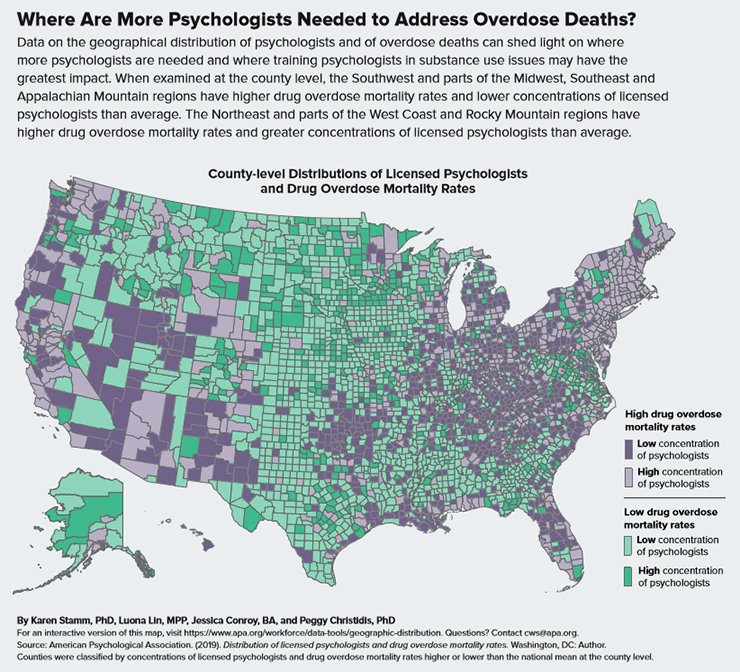
The opioid crisis isn't just a problem for researchers to solve. Experts in substance use disorders argue that clinical psychologists can do more in their everyday practices. For starters, they should get in the habit of asking all patients about their substance use, McHugh says. If they're not comfortable treating such patients, they should make efforts to refer them to providers who are. "Substance use disorder is often separated from mental health care," she says. "But you cannot be in the mental health field without running into substance misuse."
Unfortunately, too few psychologists get sufficient training to help people with addiction (see article on page 58). John Norcross, PhD, at the University of Scranton, and colleagues surveyed clinical psychology doctoral programs between 1999 and 2017 and found that fewer than a third offered specialty training in addiction (American Psychologistopens in new window, Vol. 72, No. 7, 2017). "We need to be doing a better job from graduate training through continuing education to make sure psychologists are getting the training that they need to work with folks with substance use disorders," McHugh adds.
"This is an incredibly complex public health problem," adds Walsh. "We need as many smart people as we can find to help solve it."
Interested in learning more about how psychologists are reimbursed for their services related to opioid treatment? Look for an article in the summer issue of APA's Good Practice magazine at www.apaservices.org/practice/good-practice.