Prison's Health Effects
People who have spent time in prison are more likely to suffer from chronic medical conditions, finds a study in Health Psychology. Researchers analyzed a nationally representative U.S. sample of more than 36,000 adults, 12.4 percent of whom reported a history of incarceration. Compared with people who had never been in prison, people who had been incarcerated were more likely to have hypertension, myocardial infarction, minor heart conditions, stomach ulcers, arthritis, sleep problems, anemia and sexually transmitted diseases, among other serious conditions. The results held even after controlling for a history of childhood abuse and other adversity, recent stressful life experiences, sociodemographic characteristics, smoking status and past year alcohol use. DOI: 10.1037/hea0000720opens in new window

The definition of diversity
Members of minority groups set a higher threshold for diversity when deciding whether they consider an organization to be "diverse," finds a study in the Journal of Personality and Social Psychology. In a series of seven online experiments with more than 5,000 total participants in the United States, researchers asked participants to read descriptions of companies with different percentages of black, Latinx and female employees and then judge whether the organizations qualified as diverse. On average, to declare an organization diverse, participants who were black, Latinx or female required it to have a higher percentage of minority employees than did white male participants. The difference was even larger when participants were asked to decide whether the organization was "diverse enough" rather than just "diverse." DOI: 10.1037/pspi0000182opens in new window
ADHD-Amphetamine risk
Teenagers and young adults who take amphetamine-based stimulants to treat attention-deficit hyperactivity disorder (ADHD) are at increased risk for developing psychosis, finds a study in the New England Journal of Medicine. Researchers analyzed the health-insurance records of nearly 222,000 young people, ages 13 to 25, with ADHD. Half had been given prescriptions for an amphetamine, and half had been prescribed a different stimulant, methylphenidate, between 2004 and 2015. Among those prescribed an amphetamine, 0.21 percent developed psychosis, while among those who took methylphenidate, 0.10 percent developed psychosis. The researchers say that although the overall risk for developing psychosis is very low, the results suggest caution is warranted in prescribing amphetamines to treat ADHD. DOI: 10.1056/NEJMoa1813751opens in new window

Combat stress, decades later
Combat veterans may experience more depression and anxiety as they age compared with military veterans who did not see combat, suggests a study in Psychology and Aging. Researchers examined survey data from more than 1,100 U.S. military veterans, collected between 1985 and 1991 when the men were ages 40 to 86 (average age 60). The researchers found that the veterans' anxiety and depression symptoms showed a common U-shaped curve over time—their symptoms decreased from their 40s to mid-60s, then increased again in their 70s and 80s. In their mid-60s, combat and noncombat veterans showed similar levels of depression and anxiety. However, the late-in-life rise in depression and anxiety symptoms was much steeper among the combat veterans than among those who did not see combat. DOI: 10.1037/pag0000334opens in new window

The magnetic brain
Many species, such as migratory birds, have a geomagnetic sense that helps them navigate the world, but the same sense has never been reliably demonstrated in humans. Now, a study in eNeuro suggests that the human brain is also sensitive to Earth's magnetic field. Researchers used EEG to monitor the brain activity of 34 healthy adult participants in California as they sat inside a chamber in which the direction of the magnetic field around them was manipulated. The researchers found that the brain activity in many of the participants showed sensitivity to changes in the horizontal direction of the magnetic field—but only when the vertical component of the field pointed downward, as it does in the Northern Hemisphere, where the participants resided. The researchers say that this indicates that the brain is attuned to Earth's local magnetic field. They further suggest that replicating the study in the Southern Hemisphere, where the vertical component points upward, would strengthen this conclusion. DOI: 10.1523/ENEURO.0483-18.2019opens in new window
Reading faces
Teenagers are particularly sensitive to facial expressions of anger and fear and lose some of that sensitivity as they age, finds a study in the Journal of Experimental Psychology: General. Researchers tested more than 9,500 online participants, ages 10 to 85, on a task that measured sensitivity to emotion. Participants saw pairs of faces with carefully calibrated expressions and were asked to determine which member of each pair was happier, sadder or more fearful. On average, sensitivity to all facial expressions, but especially to anger, was highest among participants in early to mid-adolescence and was somewhat lower among those in early adulthood. Among older adult participants, sensitivity to anger and fear was even lower—but sensitivity to happiness was about the same as in younger adults. DOI: 10.1037/xge0000559opens in new window

Chimpanzee culture
Human encroachment appears to be threatening chimpanzees' behavioral diversity, finds a study in Science. Previous research has found that chimpanzees pass on some behavioral traditions—such as using sticks to fish for algae or cracking nuts with stones—that differ from group to group. Researchers combed through new data and previously published studies that looked at 31 different chimpanzee behaviors in 144 communities. Compared with chimpanzees in areas relatively unaffected by humans, chimpanzees in areas with high human impact showed an 88-percent reduced probability of using these culturally transmitted behaviors. The researchers posit that this finding may be related to population loss and habitat fragmentation, which reduce the chances for chimpanzees to learn behaviors from one another. DOI: 10.1126/science.aau4532opens in new window
Falling down
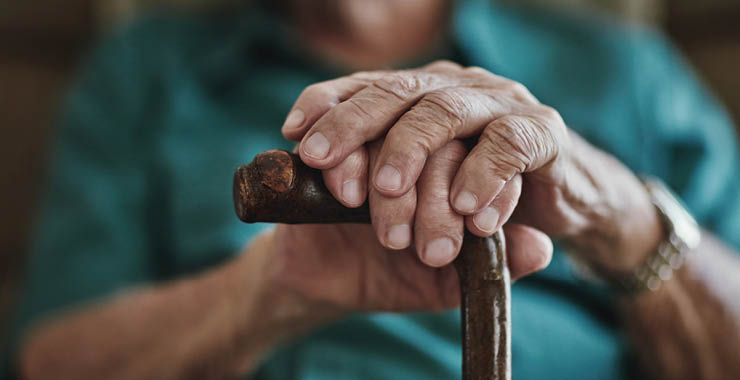
Older adults with depressive symptoms are more likely to injure themselves in falls—and those who fall are more likely to develop depression, finds a study in The Gerontologist. Researchers analyzed data on nearly 6,300 U.S. Medicare beneficiaries, age 65 and older, who lived in the community or in residential care (not nursing home) facilities. Participants were surveyed twice, a year apart, about their depressive symptoms and asked how often they had fallen in the past year. On average, those who reported more depressive symptoms on the first survey were more likely to fall over the next year. At the same time, participants who reported falls during the year between the two surveys showed more severe depression symptoms on the second survey, even after researchers controlled for the number of falls reported on the first survey, other health conditions and demographic variables. DOI: 10.1093/geront/gny179opens in new window
Inherited morality
Our characters are shaped by both our genes and our upbringings, suggests a longitudinal study in Behavior Genetics. Researchers examined 720 pairs of siblings with various degrees of genetic relatedness—including identical and fraternal twins, ordinary siblings, halfsiblings and step-siblings. Using both self-report and parent report measures, the researchers assessed the siblings on the virtuous characteristics of responsibility and conscientiousness when they were young teenagers and again at ages 25 to 27. The parents also provided self-reports on positive parenting behaviors, such as responsiveness and praise, and negative parenting behaviors, such as yelling. The researchers found associations between positive parenting behaviors and children's virtuous characteristics, and found that these associations were determined by both genetic and environmental influences. They suggest that rather than children directly inheriting virtuous characteristics, a more complex mechanism may be at work: Children inherit other characteristics (e.g., difficult or anti-social behavior) that subsequently evoke particular types of behaviors in their parents, which in turn influence the children's development of virtuous characteristics. DOI: 10.1007/s10519-018-09945-4opens in new window

Sleepless nights
Children disrupt their parents' sleep for up to six years after birth, finds a study in Sleep. Researchers surveyed 2,541 women and 2,118 men in Germany around the time of the birth of their first, second or third child, and then again yearly for six years, asking the parents about sleep duration and sleep quality. On average, sleep duration and satisfaction with sleep quality declined sharply after childbirth and reached a nadir during the first three months of a child's life. Sleep for these parents did not fully recover even four to six years later. In that period, the mothers were still sleeping an average of 20 minutes less per night, and the fathers 15 minutes less per night, than they had been before their children were born. DOI: 10.1093/sleep/zsz015opens in new window
Supporting soldiers at risk
Compassionate text messages may help reduce suicide attempts among at-risk military personnel, suggests a study in JAMA Psychiatry. In the randomized clinical trial, researchers assigned 658 members of the U.S. Army and Marines who had expressed suicidal thoughts to receive either standard care or standard care plus supportive text messages sent once a month for 11 months and on the participants' birthdays. Clinicians sent the text messages and then followed up if participants replied to them. Over the year, 9 percent of the participants who received the texts attempted suicide compared with 15 percent of those who received no texts. However, the study showed mixed or no effects for some other outcome measures (suicidal ideation and emergency room visits). DOI: 10.1001/jamapsychiatry.2018.4530opens in new window

When violence goes viral
About one in five Americans watched at least part of a graphic video of an ISIS beheading that "went viral" in 2014, according to a study in American Psychologist that explored people's motivations for watching it and how viewers were affected. As part of a longitudinal study, the researchers followed a representative sample of almost 3,300 U.S. residents for three years and found that about 20 percent reported watching part of the video and 5 percent watched all of it. The most common reasons people gave for watching were "information seeking" and "curiosity." Men, unemployed individuals, Christians and people who had been exposed to more violence in their lifetimes or who reported a greater fear of terrorism were more likely to have watched it. The researchers also found that people who watched the video reported higher levels of fear of future negative events and greater symptoms of distress two years later. DOI: 10.1037/amp0000438opens in new window
Shared plates, shared goals
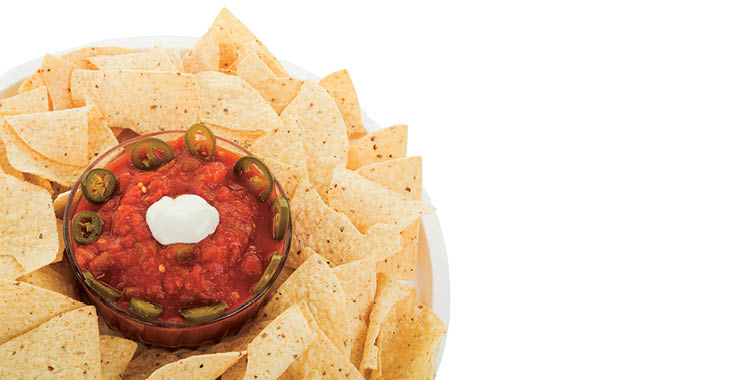
When people eat off shared plates, they are more likely to cooperate in negotiations, finds a study in Psychological Science. Researchers paired 200 strangers (students at a U.S. university) and asked each pair to negotiate an hourly wage for workers who were on strike, with one participant playing the role of management and the other playing the role of the labor union. Before the negotiation, participants ate a snack: tortilla chips and salsa, served from either one large shared bowl or two smaller separate bowls. On average, participant pairs who ate from a shared bowl settled on a wage more quickly—within four rounds of offers and counteroffers—than pairs who ate from separate bowls, who took nine rounds to agree on a wage. The researchers replicated the results in two more experiments, one with pairs of friends and another with pairs of acquaintances. DOI: 10.1177/0956797619830633opens in new window
Nicotine and ADHD
Babies born to mothers who smoke tobacco are at increased risk for attention-deficit hyperactivity disorder (ADHD), finds a study of Finnish mothers and infants published in Pediatrics. Researchers looked at 1,079 Finnish children born in 1998 and 1999 who were diagnosed with ADHD and 1,079 matched controls without ADHD. The researchers measured the levels of cotinine—a biomarker of nicotine exposure—in the children's mothers during pregnancy, using serum samples stored in a Finnish biobank. On average, children of mothers with high levels of cotinine were more than twice as likely to develop ADHD than children born to mothers with low cotinine levels, even after the researchers controlled for maternal socioeconomic status, maternal age, maternal psychopathology, paternal age, paternal psychopathology and child's birth weight. DOI: 10.1542/peds.2018-3144opens in new window

Green spaces and mental health
Living near parks and other green spaces as a child is associated with better mental health in adulthood, suggests a study in PNAS. Researchers analyzed geographic information systems data and data from the Danish Civil Registration System on more than 900,000 Danes born between 1985 and 2003. Even after controlling for sociodemographic status, parental mental health and other factors, the researchers found that growing up near green space was associated with a 15- to 55-percent reduction in the incidence of mental illnesses and behavioral health disorders, including substance use, eating and mood disorders and others. The only disorders not significantly associated with childhood proximity to green space were intellectual disability and schizoaffective disorder. DOI: 10.1073/pnas.1807504116opens in new window
Older adults' screen time
Older adults who watch a lot of television perform worse on tests of verbal memory than those who watch less, finds a study in Scientific Reports. Researchers analyzed data from a longitudinal study of about 3,600 British adults older than 50 (average age 67). Participants answered questions about their TV viewing habits, took a battery of verbal memory and word finding tests, and then repeated the same survey and tests six years later. Participants who watched more than 3.5 hours of TV per day scored lower on the verbal memory tests at baseline and saw a steeper decline in their abilities over the next six years. TV-watching was not associated with participants' scores on the word finding tests. DOI: 10.1038/s41598-019-39354-4opens in new window
Support in the neighborhood
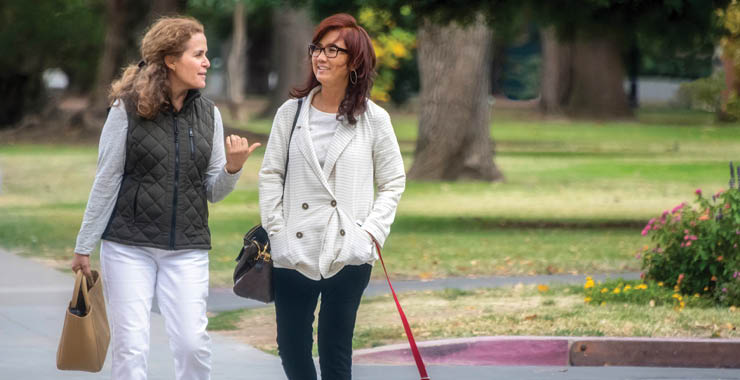
Strong relationships with neighbors can ease loneliness and provide meaningful support for people with serious mental illness (SMI), suggests a study in the American Journal of Orthopsychiatry. Researchers surveyed 232 people with SMI—including schizophrenia and major depressive disorder—who were receiving treatment at outpatient community mental health centers throughout the United States, as well as a comparison sample of 300 adults without SMI. On average, people with SMI reported weaker relationships with their neighbors, as well as more loneliness and fewer feelings of connection to their communities, compared with those without SMI. Among both those with and without SMI, however, those who had higher-quality relationships with their neighbors (such as being able to count on them for help or being treated by them as equals) reported less loneliness than those who had lower-quality relationships with their neighbors. DOI: 10.1037/ort0000403opens in new window
I can do it
Setting attainable goals now may set you up for happiness later, suggests a longitudinal study in the European Journal of Personality. Researchers interviewed 973 people, ages 18 to 92, living in Switzerland, and followed up with 637 of them two years later and 573 of them four years later. They asked about participants' well-being as well as about their life goals in 10 areas: health, community, personal growth, social relationships, fame, image, wealth, family, responsibility/care for younger generations and work. In particular, the researchers assessed how important those goals were to the participants and how attainable participants felt they were. On average, participants who felt their goals were more attainable at the beginning of the study reported greater well-being two and four years later. DOI: 10.1002/per.2194opens in new window