While such laboratory experiments are intriguing, they don’t fully capture the diverse benefits that go hand in hand with time spent in the outdoor world, says Cynthia Frantz, PhD, a professor of psychology and environmental studies at Oberlin College in Ohio. “Spending time in nature has cognitive benefits, but it also has emotional and existential benefits that go beyond just being able to solve arithmetic problems more quickly,” she notes.
In a review of the research, Gregory Bratman, PhD, an assistant professor at the University of Washington, and colleagues shared evidence that contact with nature is associated with increases in happiness, subjective well-being, positive affect, positive social interactions, and a sense of meaning and purpose in life, as well as decreases in mental distress (
Science Advances
, Vol. 5, No. 7, 2019
opens in new window).
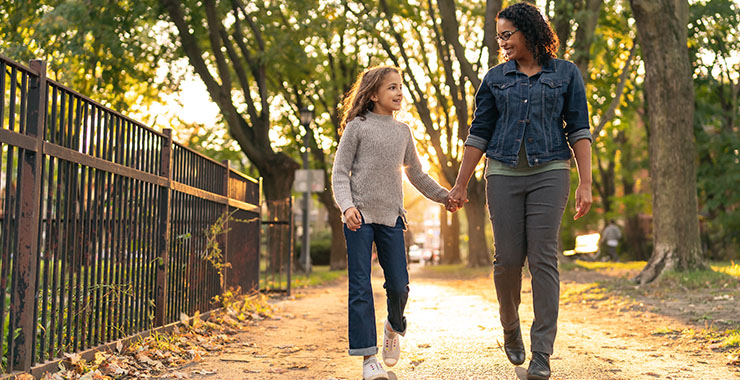
Other work suggests that when children get outside, it leaves a lasting impression. In a study of residents of Denmark, researchers used satellite data to assess people’s exposure to green space from birth to age 10, which they compared with longitudinal data on individual mental health outcomes. The researchers examined data from more than 900,000 residents born between 1985 and 2003. They found that children who lived in neighborhoods with more green space had a reduced risk of many psychiatric disorders later in life, including depression, mood disorders, schizophrenia, eating disorders, and substance use disorder. For those with the lowest levels of green space exposure during childhood, the risk of developing mental illness was 55% higher than for those who grew up with abundant green space (Engemann, K., et al., PNAS, Vol. 116, No. 11, 2019opens in new window).
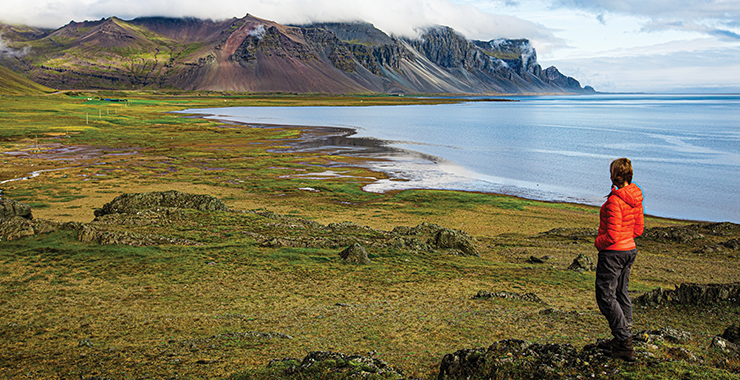
There is even evidence that images of nature can be beneficial. Frantz and colleagues compared outcomes of people who walked outside in either natural or urban settings with those of people who watched videos of those settings. They found that any exposure to nature—in person or via video—led to improvements in attention, positive emotions, and the ability to reflect on a life problem. But the effects were stronger among those who actually spent time outside (Mayer, F. S., et al., Environment and Behavior, Vol. 41, No. 5, 2009opens in new window).
More recently, scientists have begun exploring whether virtual reality nature experiences are beneficial. In a review of this work, Mathew White, PhD, an environmental psychologist at the University of Exeter in England, and colleagues concluded that while the real deal is best, virtual reality can be a worthwhile substitute for people who are unable to get outdoors, such as those with mobility problems or illness (
Neuropsychiatric Disease and Treatment
, Vol. 14, 2018
opens in new window).
Nature might also make us nicer—to other people as well as to the planet. John Zelenski, PhD, a professor of psychology at Carleton University in Ontario, Canada, and colleagues showed undergraduates either nature documentaries or videos about architectural landmarks. Then the participants played a fishing game in which they made decisions about how many fish to harvest across multiple seasons. Those who had watched the nature video were more likely to cooperate with other players, and also more likely to make choices that would sustain the fish population (
Journal of Environmental Psychology
, Vol. 42, No. 1, 2015
opens in new window). In another experiment, Zelenski and his colleagues found that elementary school children acted more prosocially to classmates and strangers after a field trip to a nature school than they did after a visit to an aviation museum (Dopko, R. L., et al., Journal of Environmental Psychology, Vol. 63, No. 1, 2019opens in new window).
Those generous behaviors weren’t attributed to students’ moods, Zelenski and his colleagues found, so it wasn’t simply that spending time in nature made them happier and therefore more giving. Another plausible (though unproven) explanation is the emotion of awe. “There are some hints that awe is associated with generosity, and nature can be a way to induce awe,” he says. “One of the things that may come from awe is the feeling that the individual is part of a much bigger whole.”