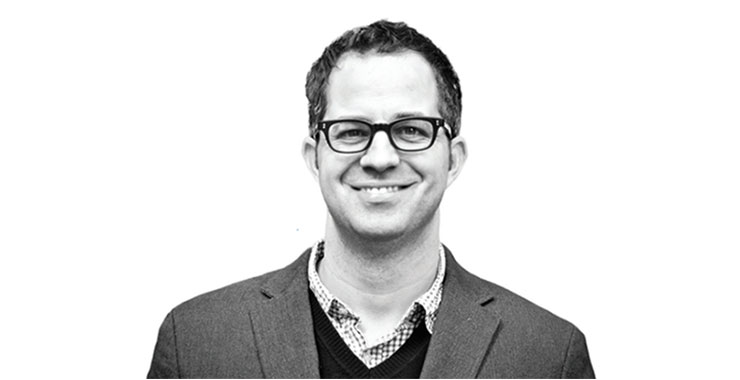
Psychologist Jay Van Bavel, PhD, became one of the early experts on the social and behavioral response to the COVID-19 pandemic. In just one week, the associate professor of psychology and neural science at New York University (NYU) gathered 41 experts to draft a summary of research findings relevant to how best to handle the COVID-19 response. The paper, quickly published in Nature Human Behaviouropens in new window, unites psychologists, economists, sociologists and others for a review of research on fake news and conspiracy theories, leadership, threat perception, and other issues at play in the ongoing global public health crisis.
Among the report’s conclusions: Leaders should highlight bipartisan support for COVID-19-related measures when possible and consider using the term “physical distancing” rather than “social distancing” to encourage people to stay remotely connected.
“Our goal here was to distill some of the best findings from thousands and thousands of articles across the social and behavioral sciences,” says Van Bavel, who also directs the Social Identity and Morality Labopens in new window at NYU. “We think these insights should be considered in complement with the recommendations of public officials, epidemiologists and virologists.”
Along with one of his co-authors, Robb Willer, PhD, a professor of sociology at Stanford University, Van Bavel has testified virtually before congressional staff to highlight those insights. He has also written about the scientific consensus for the public in The Washington Post and other outlets. The Monitor spoke with Van Bavel in May about his efforts and how psychological insights can improve messaging and outreach during a pandemic.
What are some of the key takeaways from your research review?
We’re trying to solve a massive problem, maybe the biggest threat to humanity in 100 years. Social and behavioral insights can help make public health and safety messaging more effective and resonate with a broader audience.
For example, research finds that messages that emphasize benefits to the recipient, focus on protecting others and align with the recipient’s moral values tend to be particularly persuasive. And if we’re asking people to behave in an altruistic or prosocial way, it helps to show a respected member of their social in-group modeling that behavior—and to highlight the prospect of receiving approval from others in their social group.
What have you been telling congressional staff about how they can best respond to this crisis?
About half of the conversation covers what research found from past crises, such as the Ebola pandemic—things like the way public health messages can be adapted to resonate better with economically and racially marginalized people. For example, religious or community leaders seen as credible among various groups can be recruited to encourage adherence to COVID-related measures.
The other half of the conversation is usually about what kind of support we need in order to learn more—not only about this pandemic but for future pandemics and other public health emergencies. One of the issues is that we have very little published psychological research on the COVID-19 pandemic because our publication systems and granting agencies are not well suited for rapid peer review. We’re using these talks to advocate for open access to data and new funding mechanisms to help us make even more robust conclusions and recommendations in a timely fashion.
In a response to your paper, another team of researchers suggested that psychology is not yet a “crisis-ready” discipline and that the evidence base is not robust enough to make such recommendations. What is your response to that critique?
We brought together experts from across the social and behavioral sciences to put together a summary based on multiple fields. But our paper is merely a snapshot of the studies we think are rigorous enough to act on. What you don’t see in the final version of the paper are the countless research areas, ideas and citations that we decided to exclude from our review because we didn’t trust them enough to put them in the paper.
Many of our authors are now running studies with large international samples and measures that are more relevant to the current pandemic—and we will continue to update our thinking as we obtain new and better data on these topics. For now, our goal as scientists is to communicate the best information we have as accurately and transparently as possible—and not to let the perfect be the enemy of the good.
How are you taking your messages to the broader public?
We live in an age of misinformation, so I’m a huge advocate of experts weighing in on various topics and helping the public access high-quality information. Part of my general philosophy as a scientist is to give back to society and the people who support our work.
I study politics, misinformation and polarization, and I noticed very early on that there was an enormous partisan split in attitudes toward public health behaviors like hand-washing and physical distancing, which led me to write an op-ed for The Washington Postopens in new window about the dangers of political polarization in this moment.
One positive development is that while many polls still show a partisan gap, it continues to shrink over time. Both Democrats and Republicans have dramatically increased their belief that COVID-19 is serious and that the measures to slow its spread are reasonable.
What else are you focused on now?
After the review paper was finished, it became clear that the groups in society at greatest risk during this pandemic—older adults and people who are economically and racially marginalized—are not the ones we study in most of our psychology experiments. We tend to study 18- and 19-year-old university students who are more educated and wealthier than the average person. As a result, the database we’ve built up over the years bears very little resemblance to these at-risk populations.
To address that, I launched a collaboration with 200 social scientists around the world to collect surveys from samples that are representative of the populations in 61 countries. We’re asking questions about health behaviors related to COVID and people’s willingness to engage in altruistic actions such as donating money to help others in need. We’re also collecting data on self-esteem, political ideology, self-control and other factors that may ultimately help us predict who will voluntarily engage in healthy, prosocial behaviors and who may need additional messaging in order to do so.
It’s unlike most existing databases we have—but it’s the type of data we’ll need going forward if we want the best understanding of issues facing at-risk populations.
Psychology as a field should be thinking about pivoting toward more international and representative samples and massive levels of operational coordination because that’s what we need to tackle global issues like a pandemic.