Providing disaster aid after Hurricane Katrina was the most difficult work clinical psychologist Gerald McCleery, PhD, has ever done. McCleery flew to Arkansas and drove to a crisis call center in Louisiana five days after the hurricane hit the Florida coast, on Aug. 30, 2005, to join a group of volunteers with the nonprofit United Way. For more than 12 hours a day, they fielded nonstop calls from people in profound distress: those stranded in flooded homes with no food, parents searching for missing children, patients without medication and those in mental health crises.
McCleery and the other volunteers provided information about material aid and gave professional advice. But mostly, they listened. “The thing that mattered the most was just staying on the phone,” McCleery says. “In many cases, people had nobody else to talk to.”
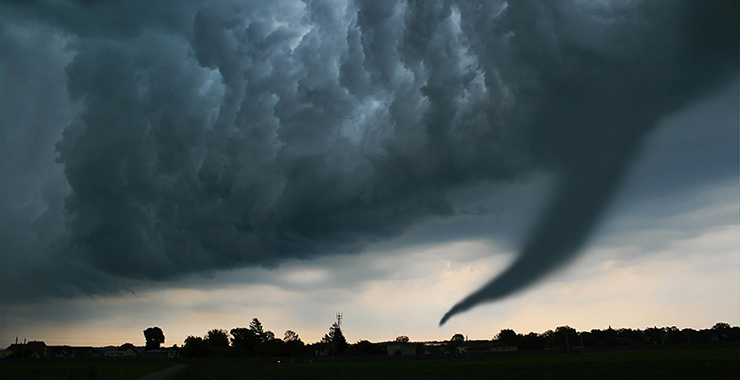
Providing that type of social support as well as research-based trauma care is becoming increasingly essential as natural disasters become both more frequent and more devastating. The most destructive hurricanes have tripled in frequency since 1900 (Grinsted, A., et al., Proceedings of the National Academy of Sciencesopens in new window, Vol. 116, No. 48, 2019) and the amount of land burned annually by wildfires in California has increased fivefold since the early 1970s (Williams, A.P., et al., Earth’s Futureopens in new window, Vol. 7, No. 8, 2019).
Because these shifts are largely due to the warmer temperatures associated with global climate change, climatologists expect extreme disasters like these to continue uprooting individuals and communities, pointing to a growing need for psychological aid. At the same time, the increasingly volatile climate makes providing such aid a challenge. Disaster mental health response is particularly difficult with these increasingly frequent natural disasters because the practice has traditionally focused on restoring a sense of stability and helping people return to their predisaster functioning.
“It was already difficult to know how to help people feel safe when in many parts of the world, the threat of these disasters has become the new normal. Now, we have that chronic threat layered on top of acute anxiety about the COVID-19 pandemic,” says Karla Vermeulen, PhD, deputy director at the Institute for Disaster Mental Healthopens in new window at the State University of New York at New Paltz (SUNY New Paltz).
“The word ‘unprecedented’ gets used a lot these days, but when it comes to disaster mental health, this really is a new world,” she says. “We’re going to need to adapt our interventions to address the resulting complex stress.”
Trauma care
Psychologists have long played a role in providing mental health care and helping to avert the onset of post-traumatic stress disorder (PTSD), substance use and domestic violence, all of which tend to increase following a natural disaster (Neria, Y., et al., Psychological Medicineopens in new window, Vol. 38, No. 4, 2008; Cepeda, A., et al., Disastersopens in new window, Vol. 34, No. 2, 2010; Women, Disasters and Hurricane Katrina, Institute for Women’s Policy Research, 2010). For example, studies show that early psychological interventions such as trauma-focused cognitive-behavioral therapy or disaster mental health interventions—which can be delivered by psychologists or, in some cases, other trained volunteers—can reduce the incidence of PTSD (Ramirez de Arellano, M.A., et al., Psychiatric Servicesopens in new window, Vol. 65, No. 5, 2014).
“The majority of people who go through a disaster don’t develop PTSD or other lasting reactions, but part of the key to that is early intervention,” Vermeulen says. “It’s very helpful to have people come in from the outside to create a sense of stability and to help connect people with resources.”
Psychologists who study disaster impacts distinguish between natural disasters, which tend to be relatively predictable in scope and promote prosocial responses, and technological disasters—such as oil spills—which are more likely to divide communities and often disproportionately affect marginalized and low-income groups (Mental Health and Our Changing Climate: Impacts, Implications and Guidanceopens in new window, APA and ecoAmerica, 2017). But disasters triggered by climate change exhibit elements of both.
“In a sense, the fires, superstorms and intense droughts we’re seeing today are both natural and technological disasters because they’re being forced and exaggerated by human-caused climate change,” says Thomas Doherty, PsyD, a clinical psychologist in Portland, Oregon, who studies environmental health. “This makes it more difficult for people to cope.”
Traditional disaster response—even when performed by psychologists—looks a lot more like triage work than traditional psychotherapy. Aid workers may only connect briefly with each person they help, and their primary functions are to provide emotional support and to help people access the resources they need most.
“The first thing a person may need is not to discuss what they’re going through but to find a bottle of water, food or a place where they can safely get some sleep,” says psychologist Steven Gold, PhD, founder and director of the Trauma Resolution and Integration Programopens in new window at Nova Southeastern University in Fort Lauderdale, Florida.
Psychologists and others who provide disaster aid can also help people navigate systems that may be in disarray if local infrastructure has been damaged. Contacting loved ones, filling a prescription or making an insurance claim can be tricky and overwhelming for those who have lost their homes or feared losing their lives. And during a global pandemic, disaster survivors must also navigate physical distancing requirements and other safety measures to protect themselves and others from COVID-19.
One commonly used intervention developed by psychologists, known as Psychological First Aid (PFA), addresses the distress people experience following disasters and aims to strengthen basic coping skills (Psychological First Aid: Field Operations Guideopens in new window, National Child Traumatic Stress Network and National Center for PTSD, 2006). Its core tenets include providing emotional comfort, helping solve problems to get basic needs met and delivering education and guidance on coping with stress. Those who administer PFA are also encouraged to connect survivors with social support, which has been shown to reduce depressive and PTSD symptoms following natural disasters (McGuire, A.P., et al., Journal of Traumatic Stressopens in new window, Vol. 31, No. 2, 2018).
“We know in all kinds of situations that social support is one of the best antidotes to being traumatized,” Gold says. “If we can help people in the middle of a natural disaster come to each other’s aid and rally together, they’re less likely to end up with long-term traumatic effects.”
But the pandemic may make this essential part of recovery more difficult, Vermeulen says, because social connections, already disrupted in daily life, are likely to be less available post-disaster.
Psychologists who practice PFA or other disaster response protocols are trained to recognize appropriate responses to natural disasters, which may include anxiety and depressive symptoms, trouble sleeping, nightmares and moodiness. These reactions are considered normal and typically resolve themselves within a few weeks. Criteria for a PTSD diagnosis are met only if symptoms become debilitating and last for more than one month.
“A lot of what we’re doing is helping people understand that they’re experiencing normal reactions to an abnormal event,” says Rebecca Thomley, PsyD, a clinical psychologist based in Minneapolis and an expert in disaster response.
But effective disaster response also involves identifying survivors who may require additional psychological support. Children, people with preexisting mental health conditions and people with physical disabilities are more likely to experience psychological distress following a natural disaster (Lai, B.S., et al., Journal of Affective Disordersopens in new window, Vol. 146, No. 1, 2013; Math, S.B., et al., Indian Journal of Psychological Medicineopens in new window, Vol. 37, No. 3, 2015; Stough, L.M., “The Effects of Disaster on the Mental Health of Individuals With Disabilities,” in Neria, Y., et al. (Eds.), Mental Health and Disasters, 2009, Cambridge University Press) and may be more likely to develop PTSD if early intervention does not occur.
“The most vulnerable people in a community—those with preexisting economic, physical health or mental health problems—are going to be most severely impacted,” Doherty says.
In many cases, these residents were also hit hardest by the COVID-19 pandemic and the resulting economic recession, putting them at even higher risk for negative reactions after a natural disaster, Vermeulen says.
Once basic needs are met and high-risk individuals receive the additional help they require, psychologists typically turn their focus toward helping people build coping strategies and an action plan for the future. This might include training on basic relaxation techniques and how to practice achieving small goals to provide a sense of agency.
That’s how clinical psychologist David J. Romano, PhD, provided disaster aid after Hurricane Michael hit Mexico Beach, Florida, in 2018. When one survivor struggled to file an insurance claim, for example, Romano helped him outline an action plan for whom to call and what to do if he reached the wrong department or a recorded message. He says creating a plan and achieving small goals is key to regaining a sense of stability and control.
“I see our role as helping people reconnect with their natural systems of support that were there before this event and will be there again in the long run when the first responders are gone,” says Beth Boyd, PhD, director of the clinical psychology program at the University of South Dakota, who specializes in culturally competent disaster response.
Psychologists’ advanced services
While interventions like PFA can be learned and delivered by anyone, including firefighters, emergency medical technicians and teachers, psychologists’ expertise enables them to master and provide more advanced services. At SUNY New Paltz, Vermeulen oversees training and education on disaster mental health (DMH), a specialized program for mental health professionals (NY DMH Responder, Vol. 9, No. 1, 2018).
In addition to mastering the tenets of PFA, psychologists trained in DMH learn about the etiology of traumatic stress, conflict resolution strategies, cultural sensitivity and how to provide rapid triage.
“DMH focuses on training people who may have great counseling skills on how different and immediate the needs of disaster survivors are than those they might encounter in more traditional practice,” Vermeulen says. “We place a lot of emphasis on thinking about how to provide immediate assistance and activating survivors’ self-efficacy rather than on delving into the past.”
In particular, experts say, providing culturally competent care is crucial during crisis response because marginalized groups—such as American Indian or immigrant communities—often have more vulnerable infrastructures and are therefore hardest hit by natural disasters.
Boyd has responded to and helped develop protocols for addressing natural disasters on reservations, which often cross state and county lines and may therefore be excluded from formal disaster plans and recovery aid systems. She says that many Native American languages have no word for “disaster”—events like floods are seen as part of the natural world—and that means a crisis may not trigger requests for material help or psychological support the way it would in other areas.
Though reservation communities can often benefit from outside help, first responders need to proceed with caution and consider the following: What sort of experiences has this community had with people coming from outside to help? How does the community view the event that has occurred and the aftermath? How do they understand health, wellness and healing? What role do spiritual healing systems and cultural practice play in their recovery? What is their infrastructure like and what will their long-term needs be?
Boyd says it’s also important to note that tribal governments may need to authorize the presence and activities of outside helpers, which can be surprising to agencies and individuals accustomed to typical rapid response protocols.
“It’s essential that psychologists bring their intercultural knowledge and experience to this disaster context,” says psychologist Linda Silka, PhD, senior fellow at the University of Maine’s Senator George J. Mitchell Center for Sustainability Solutions, who adds that working with religious leaders can often be key for connecting with immigrant communities following a disaster.
Another crucial component of first response training is teaching mental health professionals about the toll disaster response takes on helpers. Vermeulen incorporates stress inoculation exercises into SUNY New Paltz’s DMH program to help psychologists prepare for the difficult circumstances they’re likely to face when responding to a crisis.
“If you’ve been asked to deploy to a fire or tornado, what about that is going to be most upsetting—damaged infrastructure, distressed parents, missing children?” she asks. “It’s important to acknowledge what will be difficult and how you will handle that stress.”
Some coping strategies include making a plan to stay in touch with family, getting enough sleep each night and exercising. Responders are also encouraged to identify a “disaster buddy” for regular check-ins. At the crisis call center in Louisiana, McCleery and his fellow volunteers spent about an hour each day debriefing and providing emotional support for one another.
“In hindsight, I don’t think I took enough breaks,” he says. “I think I should have gotten up and walked outside more often. Because listening to story after story where the needs are so profound became incredibly painful.”
Short- and long-term needs
Disaster mental health-care providers typically respond to a community’s immediate needs, then community practitioners oversee long-term care, for example, treating PTSD or depression that may have resulted from the incident. But the increasing frequency and destructiveness of natural disasters is leaving some communities with an ongoing need for assistance.
“The traditional disaster mental health model is just not sufficient in the case of some of the megadisasters we’re seeing today, which may require us to rethink the type of aid we provide,” Vermeulen says. “Now, that will also need to incorporate the long-term psychological consequences of the pandemic.”
One solution is for psychologists to get more involved with mitigation, for instance by helping communities build their own capacity to respond to disasters when they inevitably strike. In 2018, Silka joined the Infrastructure and Climate Network (ICNet), an interdisciplinary group of engineers, climate scientists and policymakers across New England that works to help communities cope with the impacts of climate change, including severe storms and sea level rise.
Silka helps ICNet members from various fields and stakeholder groups communicate and collaborate. For example, the network recently analyzed the condition of infrastructure along the coastline in Boston to determine which communities, roads and bridges required repairs to preclude severe damage during a hurricane. Her efforts helped overcome an incompatibility between the climatologists’ models, which only resolved to the mile, and the engineers’ models, which called for a resolution of one-quarter mile or less.
Psychologists can also help address their own communities’ long-term needs by offering care for PTSD. Gold’s clinic at Nova Southeastern University provides exposure therapy for those traumatized by hurricanes. For example, many survivors of Hurricane Andrew, a Category 5 storm that struck South Florida in 1992, experienced severe anxiety on cloudy days because they associated them with prestorm conditions. Gold worked with patients to discuss their triggers and to stop retreating indoors when the sky became cloudy.
Other clinicians deliver eye movement desensitization and reprocessing therapy, which involves reliving and redefining traumatic memories, or trauma-focused cognitive-behavioral therapy, which aims to address distorted thoughts and counterproductive behaviors. There is evidence that both are effective in reducing PTSD symptoms (Guideline Development Panel for the Treatment of PTSD in Adults, American Psychologistopens in new window, Vol. 74, No. 5, 2019).
Psychologists can also contribute to the research base on early disaster interventions, which is limited—partly due to the challenges of collecting data during a crisis. PFA, for example, incorporates practices supported by research, but it has not yet been evaluated using large-scale randomized controlled trials (Shultz, J.M., & Forbes, D., Disaster Healthopens in new window, Vol. 2, No. 1, 2014).
“It’s very difficult to do a research protocol when you’re trying to assist someone in the middle of a disaster,” Romano says. “We need researchers who can help build an evidence base without intruding on those affected or compromising the work of first responders.”
Knowing the limits
Though psychological help is crucial to effective disaster response, Romano emphasizes that it’s not safe or productive to self-deploy to a crisis site.
“It’s important to go out with a group or organization and to understand their protocols. If you show up uninvited, you can actually become part of the problem,” he says.
First, volunteers should obtain training in PFA or another disaster mental health intervention. SUNY New Paltz offers an online advanced certificate in trauma and disaster mental health, which Vermeulen oversees. Then, psychologists can partner with disaster aid organizations, such as the American Red Cross, United Way, National Voluntary Organizations Active in Disaster, Medical Reserve Corps, or local nonprofits and faith-based organizations.
“We all have a desire to help in trying times,” Romano says. “There’s room for everybody to assist people recovering from these increasingly devastating disasters.”