“What stands out in your mind from everything you have heard, read or seen about the Boston Marathon bombing and the events that followed it?” This is one of the questions Dzhokhar Tsarnaev’s lawyers wanted to ask potential jurors in one of the most notorious and highly publicized cases of this century (United States v. Tsarnaev, 2016). The jury sentenced Tsarnaev to death for having—along with his brother—detonated explosive devices near the Boston Marathon finish line in 2013. Their actions left three people dead and more than 260 injured.
The nation was glued to their screens after the tragic event and the subsequent manhunt that resulted in the death of Tsarnaev’s older brother, Tamerlan, as well as a Massachusetts Institute of Technology police officer.
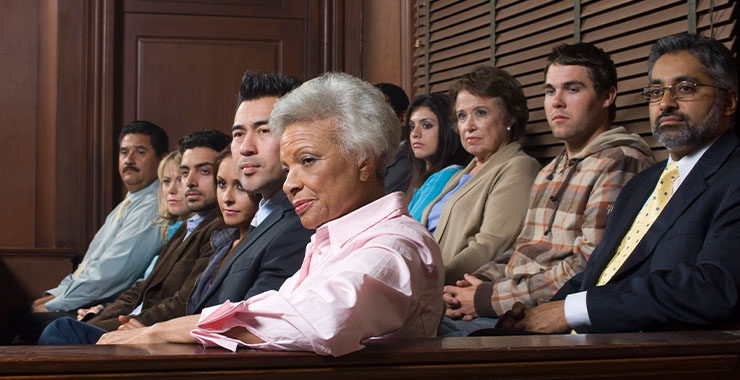
The U.S. District Court for the District of Massachusetts did not allow Tsarnaev’s team to ask this particular question during voir dire—when lawyers on both sides question potential jurors. The pool of more than 1,000 potential jurors fielded general questions about their media habits and impartiality, but the judge did not allow some of the more specific questions about their exposure to media coverage. It was later revealed that two of the seated jurors had discussed the case on social media, exposing their biases. The U.S. Court of Appeals for the First Circuit opined that the district court did not allow Tsarnaev’s defense team to sufficiently probe about the effects of pretrial publicity on jurors. The First Court vacated Tsarnaev’s death sentence and ordered a new penalty-phase trial. Now, the Supreme Court will consider whether Tsarnaev’s lawyers should have been allowed to ask prospective jurors additional questions about their exposure to pretrial publicity in this exceptionally high-profile case.
Though the Sixth Amendment guarantees the right to a fair and impartial trial, multiple studies have demonstrated the biasing impact of pretrial publicity on juror decision-making. Studies have shown that exposure to pretrial publicity affects jurors’ perceptions of witness testimony, defendant credibility, defendant culpability, and ultimately their verdicts. Research also suggests that negative pretrial publicity may increase the likelihood of guilty verdicts, whereas positive publicity may decrease that likelihood.
Several powerful social, emotional, and cognitive psychological mechanisms may account for pretrial publicity bias. Confirmation bias, for example, may lead jurors to integrate information consistent with their initial impressions of defendants—impressions often developed during exposure to media coverage before a trial. Research also suggests that jurors’ emotional response to ubiquitous pretrial publicity may mediate its effect on guilt ratings. One of the jurors in the Boston Marathon bombing case had called Tsarnaev a “piece of garbage” on Twitter.
Moreover, media coverage of capital cases tends to be particularly sensationalized, emotionally laden, and negative. In an analysis of pretrial publicity of capital cases in California, psychologists Shirin Bakhshay, PhD, and Craig Haney, PhD, JD, of the University of California, Santa Cruz, found that media coverage often relied on police and prosecution accounts, thus heightening the risk of prosecutorial bias.
Given the high-stakes outcomes of capital cases, the judicial system needs remedies to counter the effects of pretrial publicity. Some data suggest that extended voir dire—questioning potential jurors more comprehensively—may not sufficiently remedy the problems of pretrial publicity. Venue change may help subvert pretrial publicity bias, but research suggests that venues rarely change in capital cases and that a change of locale may be insufficient in cases involving national media coverage. In this era of omnipresent, digitized, and sometimes bot-generated media coverage, the effects of such publicity must be an important consideration throughout the trial process.