
skip to main content
2022 trends report

Prominent issues in health care

How psychologists are working for positive change
APA Style leaf logo Cite This Article in APA Style
Abrams, Z. (2022, January 1). Prominent issues in health care. Monitor on Psychology, 53(1). https://www.apa.org/monitor/2022/01/special-prominent-issues

health care working in scrubs sitting in a chair

The mental health of COVID health care providers

Early in the pandemic, psychologists helped document an increase in anxiety and depressionopens in new window among health care providers. Now, that acute stress has transformed into ongoing frustration, fatigue, and burnoutopens in new window as medical workers face surging cases, overflowing hospitals, nursing shortages, protests against vaccination mandates, and other difficulties.

“All of that cumulative wear and tear, with no real break, has seriously impacted the health care community,” said Helen L. Coons, PhD, the immediate past president of APA’s Div. 38 (Society for Health Psychology).

Psychologists are helping health care workers meet those challenges through support groups, individual therapy, critical incident debriefs, wellness programs, resource guides, and more. Throughout the pandemic, health psychologists have also worked on the front lines, providing care to COVID-19 patients and their families and, increasingly, to people with long COVID.

Racial bias and inequities

The COVID-19 pandemic has exposed plenty of cracks in society, including the vast racial disparities in access to health care. Psychologists have helped document that gap, identifying outcomes such as how people of color have been hit harder by COVID-19. Such inequities can be traced to institutionalized racismopens in new window, which psychologists say is the root cause of unequal health care treatment, policies, and access in the United States.

In addition to receiving worse care, African Americans and other non-White racial groups regularly face discriminationopens in new window from health care providers. “When physicians and patients interact, race plays a very significant role,” said psychologist Louis Penner, PhD, a professor emeritus at Wayne State University in Detroit who has studied racial disparities in health care for several decades.

Research by psychologists is exploring the ways that implicit and explicit racial biases shape interactions between patients and providers, how those interactions can harm physical and mental health, and what ultimately works to reduce biasopens in new window. Some are even translating this research into action by developing and testingopens in new window workshops to curtail stereotyping by medical students and residents.

A growing need for gender-affirming care

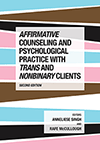
Psychologists are providing resources and care to address an onslaught of policies that limit health care access and other rights for transgender people; in 2021 alone, 33 states introduced more than 100 pieces of anti-transgender legislation, according to the American Civil Liberties Unionopens in new window.

“It’s important for psychologists to remain educated in working with trans youth, even if youth are coming to see them about something unrelated to their gender identity,” said Kristina Olson, PhD, a professor of psychology at Princeton University who studies gender development and well-being.

Transgender youth face higher rates of depression, anxiety, and suicideopens in new window than their cisgender peers. To address this concern, psychologists are piloting psychotherapy interventionsopens in new window for transgender clients and compiling resources on pronoun normsopens in new window, nonbinary gender identitiesopens in new window, and how to find gender-affirming care. APA has also released several policy resolutions opposing anti-transgender policiesopens in new window and supporting gender identity changeopens in new window, along with a collection of online resources to assist with member-driven and state-level advocacy efforts.

Limited access to abortion

New and evolving challenges to abortion rights—including Mississippi’s law banning most abortions after 15 weeks and the Texas ban on nearly all abortions—have spurred new efforts by psychologists to minimize the mental health damage such laws may inflict on women.

“Abortion in and of itself does not cause mental health issues,” said psychologist M. Antonia Biggs, PhD, a researcher at Advancing New Standards in Reproductive Healthopens in new window at the University of California, San Francisco. On the other hand, “denying someone an abortion due to gestational limits does cause short-term increases in stress and anxiety and lowers self-esteemopens in new window.”

In September 2021, Biggs and more than 100 other psychologists and social scientists filed an amicus briefopens in new window that urged the U.S. Supreme Court to reject the Mississippi ban. Research by psychologists and others shows that getting an abortion does not carry an increased risk for negative emotionsopens in new window, suicidal ideationopens in new window, or other mental health problemsopens in new window. Perceived abortion stigma and logistical barriers that lead to delays, which experts say women in Texas and Mississippi are likely to face, do increase distressopens in new window. Such challenges are likely to have an outsize impact on women of coloropens in new window and women of low socioeconomic status.

2022 trends report

Recommended Reading

Emerging trends for 2022

You may also like