1892
The American Psychological Association is founded, with G. Stanley Hall as president and 31 White male members.

1910
The Eugenics Record Office is established at the Carnegie Institution of Washington’s Station for Experimental Evolution. Several leaders of organized psychology were founders and active members, including Lewis Terman, who would later become APA president.

1916
Lewis Terman creates a revised version of the Stanford-Binet scale to justify a segregated system of education to train certain children, such as Blacks, Mexicans, and Native Americans, into “efficient workers.” Other intelligence tests based on scientific racism followed.
1933
Psychologist Raymond Cattell argues against miscegenation and the full citizenship of Black Americans. He continued to maintain the dangers of “race mixing” through the early 1990s. In 1997, he is selected winner of the APA Gold Medal Award for Life Achievement. Amid protest by a small group of psychologists, the award is postponed, but a larger group of APA members protest its postponement. Eventually, Cattell withdraws himself from consideration.
1954
Brown v. Board of Education is decided, aided by the testimony of Black psychologists Mamie Phipps Clark and Kenneth Clark. This ruling ends segregation in public schools in the United States. However, psychologists including Henry Garrett, Raymond Cattell, Audrey Shuey, and others lobby to overturn the decision as well as other civil rights legislation in the following years.
1966
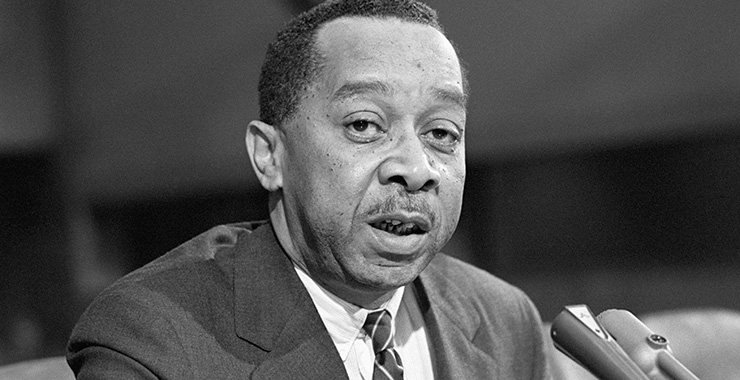
Kenneth Clark becomes the first Black president of the American Psychological Association, 74 years after the organization was established.
1967
Arthur Jensen delivers an address to the American Educational Research Association emphasizing genetic roots for group differences in the educability of children of color. Jensen’s work continued to fuel considerable debate about group differences in IQ and ability for years to come.
1968
The Association of Black Psychologists is formed when 75 Black psychologists leave APA, charging that it has failed to address issues of poverty, racism, and racist and cultural biases in testing. Other ethnic psychological associations (EPAs,) including the Asian American Psychological Association, National Hispanic Psychological Association, Society of Indian Psychologists, and others, formed during the 1970s and beyond.
1974
APA announces a Minority Fellowship Program, funded with a $1 million grant from the National Institute of Mental Health’s Center for Minority Group Mental Health’s Programs. The program has graduated 2,201 alumni to date.
1978
Thirty representatives of EPAs urge APA leadership to create a stronger presence for ethnic minority concerns. The APA Office of Ethnic Minority Affairs is created in 1979, followed by the creation of the Board of Ethnic Minority Affairs in 1980, which became the Committee on Ethnic Minority Affairs in 1990.
1992–2019
Reviews of APA’s Ethical Principles of Psychologists and Code of Conduct find little mention of race and ethnicity. In response, APA issues Guidelines for Providers of Psychological Services to Ethnic, Linguistic, and Culturally Diverse Populations in 1993. Other guidelines related to race, ethnicity, and culture follow, including the Multicultural Guidelines in 2002, revised in 2017, and the Race and Ethnicity Guidelines in 2019.
2005
Representatives of EPAs begin attending APA Council of Representatives meetings as observers. A bylaw change to provide voting seats for EPA representatives on the council fails to pass three times over 15 years. The change is finally approved by APA membership in 2020.