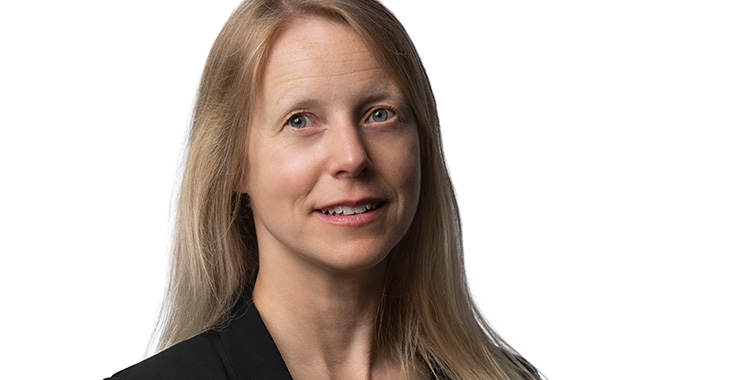
In the first few months of the pandemic, health psychologist Genevieve Dunton, PhD, was struck by the fact that kids’ activity levels had decreased dramatically as the world shut down. Her son was 8 at the time, and like many parents, she worried that he was sedentary more often than usual when school recess became sitting in front of a computer and sports and other activities were canceled indefinitely.
“I saw an immediate impact on him and was really curious what was going on with other people,” she said. “We had already seen rising rates of obesity and Type 2 diabetes in this age group prior to the pandemic, especially the kids in upper elementary school and early adolescence, so they were vulnerable.”
Dunton, who teaches population and public health sciences at the University of Southern California, pursued that curiosity. She surveyed parents of kids ages 5 to 13 across the United States in April and May 2020 on how their kids’ physical activity and sedentary behavior had changed from the pre-Covid to early Covid period.
As she suspected, she found that children’s physical activity levels, particularly among older kids and girls, decreased significantly during this time (BMC Public Health, Vol. 20, No. 1351, 2020).
The timing of that sedentary behavior may mean those short-term changes become permanently entrenched, Dunton said, thus increasing the risk of obesity, diabetes, and cardiovascular disease—as well as the mental health effects of weight stigma—down the road. The Monitor spoke with Dunton about how her findings relate to public health and what these findings may mean for children moving forward.
Your study looked at kids ages 5 to 13 years old. Why is this age group especially important to study?
Ages 5 to 13 is called the “adiposity rebound” period. Babies and toddlers have a higher percentage of body fat that they gradually lose up until about age 5. After that, their percentage of body fat starts to rebound again and there is potential for excessive weight gain or body fat accumulation that can put kids on a trajectory that is detrimental for health outcomes. We think about this period as an important window to make sure that activity levels are maintained and there is healthy eating in order to avoid excessive weight gain and body fat accumulation.
It also coincides with the period that we start to see physical activity levels decline in kids and sedentary behavior increase. That’s partially due to biology—as humans age, activity is not part of their exploration and learning and development as much. But sometimes it declines at a much faster rate than it should, and that’s often because of social influences.
Why is the pandemic such a concern when it comes to potential long-term health issues?
The pandemic is a point of concern because once behavior trajectories are altered, they can be really hard to undo. It may be harder to recover for several reasons. One is that human beings develop behavior patterns and habits that are particularly difficult to change. And the longer a period of disruption occurs, the more difficult it can be to emerge out of it. Also, whereas adults may have more intentional thought and self-control and they’re aware that their activity level has changed, young adolescents may not have that much executive and cognitive control over the situation. The context has changed, and unless they’re proactively coming back to their parents saying “I really miss soccer!” they may not be able to bounce back.
We have some unpublished data from 16 months after the beginning of the pandemic, and we did see that, for the most part, the 5- to 8-year-olds did bounce back, but it was the older group, the 9- to 13-year-olds, that didn’t. They remained less active and more sedentary. They may be the ones who are vulnerable to these bad habits, and perhaps with the younger children, adults are more involved and they want to make sure their kids get back into things like sports.
What can psychologists and other adults do to help children regain their levels of activity after the pandemic?
Psychologists can work with parents, schools, and teachers and physical education programs to make sure that activities are back and reinstated. For many kids, recess is one of the main ways that they were active, and once they were home, maybe their neighborhood is unsafe or they can’t get outside because they don’t have the yard space. Schools provide an opportunity for activity, so making sure that those systems are still in place for younger kids is key.
For adolescents, it’s really tough. It may mean lowering the bar for entry into sports and activities, because it’s often quite competitive at that point. Maybe thinking about more recreational opportunities, whether it’s intramural or club sports or just free classes and lessons that are part of the school systems or community centers that can be more focused on fun and enjoyment for this age group.
Your broader research focus is on population health. How do you define population health, and how does psychology fit in?
I see population health as the health of a group of people or community. You can’t just rely on the individual-level psychosocial process. You can go so far as an individual, and at some point, success depends on accessibility and availability at the community level. So that’s where the intersection of psychology and public health come together.
This intersection is really fascinating. I was trained as a health psychologist, which was really focused on individual processes. So, looking at motivation, emotion, decision-making, and cognition and their relation to health behavior change. Then, when I finished my PhD, I went and did a master’s of public health. I then began to see the intersection of psychology and public health in that we can look at the interactions between the individual processes that we study as psychologists and the context of the environment and policy.
We see that these individual-level psychosocial processes may unfold differently depending on the context that someone’s in, including their community-level circumstances and policies in their community. We see that really playing out with the pandemic and physical activity in particular. A family or a parent or a child may have all the desire and motivation to be active, but when you live in a place where there are restrictions on activities, classes and lessons are shut down, then you have this interaction.