skip to main content
News

The cognitive impact of long COVID: What can psychologists do   

Researchers are finding that Covid’s effects on the brain may persist for years

APA Style leaf logo Cite This Article in APA Style
Calkins, H. (2024, April 11). The cognitive impact of long COVID: What can psychologists do. Monitor on Psychology, 53(8). https://www.apa.org/monitor/2022/11/psychologists-long-covid

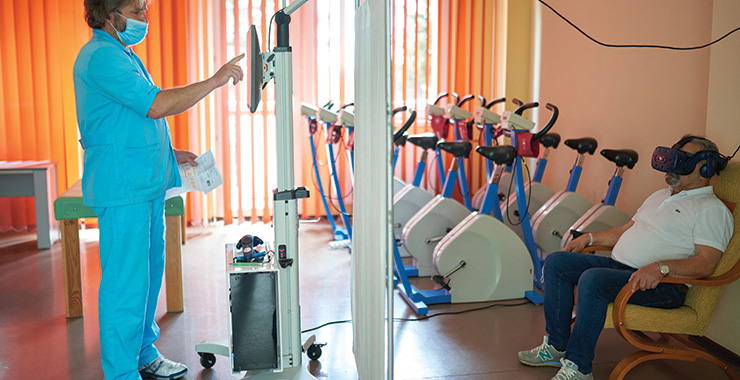
medical professional working with a patient wearing virtual reality glasses

A substantial number of people who survived the acute phase of Covid-19 have never made a full recovery. Psychologists are breaking new research ground to understand the causes, effects, and possible treatments for so-called “long Covid,” particularly related to its impact on cognition and mental health.

The perils of long Covid include fatigue, lowered endurance, reduced cognitive efficiency, and mental health effects, such as anxiety and depression.

[Related: Treating patients with long Covid]

“Data from our racially and ethnically diverse group of patients, who are assessed approximately four months after acute illness, suggest that more than two thirds are continuing to experience cognitive dysfunction,” said Tracy Vannorsdall, PhD, ABPP-CN, a clinical neuropsychologist who studies and treats patients in the Johns Hopkins Post-Acute Covid-19 Team (JH PACT) clinic in Baltimore, Maryland.

Research by Vannorsdall and other psychologists shows that patients who endured severe illness requiring a stay in the intensive care unit (ICU) display significant cognitive and neuropsychological deficits, which tracks with long-established research on the impact of ICU treatment on the brain. However, both psychologists and neuroscientists have detected measurable changes in the brains of people who had less-severe cases, and many long Covid sufferers who had mild illness report ongoing cognitive dysfunction and psychological distress.

Untangling the risk factors for developing long Covid and its mental health symptoms is a challenge for researchers and practitioners alike. While some research indicates that people with a history of anxiety are at higher risk for developing long Covid, psychologists are learning that previous mental health issues cannot explain the myriad symptoms long Covid patients endure. Now, experts theorize that SARS-CoV-2, the virus that causes Covid, has some harmful effect on the brain, either directly through infection or through resulting inflammation. Additionally, emerging evidence suggests that there may be nonpsychological factors that make some people more susceptible to developing long Covid, such as previous infection with a different virus.

[Related: How Covid-19 attacks the brain]

The numbers

According to the U.S. Centers for Disease Control and Prevention (CDC), long Covid symptoms may impact as many as 1 in 5 adult survivors of the illness, regardless of how mild their initial infection was. This is double the number researchers reported earlier in the pandemic (The BMJ, Vol. 370, No. 8258, 2020).

The CDC estimates that more than 200 million people in the United States have already been infected with Covid-19, and predicts 100 million new infections this fall. These growing numbers signal an urgent need for psychologists to learn about long Covid, lead efforts to understand how SARS-CoV-2 affects the brain, and treat the rising tide of patients struggling with cognitive and psychiatric problems as a result of Covid infection.

Definitive biomarkers for long Covid have yet to be uncovered. However, the sheer number of people affected by its often disabling symptoms has begun to erode initial skepticism by the medical and scientific establishment.

Long Covid symptoms

Long Covid has a variety of names, including long-haul Covid, post-acute sequelae of Covid-19 (PASC), and post-Covid condition, which is how a World Health Organization panel defined it late last year.

People with long Covid are frequently described as having “lingering symptoms,” but they often develop confounding new ones. Their experiences support the rapidly accumulating evidence that SARS-CoV-2 is not simply a respiratory virus, but one that takes a toll on nearly every major system and organ in the body, from the immune system, to the heart and vascular system, to the gastrointestinal tract, to the kidneys (Bowe, B., et al., Clinical Epidemiology, Vol. 32, No. 11, 2021opens in new window).

The brain and the nervous system are no exceptions—and in fact, some of the most pervasive symptoms of long Covid appear to be neurological, cognitive, or psychiatric in nature. In August, a study of more than 2.5 million people by researchers at the University of Oxford revealed that the neurological and psychiatric risks of Covid were significant and that the more severe outcomes—such as psychotic disorders, cognitive deficit, dementia, and epilepsy or seizures—may persist for years (Taquet, M., et al., Lancet Psychiatry, Vol. 9, No. 10, 2022).

Descriptions of “brain fog,” which is not a medical term but one that characterizes sluggish thinking, have been ubiquitous since the early days of the pandemic. Also common are reports of altered or lost sense of taste or smell, which signals that the virus has had some neurological impact and, similarly, is observed in patients with neurodegenerative diseases. Many long Covid sufferers also report intense anxiety, anhedonia, insomnia, and debilitating fatigue, as well as short-term memory loss, confusion, and problems with concentration and attention (Journal of the Academy of Consultation-Liaison Psychiatry, Vol. 63, No. 2, 2022). The data bear this out. A recent meta-analysis found that up to 22% of people who have had Covid report persistent fatigue or cognitive impairment 12 weeks after infection.

Additionally, patients are also reporting “a high rate of psychological distress, as well as difficulties with daily functioning, specifically related to changes in cognition and mental well-being,” said Vannorsdall.

Delia Silva, PsyD, ABPP-CN, is a clinical neuropsychologist in San Diego, California. At her practice, Pacific Neurobehavioral Clinic, PC, Silva has seen an increasing number of referrals for patients in need of neuropsychological evaluation because of long Covid. While a “small minority” of these patients’ Covid symptoms were severe enough to require oxygen therapy or mechanical ventilation in the ICU (which raises the risk for poor cognitive outcomes), “most of the patients I have seen had relatively mild cases of Covid,” she said. She has observed that “consistent with the literature thus far, it appears that the people who were not hospitalized or intubated due to Covid have generally performed within normal limits on neuropsychological testing.”

However, these patients may struggle with dysautonomia, which involves dysfunction of the nerves that regulate nonvoluntary body functions, such as heart rate, blood pressure, and sweating. This may lead to reduced cognitive efficiency related to their fatigue, she said.

Some patients with persisting symptoms have also presented with clinically significant psychiatric symptoms. According to Silva, “some of these symptoms can be attributed to the intense stress and isolation that patients have endured during the pandemic, which may contribute to worsening anxiety. Additionally, these patients may feel uncertain about their post-Covid recovery, or have a history of prior psychiatric conditions, either of which could make anxiety or depression worse.”

Furthermore, anxiety can cause physical symptoms, such as heart palpitations, which may partially explain some of the issues that patients with long Covid are experiencing.

Punam Rahman, PsyD, ABPP, is a rehabilitation psychologist at the Shepherd Center in Atlanta, Georgia. Her patients have injuries of the spinal cord and brain, and some of them have symptoms consistent with long Covid. She describes the “Covid brain” as an additional disability.

“These patients often have persistent brain fog and other cognitive concerns, which definitely impact their rehabilitation process,” she said. Long Covid affects “their ability to carry over new learning, [their ability] to manage their care, and their ability to engage in their recovery.”

[Related: Rehabilitation psychology and Covid long-haulers]

Who gets long Covid?

We don’t know why some people develop long Covid, but we do know that it occurs in people who had severe, moderate, or mild Covid illness. The relationship between the relative severity of the illness and the development of long Covid is still unclear.

“We know that people with medical comorbidities or of older age are at higher risk of having more severe Covid cases and persisting symptoms. We also know that people who were intubated are at higher risk of experiencing neurological or pulmonary symptoms,” said Silva. “We’re also seeing that with milder cases, people with premorbid psychiatric histories (anxiety, in particular) tend to have subjective reports of persisting Covid symptoms.”

At the same time, Silva said, “there are also people with mild Covid cases who seem to have persisting symptoms that might not be explained by psychiatric factors.”

Researchers speculate that Covid’s impact on the brain may explain why some people develop long Covid and experience cognitive dysfunction as a result.

In Switzerland, researchers at the University of Geneva have been tracking and analyzing neuropsychological problems in long Covid patients as part of the Covid-COG project since the spring of 2020. So far, their findings support what researchers and clinicians like Silva and Vannorsdall have observed: people who had severe acute disease display the most significant cognitive deficits. But Philippe Voruz, MSc, a doctoral candidate in neuropsychology and one of the researchers on the project, said the findings suggest that cognitive deficits appear to be caused by the virus itself.

“Our results indicate that substantial variance in long-term neuropsychological deficits in Covid-19 is attributable to the infection, and not to previous medical history, treatment, or post-ICU effects,” said Voruz. He and his team drew this conclusion based on data showing that even patients with moderate disease—meaning they were hospitalized but did not require mechanical ventilation—showed cognitive deficits on neuropsychological tests, and neuroimaging scans revealed altered patterns of connectivity in their brains (Voruz, P., et al., Clinical and Translational Neuroscience, Vol. 6, No. 2, 2022, and Brain Communications, Vol. 4, No. 2, 2022).

Similar research by neuroscientists shows that Covid infection is linked to changes in brain structure in older adults (Nature, Vol. 604, 2022), even in those who were never hospitalized. This suggests that Covid has a deleterious effect on the brain in some people, regardless of how sick they were in the acute phase of the infection. But why some people are affected while others are not remains under investigation.

Long Covid and kids

Because of a presumed lower prevalence in children and subsequent lack of data, most research into how long Covid impacts the brain is focused on adults. However, children are affected too, an important note made in the August study from the University of Oxford.

Rowena Ng, PhD, and her colleagues provide neuropsychological assessment services to pediatric patients followed by the Kennedy Krieger Institute’s Pediatric Post-Covid-19 Rehabilitation Clinic in Baltimore, Maryland.

Ng said that patients in the clinic report cognitive dysfunction, fatigue, sleep disturbance, headaches, and anxiety and depression symptoms. But they typically perform normally on cognitive tests, and many of them have histories of attention, anxiety, or mood concerns prior to infection.

“Many of these patients also have emergent physical symptoms after the infection, including headaches, fatigue, dizziness, and gastrointestinal problems—all of which may contribute to attention and concentration difficulties,” she said. “This makes it challenging to fully differentiate whether the cognitive difficulties patients report, or that we observe on testing, are a direct result of Covid-19 infection, indirect outcomes from physical symptoms associated with Covid-19, worsened anxiety or mood, pandemic-related stress, or a combination of these.”

Additionally, social isolation during “lockdown” periods of the pandemic has been noted to have a serious impact on school performance, attention, and mood in children, particularly those who already had mental health conditions. These effects may have been even worse in children who had Covid or experienced ongoing problems related to their infection.

The August study from the University of Oxford concluded that children who have had Covid were not more likely to be diagnosed with anxiety or depression following their infection, and their risk of brain fog subsided over a period of two years. However, the study also found that children with a previous Covid infection had an increased risk of psychotic disorders and seizures, though they have an overall lower risk profile than older adults.

Additionally, Ng pointed to emergent clinical case studies suggesting that pediatric patients show changes in the brain following Covid infection, similar to what has been found in older adults (Morand, A., et al., European Journal of Nuclear Medicine and Molecular Imaging, Vol. 49, No. 3, 2022).

She said there is much to learn about the impact of Covid infection in children and on their subsequent brain development. She and her colleagues draw much of what they know about long Covid in children from case studies or patient (and parent) reports, but she is hopeful for more comprehensive data soon.

“The number of specialty clinics dedicated to serving pediatric patients with long Covid is growing, and some have begun to gather longitudinal clinical data that may better characterize cognitive and behavioral outcomes associated with the infection,” she said.

What causes long Covid?

“Understanding the etiology of long Covid is essential because once we comprehend the cause, we can work towards a cure,” said Julia Samton, MD, who is board certified in neurology and psychiatry and co-owns The Midtown Practice in New York City.

Presently, there are three leading theories for what causes post-Covid cognitive and psychiatric symptoms, according to Silva, who detailed these theories in an August 2021 blog post, “Long-Haul Covid-19: What We Know, and What We Don’t,” on her practice’s websiteopens in new window.

The first is cerebrovascular ischemia, which occurs when the brain doesn’t receive adequate blood flow and is a precursor to a stroke. This could largely explain why patients who had severe acute disease display the most serious deficits.

For those with moderate or mild acute disease, a second theory is that direct viral infection of the brain causes cognitive dysfunction and neurological problems, such as the hallmark loss of taste and smell experienced by many people with Covid. There is limited evidence for this theory, Silva wrote.

A third theory involves neuroinflammation, which scientists theorize is the result of an immune system in overdrive. Scientists have linked Covid infection (even mild infection) with inflammatory processes in the brain in both animal and human models (Nature Reviews Neurology, Vol. 18, No. 453, June 2022, and Nature, Vol. 595, June 2021).

Samton, who is also affiliated with New York–Presbyterian Hospital, explained that this neuroinflammation could be caused by malfunctioning mast cells, a type of white blood cell found in the body’s connective tissue.

“These cells release chemicals that lead to even more inflammation in a part of the brain called the hypothalamus, which is basically the coordinator of many functions of the nervous system,” she said. This process could lead to the brain fog and fatigue experienced by many people with long Covid.

However, in May 2022, a longitudinal study led by Michael Sneller, MD, of the National Institutes of Health, failed to identify a definitive cause of long Covid, and did not find evidence to support these theories. The study did, however, find that women with a history of anxiety were at greater risk for developing long Covid, a conclusion that many patient advocates (and even Sneller himself) were concerned would lead to further marginalization of post-Covid patients by the medical and scientific establishment (Annals of Internal Medicine, Vol. 175, No. 7, 2022).

Nonetheless, “emotional trauma and posttraumatic stress disorder may play a role in creating or worsening symptoms,” Samton said.

Samton also pointed out that researchers have identified some additional possible risk factors for developing long Covid, including Type 2 diabetes, fragments of SARS-Cov-2 RNA in the blood, evidence of Epstein-Barr virus (EBV) in the blood, and an increase in autoimmune antibodies (Cell, Vol. 185, No. 5, 2022).

There is also some evidence regarding the protective factor of vaccines, which provides some clues, although the results have been mixed. One study suggested vaccination lowered the risk of developing long Covid by half. But a later study concluded that vaccines had a much more limited effect, and only reduced risk by 15%.

Clearly, much remains to be discovered about why some people develop long Covid, and why it causes cognitive and neuropsychological dysfunction. However, scientists and clinicians have known for a long time that viral infections can lead to long-term sequelae.

“Viruses vary in the extent to which they affect brain health,” said Vannorsdall, and she added that on the whole, the cognitive impact of SARS-CoV-2 on the brain is less severe relative to viruses that more often cause encephalitis, such as herpes simplex virus (HSV-1) or varicella-zoster virus (VZV).

But while this particular virus is a novel one, its potential to cause chronic illness and other sequelae is not unique. There are many examples, but a significant one is the relationship between EBV infection and multiple sclerosis, which was strengthened by a study published earlier this year (Science, Vol. 375, No. 6578, 2022). Additionally, some researchers and many patients have noted similarities between long Covid and myalgic encephalomyelitis/chronic fatigue syndrome (ME/CFS), which is theorized to be a postviral illness.

Particularly relevant is the fact that some survivors of the first SARS epidemic became ill with a similar postacute condition in 2002 (which Voruz said was a significant motivator for the Covid-COG project).

Altogether, though, this existing body of knowledge and new research have not yet added up to definitive answers.

“The variability in outcomes across patients has been marked, particularly as it relates to cognition and mental health,” said Vannorsdall. “I suspect that as our mechanistic studies evolve, we will begin to appreciate that there are multiple etiologic pathways contributing to persistent post-Covid symptoms, with vascular, inflammatory, and psychological pathways contributing to varying degrees in different patients.”


Hope for the future

“As we work towards answering clinically important questions, there will continue to be an important role for psychologists in providing psychoeducation and setting appropriate expectations, while helping optimize health behaviors and coping strategies in order to improve patient well-being,” Vannorsdall said.

Silva agreed, and said that a cognitive behavioral approach on how mood or anxiety disorders can contribute to reduced cognitive efficiency can be helpful. “We have seen improvement with many of these patients at this practice,” she said.

She also encourages patients to continue following up with their medical doctors for further evaluation and treatment of their physical symptoms.

Rehabilitation psychologists like Rahman also have an important role to play in helping long Covid patients manage their symptoms. At both traditional rehabilitation clinics and specialty long Covid clinics, they are helping long Covid patients recover or adapt to their new levels of function.

Rahman said some of her patients have had success with several different approaches. One is “pacing,” a strategy that helps patients put their limited energy toward tasks and activities that matter the most to them. Other organizational strategies like symptom tracking can help patients prioritize their daily tasks, improve their memory and attention, and show patterns over time. Speech and language pathologists can also help patients compensate for deficits by working with them to develop new ways of learning and communicating.

At the same time, normalizing the situation is important, Rahman said. “We have to acknowledge that yes, this is a major change, and it has so much impact on the patient’s day-to-day,” she said. “We have to be honest that we might not fix the brain right away, but we have great tools to help. We can instill hope.”

In the meantime, there are studies underway, such as the Listen study by researchers at the Yale School of Medicine, that may make significant strides toward uncovering what causes long Covid, and how to better treat it. The National Research Action Plan on Long Covid, announced by the White House in August, may also lead to greater understanding, improved treatments, and better social supports and other interventions for people with long Covid.

“Until we develop a treatment specifically targeted to the neuropsychiatric effects of Covid, we should rely on established therapeutics to rehabilitate affected individuals,” Samton said. “A multidisciplinary team that works together to address the different components of long Covid can make all the difference in hope and physical progress.”

Recommended Reading

You may also like