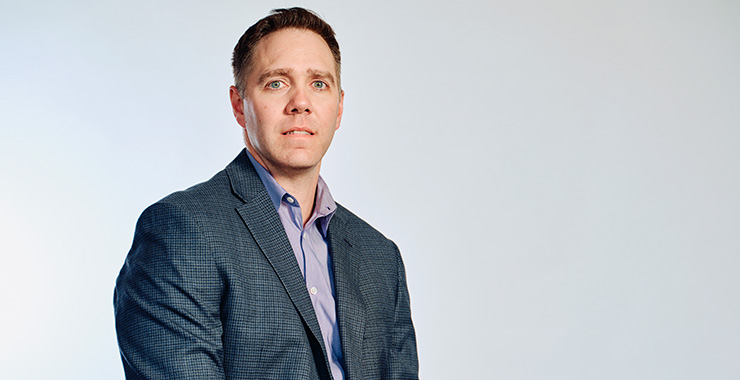
For clinical psychologist Dan Pelton, PhD, firsthand experience with professional burnout shaped the trajectory of his career. In 2011, he spent 10 months as an Army brigade psychologist in eastern Afghanistan, where he was the only psychologist serving a population of more than 4,000 soldiers. “It was a rewarding but overwhelming experience,” he said. Though he felt prepared for the clinical work, he wasn’t ready for the professional isolation. “I took for granted how important it was for me to have fellow psychologists whose doors I could knock on when I needed to talk,” he said.
By the end of his combat tour, he recognized symptoms of burnout in his own work. He was emotionally exhausted, and his empathy was feeling rough around the edges. Years later, he can appreciate the lessons he learned. “First, I realized that if I, as a mental health provider, can burn out, it can happen to anyone,” he said. The second lesson: “An employer’s choices and culture have a direct effect on employees’ resilience.”
In 2011, for example, some miliary recruiters felt incentivized to enlist more service members, including some with severe mental illness who ordinarily would have been disqualified. As a result, military psychologists like Pelton were devoting most of their time to a few high-needs cases. “That’s just one example of the many ways that organizational choices can contribute to—or protect against—employee burnout,” he said.
Today, Pelton is a mental health leader for Deloitte’s Government and Public Service (GPS) Practice. In this role, he partners with leadership across active-duty military, federal health agencies, federal law enforcement, and higher education to determine what programs are currently in place, identify gaps, and then develop strategies, programs, and evaluation techniques to address the mental health or wellness challenges they’re facing.
The Monitor spoke with Pelton about trends in workplace resilience, what employers can do to prevent burnout, and how psychologists can help.
What contributes to workplace burnout?
Let me first define burnout. Burnout emerges in response to prolonged work stress and is characterized by exhaustion, cynicism, and reduced personal accomplishment. The impact of burnout can be devastating, and in some cases it can take over a year to recover. We’ve surveyed thousands of employees across various industries, and most report workload (nature and volume of work) to be the largest driver of burnout. Conversely, recognition is one of the most important protective factors. A large proportion of the workforce rates public recognition and praise as important as, if not more important than, financial rewards. It’s important to recognize people specifically for what they’ve done well—just saying “good job” doesn’t cut it. But that creates an interesting conundrum. Recognizing employees with bonuses or praise but not addressing factors contributing to increased workload can incentivize burnout behaviors and inadvertently create a burnout cycle.
We typically look at six factors that contribute to workplace resilience, based on the Areas of Worklife Survey: workload, recognition, community, control, fairness, and purpose. I’ve observed that employers that do each of these well have a happier and more engaged workforce. In organizations that don’t do these things well, people are leaving and seeking employment elsewhere.
How can employers address these factors?
Employees are leaving their jobs for companies that have programs, services, and benefits that support their mental health and well-being. The challenge is that employers often put the onus of responsibility on individuals to become more resilient. They say, “I see you’ve been stressed; why don’t you take a week off to rest and rejuvenate.” That’s well-intentioned, but if the employee comes back to the same broken system, they’ll inevitably burn out again. We’re in unprecedented territory post-COVID, with hybrid work and a back-to-back Zoom culture. We have a pandemic of burnout coming if we don’t thoughtfully rearchitect how work is being done.
One area that employers can target is a phenomenon called collaboration overload. One study shows that post-COVID, employees spend 85% of their workweek collaborating via instant messages, emails, texts, and team chats—and for many people this phenomenon has been accelerated over the course of the pandemic. People who spend most of the day collaborating can’t get much done. That affects both their productivity and well-being. Employers can curb the “always on” culture by helping people collaborate more effectively and put more structure into their work—for example, encouraging calendar blocks, ensuring certain days or times are meeting free, and creating online knowledge repositories.
How should employers be thinking about well-being versus mental health?
Modern organizations generally feel more comfortable talking publicly about well-being—things like stress management, self-care, mindfulness, and more. That’s fantastic in and of itself, but we’re seeing rising rates of mental illness in the workforce, which have been accelerated by COVID. Employees are looking to their organization to address their mental health as well as their well-being needs.
One thing that employers can do is evaluate the effectiveness of their employee assistance programs (EAP) and optimize those services. Many companies find their EAPs aren’t being fully used. Employees may have trouble connecting with their EAP in a timely manner or feel the services or providers don’t match their needs. Employers can also create empowerment around mental health, such as offering classes on mental health literacy, helping employees understand what services are available to them, how to use those services, or how to interview a therapist to find a good match.
What role can clinical psychologists play in addressing employee resilience?
Mental health and wellness are top needs in the workforce, and psychologists’ skills are critical in helping employers address these challenges. Our nuanced understanding of how individual psychopathology develops can be generalized to systems of people, like the workforce, which helps us understand how dysfunction can develop and spread through organizations. At Deloitte, we have internal clinical psychologists as well as psychologists working in market-facing roles to provide mental health-related services to address complex issues such as digital behavioral health and workforce resilience. But the need extends beyond our clients. I’ve seen so much opportunity to apply a psychological skill set in the workforce, particularly over the past 2.5 years. There is an ocean of need on the business side of psychology, and folks with a clinical skill set are the right people to address it.