skip to main content

Why the benefits of annual anxiety and depression screenings for kids and teens outweigh the risks

New screening guidelines are a step in the right direction. But can an already strained mental health care system respond appropriately? Here’s what you need to know

APA Style leaf logo Cite This Article in APA Style
American Psychological Association. (2022, October 26). Why the benefits of annual anxiety and depression screenings for kids and teens outweigh the risks. Monitor on Psychology, 54(1). https://www.apa.org/monitor/2023/01/screening-kids-anxiety-depression

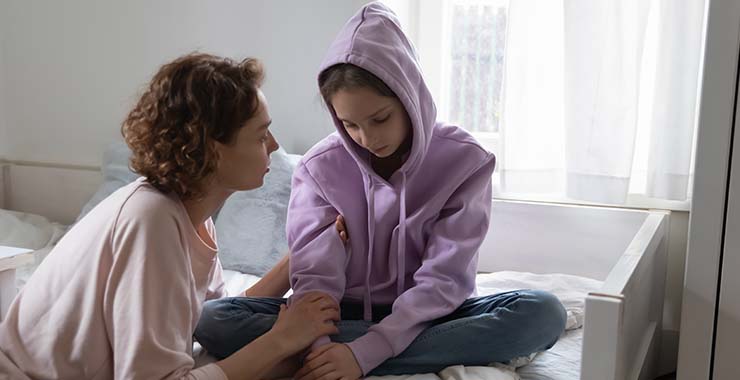
parent talking to a teen

In October, the United States Preventive Services Task Forceopens in new window (USPSTF) released new recommendations for screening children and adolescents for anxiety and depression amid a growing crisis of youth mental health. The task force, made up of 16 volunteer health care experts who review the evidence to determine the benefits and harms of various preventive health services, recommended anxiety screenings for youth, ages 8 to 18, and depression screenings for adolescents, ages 12 to 18.

“Too many children and teens are experiencing mental health concerns. This has been going on for many years and the Covid-19 pandemic has simply escalated the problem,” said clinical psychologist Lori Pbert, PhD, a professor of population and quantitative health sciences at the University of Massachusetts Chan Medical School and a member of the USPSTF.

[ Related: Anxiety among kids is on the rise ]

About 8% of children and teens met criteria for an anxiety disorder in 2019 and experts estimate that the number has increased during the pandemic (National Survey of Children’s Health, Child and Adolescent Measurement Initiative, 2019opens in new window). Among high school students, an increase in depressive symptoms and a 44% spike in suicidal thoughts and behaviors further drove U.S. Surgeon General Vivek Murthy to declare a youth mental health crisisopens in new window in 2021.

Amid those trends, the USPSTF has made its first ever recommendation for regular anxiety screenings for children ages 8 to 18. After reviewing the evidence, the task force gave a “B” grade to the recommendation, meaning they have moderate certainty that the benefits of annual screenings outweigh any risks ( JAMAopens in new window , Vol. 328, No. 14, 2022opens in new window). At the same time, the task force reaffirmed its 2016 recommendation that adolescents, ages 12 to 18, receive regular screenings for depression ( JAMA , Vol. 328, No. 15, 2022 opens in new window). Evidence was insufficient to unilaterally recommend anxiety screenings for children 7 and under, depression screenings for children 11 and under, or suicidality screenings at any age.

Separately, the USPSTF has released guidanceopens in new window that recommends screening for anxiety and depression in adults under 65, which will be formalized in 2023 following a public comment period.

[ Related: Routine anxiety screenings for adults can get people vital help earlier, APA CEO says ]

The new recommendation applies to children and adolescents without a diagnosed mental health condition who are not showing signs or symptoms of depression, anxiety, or suicide risk. (Separate from these recommendations, any child or teen displaying signs and symptoms of a mental health condition should be assessed and connected to care.) The screening itself—typically done by the child’s primary care provider—is not sufficient to diagnose anxiety or depression; instead, it identifies children who warrant further assessment, ideally by a mental health professional. That may lead to a recommendation for ongoing monitoring or a prescribed course of treatment.

“This recommendation sends the message that childhood anxiety and depression are serious and we need to systematically screen for them on a regular basis, even if patients aren’t coming to us reporting symptoms,” said Joseph F. McGuire, PhD, associate professor of psychiatry and behavioral sciences at John Hopkins Medicine, and a clinical psychologist who works with children and adolescents.

ADVERTISEMENT

A strained system

While the health benefits of identifying children and teens who are suffering from anxiety and depression are clear, the new screenings will add cases to a mental health care system already under strain. Psychologists and other mental health professionals are facing severe burnout and the demand for services far exceeds the supply of qualified clinicians, said Daniel Mullin, PsyD, MPH, an associate professor of family medicine and community health at the University of Massachusetts Chan Medical School.

“Simply put, in many communities, treatment will not be available after screening,” he said.

Still, the task force says recommendations like these can help spread awareness of the need to create greater access to mental health care for children and adolescents. They may also foster an environment where new, creative solutions can arise.

“There’s no way to hide from the reality that therapists are already stretched and this approach is going to introduce more people who will need services,” said Bunmi Olatunji, PhD, a professor of psychology and psychiatry and behavioral sciences and director of the Emotion and Anxiety Research Lab at Vanderbilt University. “But it’s also an opportunity to figure out how we can adapt.”

For example, telehealth services can ease the burden on mental health providers and help reach patients who are geographically isolated.

Stepped-care models, which match treatment intensity to patient needs, can also reduce the strain on clinicians. Not every child who screens positive will go on to get a diagnosis and not everyone with a diagnosis will require ongoing care. For some, guided self-help materials (delivered through workbooks or apps) may be sufficient. For others, school-based interventions and group therapy are another way to provide evidence-based treatment amid the workforce shortage.

Integrated care teams, where primary care physicians work alongside mental health professionals and other specialty providers, are also crucial for making treatments more accessible to children in need, Mullin said.

That can make the transition from primary care to mental health treatment smoother and help normalize mental health as a part of overall well-being. At minimum, primary care providers must know how to administer screenings to their patients and have a reliable network of mental health providers where they can refer patients and their families, said Janine A. Rethy, MD, MPH, division chief of community pediatrics at MedStar Georgetown University Hospital and an associate professor of pediatrics at Georgetown University School of Medicine.

“We can’t just be screening—we also need the training, the resources, and the partnerships to be able to respond,” she said.

Ongoing challenges for primary care providers include limited formal education on mental health, long waitlists that make it difficult to maintain a reliable list of mental health providers for referrals, and a lack of sustainable reimbursement to build integrated care teams that include psychologists, social workers, and care coordinators. One way psychologists can help is through phone consultations to primary care providers who do not have ready access to a mental health professional.

Intervening early

The USPSTF is not a regulatory authority, so health systems and primary care providers will bear responsibility for whether and how to implement the new recommendations.

While the task force found that evidence was insufficient to recommend a specific interval for anxiety and depression screenings, the testing will likely take place during annual check-ups. Providers can use several evidence-based tools for evaluating anxiety and depression in children and teens, such as the 9-item Patient Health Questionnaire for depression and the Screen for Child Anxiety Related Disorders (scared) for anxiety. scared includes a list of questions for children, with items such as “I get stomachaches when I am at school” and “I worry about things working out for me,” as well as a related list for parents.

These and other questions can help flag children suffering from anxiety who may otherwise slip through the cracks.

In children and teens, generalized anxiety disorder and social anxiety disorder are the most common anxiety disorder diagnoses. The Diagnostic and Statistical Manual of Mental Disorders (DSM-5) also recognizes five other types of anxiety disorders: panic disorder, agoraphobia, specific phobias, separation anxiety disorder, and selective mutism (an inability to speak in certain social situations, such as at school).

Untreated anxiety during childhood is associated with increased risk for future anxiety disorders (including the same or another type), as well as a higher risk of depression ( JAMA , Vol. 328, No. 14, 2022 opens in new window).

“We know that when anxiety disorders are not treated, they do have a very chronic course, and in many cases, actually get worse,” Olatunji said.

But the Centers for Disease Control and Prevention estimate that only about 20% of children with mental or behavioral health problems receive specialized care from a mental health professional (Improving Access to Children’s Mental Health Care, CDC, 2022opens in new window).

The new screening recommendations will likely further increase demand for psychological treatment, and experts say it’s important to stick to evidence-based treatments.

“A license to do something is not a license to do anything,” said Olatunji. “We have to be mindful that we’re only providing interventions that are evidence-based, and not to sway away from that just because there’s pressure to intervene.”

Ultimately, that leads back to the workforce shortage. Fulfilling the promise of the new screenings will require more psychologists, as well as other mental health professionals, trained to deliver care and resources tailored to children and teens in need.

“We can’t address this mental health crisis in youth without building more capacity of mental health professionals,” Pbert said.

Recommended Reading

Psychology topics

You may also like