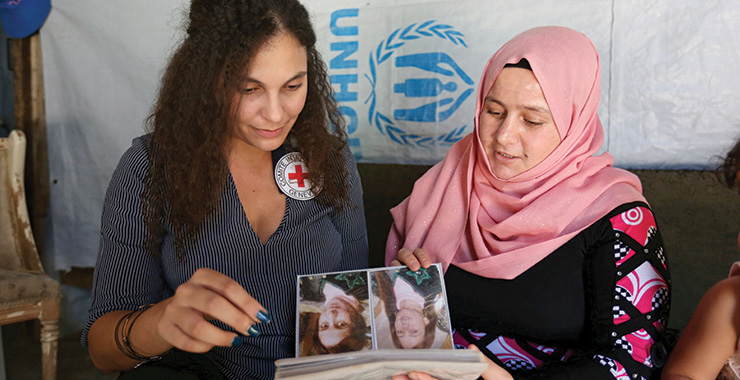
Related to—and often overlapping with—efforts in humanitarian settings, many psychologists work to promote and protect human rights, which are fundamental entitlements inherent to all human beings that can be particularly threatened during humanitarian challenges.
In a survey of 31 psychological associations in 29 countries, most reported increasing their commitment to human rights prior to 2021, including undertaking work with nongovernmental organizations or establishing a section dedicated to human rights (Wainwright, T., et al., Psihologijske Teme, Vol. 31, No. 1, 2022opens in new window).
“This is a big part of what we do as psychologists. Human rights are part of our ethical code of conduct,” said Alfonso Mercado, PhD, a licensed clinical psychologist and an associate professor of psychological science at the University of Texas Rio Grande Valley. “If we find ourselves in a situation where that is of great concern, it’s important to play a role and to help.”
[Related: International humanitarian careers]
To learn more about a human rights framework on psychology, Nora Sveaass, PhD, a human rights advocate and a professor of psychology at the University of Oslo, suggests familiarizing oneself with key global and regional declarations. These documents offer concrete guidance on a wide array of topics, including the right to seek asylum, marry, and access information from the mass media.
“My advice to psychologists is to be faithful to psychology and also at the same time learn about human rights. Human rights are closer to psychology than we often think, and we can contribute both to the strengthening and defense of these principles in practice,” Sveaass said. “This is something very important, it is doable, and we can make a difference.”
Key United Nations declarations include:
- Universal Declaration of Human Rightsopens in new window
- International Covenant on Civil and Political Rightsopens in new window
- International Covenant on Economic, Social and Cultural Rightsopens in new window
- Convention on the Rights of the Childopens in new window
- Convention Against Torture and Other Cruel, Inhuman or Degrading Treatment or Punishmentopens in new window
- International Convention on the Elimination of All Forms of Racial Discriminationopens in new window
The following resources offer training and information at the intersection of psychology and human rights:
- The Global Network of Psychologists for Human Rightsopens in new window creates a bridge between psychologists and international human rights issues, including bimonthly webinars on a range of related topics.
- Mental Health and Human Rights Infoopens in new window provides training manuals, guidelines, and other resources on supporting people affected by human rights violations and crises such as gender-based violence, disasters, or torture.
- World Health Organization QualityRightsopens in new window is a set of training and guidance materials designed to establish a human rights framework for mental health support, including for people with disabilities.