For psychologists interested in exploring humanitarian work, those with experience in the field offer guidance on how to get started and build a meaningful career.
Develop your strengths
Before seeking work abroad, especially in conflict zones, Sveaass recommends learning to provide crisis-focused mental health care well where you are—for instance, by working in a hospital or community clinic.
“A colleague of mine says, ‘people can easily bring chaos into chaos,’ and that should not happen,” she said. “Psychologists should be well trained and have some experience before working with people exposed to so much crisis and insecurity.”
In the United States, opportunities abound for working with people from a variety of cultural, religious, and economic backgrounds. Those experiences provide a critical foundation for crisis intervention or other work in humanitarian settings.
Volunteering to aid disaster relief efforts with your local chapter of the American Red Cross is another way to gain experience with circumstances that bear similarities to international humanitarian crises, Nitza said.
“Starting out responding to a local emergency like a house fire is a great way to get your feet wet and figure out if this kind of work—which requires a lot of cognitive flexibility—is for you,” she said.
Expand your knowledge and expertise
There is no single path to a career in international humanitarian psychology, but there are some key skills psychologists can sharpen.
Training in interventions such as Psychological First Aid and Skills for Psychological Recovery, or becoming a Red Cross international disaster responder, can help build a foundation for working in humanitarian contexts, Nitza said.
Those still in school might choose electives that can help lay the groundwork for humanitarian activities. These could include courses on trauma, human rights, organizational psychology, and equity, diversity, and inclusion. Nitza also suggests that clinicians-in-training gain deep expertise on group-based interventions.
“Most of the world comes from collectivist cultures where individually based interventions don’t make a lot of sense,” she said.
Enrolling in such courses is also a good way to connect with experts working in the field and to identify potential mentors and job openings, Hijazi said. Continuing education opportunities are available through Fordham University’s Institute of International Humanitarian Affairs and the Centre for Global Mental Health.
“Build your network and knowledge by finding existing courses that help you make links to people who are already doing this work,” she said.
Explore humanitarian work at home or abroad
Fellowships, including those offered by the American Association for the Advancement of Science and USAID, are one key way to gain training and experience abroad.
Opportunities may also exist closer to home. Alfonso Mercado, PhD, a licensed clinical psychologist and an associate professor of psychological science at the University of Texas Rio Grande Valley (UTRGV), has done humanitarian work through his collaboration with community leaders at refugee camps near the U.S.-Mexico border. In McAllen, Texas, and Reynosa, Mexico, he partners with local legal aid organizations to conduct psychological evaluations, which can bolster requests for asylum.
“The immigration crisis is a humanitarian crisis, and our data highlights the significant trauma exposure and rates among this population, often with no trauma-informed care,” Mercado said.
Focus on helping the helpers
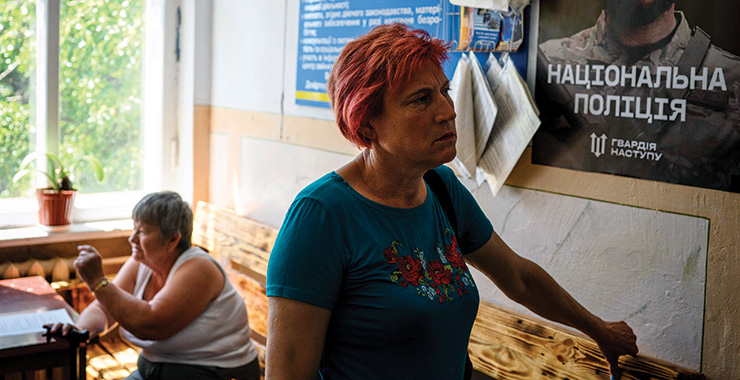
For psychologists who want to get actively involved in humanitarian crises around the world, one great way to do so while minimizing harm is providing support for local mental health workers.
“A really clever option for psychologists who want to help is to figure out how to support the mental health providers on the ground,” Aldhalimi said. “Do we all need to go to Ukraine and see patients? No. But do psychologists in Ukraine need support right now? Absolutely.”
That may include addressing secondary traumatic stress through debriefing and helping local providers find ways to maximize the impact of the services they provide, she said. The latter could involve collaborating with local service providers, academic institutions, and community leaders to find out where they need help and fill gaps—for instance, by assisting with training initiatives.
Transition throughout your career
Because humanitarian work falls outside of traditional teaching, research, and practice activities, psychologists who walk this path have a number of options for shaping a fulfilling career.
Partnering with an academic institution is one way to build a platform for the work, conduct relevant research, and maintain a stable salary. At UTRGV, Mercado helped establish a bilingual, multicultural clinical psychology doctoral program that provides special training for working with immigrants, refugees, and Latine communities. He has also maintained a strong relationship with the Texas Psychological Association, where he served as president in 2022 with the theme of assisting disadvantaged populations.
On the clinical side, providers often combine private practice with pro bono or volunteer work in order to make a decent living, Sveaass said. And after working on the front lines for more than a decade, Hijazi shifted into consulting and advocacy while pursuing additional training in clinical psychology. She now works with UNICEF to scale up global mental health support for children, young people, and caregivers at the policy and programming levels.
Leverage this opportunity for growth
Humanitarian work is challenging and requires sacrifice—psychologists doing crisis response, for example, may need to spend time apart from their loved ones. But the work can also be incredibly rewarding, Hijazi said, and can broaden one’s perspective in ways that are life- and career-changing.
“It might be uncomfortable, and it might not be for you,” she said. “There are psychologists who will dip in and out of this world, but if they approach this work with humility, they go back to their path and aspirations with a broader, more rooted experience of the world to take with them.”