skip to main content

The impact of election stress: Is political anxiety harming your health?

Psychological science shows that politics can harm our physical and mental health, but the positive aspects of political engagement can lead to greater well-being

APA Style leaf logo Cite This Article in APA Style
Abrams, Z. (2024, October 22). The impact of election stress: Is political anxiety harming your health? Monitor on Psychology, 55(7). https://www.apa.org/monitor/2024/10/managing-political-stress

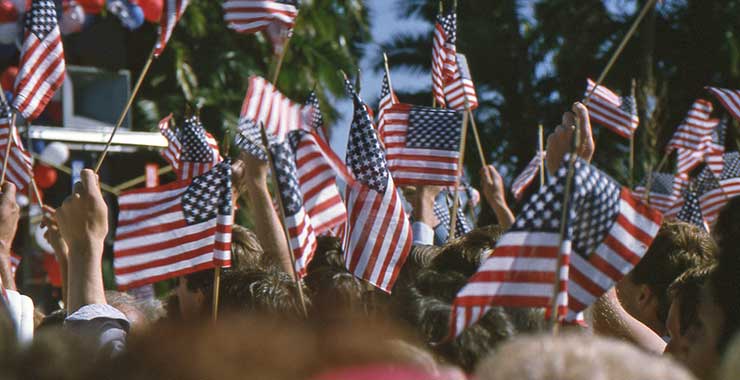
crowd of people holding american flags

Key points

  • Political concerns, which affect both mental and physical health negatively across a broad swath of the population, topped the list of stressors on APA’s 2024 Stress in America survey.
  • Political anxiety is a source of chronic stress that differs from psychological conditions such as general anxiety, with its unique impact on emotional well-being and societal cohesion.
  • Effective coping strategies include regulating exposure to political information and fostering positive social connections to mitigate the adverse effects of political stress.

Americans are feeling increasingly stressed about politics amid assassination attempts, a late-breaking candidate change, debate drama, and legal battles. In APA’s 2024 Stress in America survey, 77% of U.S. adults said the future of our nation was a significant source of stress in their lives (Stress in America 2024, APA).

Research shows the distress we feel around politics can harm our physical and mental health—and it’s only getting worse. In 2016, the presidential election caused significant stress for 52% of adults—this year, that number jumped to 69%. Additionally many U.S., adults said they were worried that the election results could lead to violence (74% of respondents) or that the 2024 election could be the end of democracy in the U.S. (56% of respondents) (Stress in America 2024, APA).

“In general, we know that chronic stress harms psychological well-being and physical well-being. It takes a toll on our bodies,” said Brett Ford, PhD, an associate professor of psychology at the University of Toronto who studies the link between emotions and political engagement. “There’s a strong case to be made that for many people, politics is a form of chronic stress.”

There’s a strong case to be made that for many people, politics is a form of chronic stress.
—Brett Ford, PhD, associate professor of psychology, University of Toronto

In national surveys, close to half of U.S. adults say politics is a significant source of stress, citing problems such as lost sleep, shortened tempers, and obsessive thoughts (Smith, K. B., PLOS ONE, Vol. 17, No. 1, 2022opens in new window). On a daily basis, diary studies show that political events can make self-reported emotional reactivity and physical health worse (Neupert, S. D., et al., Current Psychology, Vol. 40, 2021opens in new window).

“There is a considerable and growing amount of evidence that politics is having a negative effect on a broad range of health outcomes,” said Kevin B. Smith, PhD, a professor of political science at the University of Nebraska–Lincoln who studies how politics affects well-being. “This is coming from different scholars using different data, approaches, and measures, and it all triangulates on the same inference: Politics isn’t very good for us.”

Psychologists, political scientists, and other experts are now digging further into the concepts of election stress and political anxiety with the hope of better understanding—and hopefully assuaging—those negative effects.

A shared stressor

Research has accelerated since the 2016 election, seeking to understand the unique aspects of “political anxiety,” including where it might overlap with psychological conditions such as general anxiety, and where it differs. Early studies suggest that the two concepts are distinct. In other words, people who report feeling anxious about politics aren’t simply people with high levels of anxiety overall (Weinschenk, A., & Smith, K. B., Politics and the Life Sciences, 2024opens in new window).

“There’s something distinctive about the way politics is stressing us out,” said Jayme Renfro, PhD, an associate professor of political science at the University of Northern Iowa who has conducted research on election stress. “Political anxiety is a thing that is separate from, or at least a distinct part of, stress and anxiety in general.”

Politics is a stressor that’s complicated and multifaceted, Ford said, partly because it can trigger such a wide variety of emotions, ranging from worry, sadness, and despair to outrage, disgust, anger, frustration, and more. Political events can have both short- and long-term repercussions, and they often involve conflict between groups, which can have real-life social ramifications.

The collective nature of politics also sets it apart from most other life stressors, said Shevaun D. Neupert, PhD, a professor of psychology at North Carolina State University who studies how elections impact day-to-day emotions.

“This is a widely felt phenomenon, a shared experience that affects all people living in this country in one way or another,” she said.

In national surveys led by Smith, conducted during the 2018 midterms and 2020 presidential election, around 40% of U.S. adults said politics was a prominent source of stress in their lives (PLOS ONE, Vol. 17, No. 1, 2022opens in new window; Journal of Elections, Public Opinion and Parties, Vol. 34, No. 3, 2024opens in new window).

“When we’ve probed a little deeper, significant proportions of Americans report that because of politics, they lose sleep, have damaged social relationships, and can’t stop paying attention to social media,” Smith said.

Across three separate surveys, 1 in 20 people also reported being so distressed about politics that they had suicidal thoughts.

Studies of partisanship echo those findings. In one study, people who said their state was becoming more politically polarized were also more likely to develop anxiety or depression (Nayak, S. S., et al., Social Science & Medicine, Vol. 284, 2021opens in new window). When people felt politically dissimilar from the average voter in their state, they also reported experiencing worse physical health (Fraser, T., et al., PNAS Nexus, Vol. 1, No. 1, 2022opens in new window).

That distress is so severe that it spurs some people to consider moving. Because of the political environment, 41% of U.S. adults said they have considered moving abroad and 39% considered moving to another state (Stress in America 2024, APA).

Election season is particularly turbulent, with swells of positive and negative emotions as primaries, rallies, and debates unfold. Daily diary studies led by Neupert found that emotional reactivity in various life domains (including work and relationships) increased several days before and after the 2016 and 2018 elections (Current Psychology, Vol. 40, 2021opens in new window; Zhu, X., et al., Psychological Reports, Vol. 125, No. 5, 2021opens in new window).

“On days when people were experiencing more election-related stress, they also had more negative emotions and reported worse physical health,” she said.

Part of that stress may be related to the act of voting itself. During the 2012 presidential election, Renfro, Smith, and their colleagues found higher cortisol levels in people voting at the polls compared to those who voted at home or did a control task outside the home that was unrelated to politics (Neiman, J., et al., PLOS ONE, Vol. 10, No. 9, 2015opens in new window).

The aftermath of elections may carry its own set of challenges. Following the 2016 presidential election, alcohol spending went up in counties where support for the losing candidate was higher (Musse, I., & Schneider, R., Economics & Politics, Vol. 35, No. 1, 2023opens in new window).

But studies also point to our resilience in the face of election stress, finding that anxiety and depressive symptoms tend to fade in the days or weeks after an election (Roche, M., J., & Jacobson, N. C., Psychological Reports, Vol. 122, No. 2, 2019opens in new window; Simchon, A., et al., Journal of Experimental Psychology: General, Vol. 149, No. 11, 2020opens in new window).

“Interestingly, longitudinal work tracking people over time suggests that these hits we take to well-being, on average, don’t last very long,” Ford said. “But that’s on average, and it may not take into consideration how people differ from each other.”

For example, people who are young, politically engaged, or left-leaning tend to experience higher levels of political anxiety than their counterparts (PLOS ONE, Vol. 17, No. 1, 2022opens in new window). Where a person lives and who they interact with can also have a big effect on political anxiety levels, Neupert said.

Staying politically engaged

On the surface, basic strategies for regulating emotions can work to reduce stress about politics. Ford and her colleagues found that after the 2016 election, Hillary Clinton voters who reframed their negative thoughts about the election outcome using cognitive reappraisal techniques had better emotional well-being (Journal of Personality and Social Psychology, Vol. 117, No. 5, 2019opens in new window).

But the benefits came at a cost because those respondents were also less motivated to take political action. A follow-up study replicated the results, finding that emotion regulation strategies (including distraction and reframing) improved well-being but reduced political engagement (Journal of Personality and Social Psychology, Vol. 125, No. 1, 2023opens in new window).

“We’re seeing a trade-off between reducing negative emotions about politics, which is a perfectly reasonable goal, and the motivation to be politically active,” Ford said.

Those findings beg the question: “Is there a way of regulating the negative emotions politics triggers so politics doesn’t impair our well-being, but at the same time, doesn’t decrease our motivation to take action?” said psychologist Matthew Feinberg, PhD, an associate professor of organizational behavior at the University of Toronto and a collaborator of Ford’s.

The team’s latest research is exploring whether the positive emotions politics can evoke—things like admiration, compassion, inspiration, and gratitude—can be used to motivate voters to action without raising their stress levels. So far, the study is yielding promising results.

“Just as negative emotions help drive us to take action, so too do our positive emotions,” Ford said. “These kinds of socially engaged emotional experiences appear to help push people to get involved, but with less cost to their well-being.”

Those results are echoed by recent reports. The election may be a source of stress for more U.S. adults this year, but they also plan to volunteer and contribute more to causes they value, according to APA’s Stress in America survey. Fifty-one percent of adults planned to do so, compared to 45% prior to the 2020 presidential election.

Social connection clearly makes a difference, but some social ties are more helpful than others, according to research on partisanship by Costas Panagopoulos, PhD, a professor of political science at Northeastern University in Boston, and his colleagues.

In polarized communities, they found that bonding ties, or bonds between people who are similar (in this case, politically similar), were linked with better physical and mental health (International Political Science Review, Vol. 75, No. 3, 2022opens in new window). Bridging ties—connections with dissimilar people—were associated with worse overall health for people who were politically isolated.

“When we’re worried, we have an instinct to isolate ourselves, but we have to reach out and connect,” said Steven Stosny, PhD, a clinical psychologist, consultant, and author based in Washington, D.C., who works with individuals and couples experiencing stress around politics and daily news.


american flag hanging over the empty site of a political rally

Limiting chronic exposure

While there’s plenty of historical precedent for chaos and contention in U.S. politics, some aspects of the last few election cycles are fundamentally different.

“The information environment has changed, making it much, much harder to ignore politics today,” Smith said. “It’s not something we’re getting in the morning with the newspaper and in the evening on the TV broadcast—it’s now constant, all the time.”

A 24-hour news cycle full of conflict and vitriol functions as a chronic, low-level stressor that can trigger election stress. Stosny said that patients he works with report intrusive thoughts, compassion fatigue, and strained relationships related to the election.

Ford says to keep in mind that social media platforms are designed to keep us engaged and push our buttons. That means it takes extra effort to limit chronic exposure, but finding a balance is important. Tune in when there’s something to be done, she said, like finding out where to vote or how to contribute to a campaign. Another tip: Consider reading rather than watching your news, Renfro said.

“Reading gives you a little bit more control over what you’re ingesting, so you’re not being bombarded with scenes and images that may be intended to manipulate you in some way,” she said.

On the topic of political anxiety, Smith said what we don’t know is still much, much larger than what we do. Priorities include a deeper understanding of how politics affects health across various groups, and how to support individual well-being without harming collective goals, such as political participation.

“We can’t ask people to sacrifice their well-being, so we need to understand what can work to reduce political anxiety,” ideally without reducing engagement, Ford said. “It’s a tall order, but an important one.”

Further reading

Recommended Reading

Recommended reading

Speaking of Psychology

Subscribe to APA’s audio podcast series highlighting some of the most important and relevant psychological research being conducted today.

Subscribe to Speaking of Psychology and download via:

Appleopens in new window
Apple podcast logo

Spotifyopens in new window
Spotify logo

You may also like