skip to main content
In brief

Playtime interactions, social media addiction, and more scientific research

Snapshots of peer-reviewed studies in psychology and related fields
APA Style leaf logo Cite This Article in APA Style
Palmer, C. (2025, April 1). Learning to play, social media addiction, short-circuiting suicidal ideation. Research in Brief, 56(3). https://www.apa.org/monitor/2025/04-05/playtime-social-media-addiction-happiness

mother playing with two young children

Modeling playtime

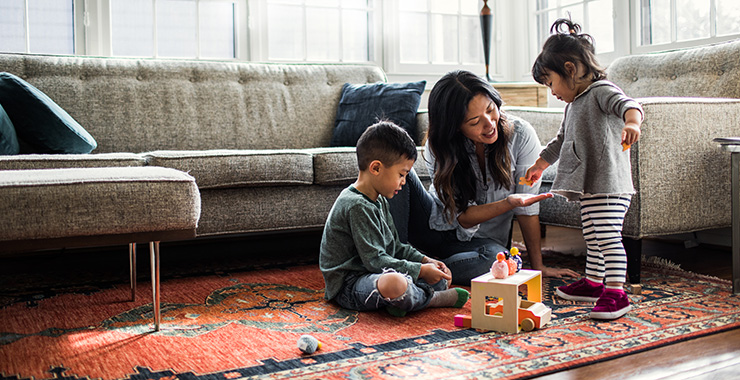
A mother’s interactions with her child can shape how the child plays with other children, suggests research in Developmental Psychology. Researchers observed 128 mothers in the United States playing with their 32-month-old children in a single playroom lab session. Six months later, the researchers observed the children interacting with kids they had never met, and then when the children were ages 58 and 66 months, playing with a close friend. During all interactions, the researchers focused on the children’s responsiveness (being receptive to play suggestions) and assertiveness (initiating play or proposing ideas for games). During the mother-child playtime, the researchers also noted the mothers’ sensitivity to their children’s interests and requests. Children whose mothers balanced sensitivity and responsiveness in play were more likely to show the same skills with their friends. Similarly, children who were assertive during play when their mothers were responsive were more likely to be assertive with new acquaintances.
DOI: 10.1037/dev0001809
Social support short-circuits suicide ideation

People struggling with mental health symptoms are less likely to think about suicide if they have a social support network in place, according to research in Psychological Services. Researchers surveyed 4,436 U.S. veterans and 13,994 nonveterans about their mental health symptoms (post-traumatic stress, anxiety, alcohol use, depression), current suicide ideation, and perceived level of social support from a significant other, a friend, or family members. They found that perceived social support was more protective against suicide ideation for those with lower levels of mental health symptoms than for those with higher symptom levels. Findings were consistent across veterans and nonveterans, men and women, social support sources, and mental health symptoms. The findings indicate that individuals with lower severity of mental health symptoms may benefit from strategies aimed at increasing perceived social support more than those with higher symptom severity. 
DOI: 10.1037/ser0000849

Family proximity and community values

People who live near their relatives have a stronger sense of community and harsher attitudes toward transgressive behavior, indicates research in the Journal of Personality and Social Psychology. Across six studies, researchers surveyed 3,301 people in the United States, Ghana, and the Philippines about their relatives’ proximity, their social and personal identities, and their attitudes about social issues. They found that people who live close to their family, or who even imagine residing near family, were more likely to engage in extreme pro-group behavior (e.g., willingness to serve their country in a war); believe that people are fundamentally connected to others; identify themselves as more connected to, and trusting of, their community and neighbors but less connected to foreigners; condemn antisocial behaviors (e.g., support the death penalty for murder); and, because of increased worry about inbreeding, judge sibling incest as significantly more morally wrong. 
DOI: 10.1037/pspa0000428

Parental conflict and social media addiction

A poor relationship with parents during adolescence, characterized by low parental monitoring and lots of conflict, can contribute to the development of social media addiction in adulthood, suggests research in the Canadian Journal of Behavioural Science. Researchers surveyed 322 participants in Canada about monitoring by and conflicts with their parents at three key developmental stages: adolescence (age 15), emerging adulthood (age 25), and adulthood (age 30). Lower levels of parental monitoring when participants were 15 years old were associated with greater use of chat sites, which predicted increased social media involvement at age 25 and, ultimately, greater likelihood of social media addiction at age 30. This finding suggests that early online behaviors, influenced by parental factors, can have lasting effects on social media habits. In contrast, parent–adolescent conflicts were directly associated with social media addiction at age 30, but this association was not influenced by chat site use at age 15 or social media involvement at age 25.
DOI: 10.1037/cbs0000428

Mild brain zaps ease depression

Gentle brain stimulation could be an effective at-home remedy for treatment-resistant depression, indicates a study in Nature Medicine. Researchers trained 174 adults in the United Kingdom and the United States, all of whom had been diagnosed with a major depressive disorder, to use a headset to deliver transcranial direct current stimulation (tDCS), in addition to their regular treatment. Half of the participants were randomly assigned to receive a current of 2 milliamperes—about 0.5% of the energy needed to power a 100-watt light bulb—for 30 minutes, 5 times a week for the first 3 weeks, then 3 times a week for 7 weeks. Participants in a control group wore a sham headset. After 10 weeks, the treatment group’s depression symptom scores dropped by 9.41 points, whereas the control group’s scores decreased by 7.14 points. Nearly 45% of participants with the active tDCS device experienced a reduction in or recovery from their symptoms, compared with almost 22% of those with the control device. 
DOI: 10.1038/s41591-024-03305-yopens in new window

Don’t worry (about happiness), be happy

Research in Emotion suggests that worrying too much about happiness can make you feel less happy and even more depressed. Researchers asked 1,815 participants in the United States to complete surveys and diaries over the course of 1 to 11 years that measured the value they placed on happiness as well as three facets of well-being: satisfaction with life, psychological well-being, and depressive symptoms. Not only did aspiring to be happy not predict participants’ overall well-being, but being concerned about happiness was heavily associated with lower well-being, including less satisfaction with life and greater symptoms of depression. The findings suggest that the pursuit of happiness does not adversely impact well-being, but focusing too keenly on one’s own level of happiness can. 
DOI: 10.1037/emo0001381

Get a job to match your personality

Stereotypes about personality traits and occupations are largely true, suggests a study in the Journal of Applied Psychology. Researchers asked 68,540 adult participants in Estonia to disclose their primary occupation and answer 198 questions assessing not only the Big Five personality traits (extraversion, neuroticism, openness, agreeableness, and conscientiousness), but also more nuanced traits, such as curiosity, sociability, precision, and emotional stability. The findings revealed that occupations explained 2%–7% of the variance in the Big Five traits but up to 12% of the variance in individual nuanced traits. In general, occupational groups with specific personality demands showed clear differences in personality traits. For instance, participants in social professions like sales scored higher on extraversion. Occupations linked with higher performance demands exhibited more uniformity for specific traits, particularly emotional stability and conscientiousness. 
DOI: 10.1037/apl0001249

Runner’s high

For beginning runners, overestimating the difficulty of a run makes the experience more enjoyable, according to a study in Sport, Exercise, and Performance Psychology. Researchers recruited 66 participants in Belgium who were engaged in a “start-to-run” program. Before a daily run, the participants predicted the amount of perceived exertion they would experience. Then, just after the run, they rated how much exertion they perceived experiencing as well as how much pleasure they got out of the run. The researchers found that running pleasure increased when the actual exertion level was less than predicted. 
DOI: 10.1037/spy0000362

Text abbreviations signal insincerity

When texting, using full words instead of abbreviations makes people appear more sincere and increases their likelihood of receiving responses, indicates research in the Journal of Experimental Psychology: General. In a preliminary survey, researchers found that 99% of respondents reported using texting abbreviations (e.g., “IDK” for “I don’t know”), and 84% believed that others would respond well to abbreviations. Then, across eight studies with 5,306 participants—including an analysis of Discord chats, dating scenarios, and conversations among Tinder dating app users from 37 countries—texters who used abbreviations received shorter and fewer responses and were less likely to receive contact information from the other texter. A post-test study with 120 participants found that just 15.8% accurately predicted the researchers’ main findings, suggesting that most people are not aware of the detrimental impact of texting abbreviations on perceived effort, responsiveness, and sincerity. 
DOI: 10.1037/xge0001684

More noise, less talk

According to a study in Developmental Psychology, the noisier a home’s background sounds, the less infants and their mothers interact vocally. Researchers quantified background sounds—television/screens, devices, music, appliances, and transportation/construction—during 1- to 2-hour blocks in 76 homes in the United States with infants 8 to 26 months old. Exposure varied enormously among homes but was stable within a given home across the weeklong study period. On average, infants vocalized during 46% of the intervals without background sound compared with 38% of the intervals containing background sound. Mothers spoke to infants, in turn, during 64% of quiet intervals and 58% of noisy ones. Television/screen sounds, the most dominant background sounds, were associated with the lowest levels of infant vocalizations. Though the differences in noisy and quiet environments were relatively weak in magnitude, the researchers suggest that reduced language interactions can profoundly impact language learning over time. 
DOI: 10.1037/dev0001762

Manage symptoms by staying busy

For people with attention-deficit/hyperactivity disorder (ADHD), periods characterized by greater life demands are associated with milder symptoms, suggests research in The Journal of Clinical Psychiatry. Researchers analyzed data from 483 participants in the United States, all of whom were diagnosed with ADHD in childhood and tracked for 16 years. Participants were between 7 and 10 years old at the study’s start and had follow-up assessments of ADHD symptoms, functional impairments, and treatment usage every 2 years into their mid-20s. Almost 10% of participants achieved sustained complete remission, 15.6% experienced one significant reduction in symptoms that remained stable thereafter, and 11% exhibited consistently high symptoms throughout the study. Most participants (63.8%), though, exhibited fluctuating ADHD, characterized by periods of remission interspersed with recurrences of symptoms. For them, remission was most likely to occur during periods of higher responsibilities at work, school, or home, suggesting that structured, demanding environments may help some people with ADHD manage their symptoms. 
DOI: 10.4088/JCP.24m15395opens in new window

It’s not you, it’s me

Relationship satisfaction is primarily influenced by one’s personality, with partner traits having a negligible impact, suggests research in Personality and Individual Differences. Researchers analyzed data from a longitudinal survey of 486 heterosexual couples in Germany. Participants self-assessed their Big Five personality traits at study onset and rated their relationship satisfaction annually over 9 years. The results revealed that participants’ own personality traits, not their partner’s, were the primary predictors of long-term relationship satisfaction. Neuroticism had a consistently negative impact on satisfaction for both men and women, while conscientiousness positively affected relationship satisfaction for both genders. Extraversion showed a negative association with relationship satisfaction for women but not for men. Agreeableness and openness to experience had no significant impacts. 
DOI: 10.1016/j.paid.2024.112887opens in new window

Climate change distressing youth

Climate change is causing widespread distress among young people, indicates research in The Lancet Planetary Health. Researchers surveyed 15,793 individuals in the United States ages 16 to 25, about their climate-related experiences and emotions, political party identification, and beliefs about the causes of, desired and planned actions in response to, and thoughts about the U.S. government’s response to climate change. Overall, 85% of respondents said they were at least moderately worried about climate change, and 57.9% were extremely worried. In addition, 42.8% said climate change had adversely impacted their mental health, 38.3% said their feelings about climate change negatively affected their daily life, and 72.8% reported they would likely vote for political candidates who support aggressive climate protection policies. Those reporting exposure to more types of severe weather events, as well as non-Republican political identification, exhibited stronger climate-related distress and desire for action. 
DOI: 10.1016/S2542-5196(24)00229-8opens in new window

Mental exhaustion drives aggression

Prolonged mental fatigue can kick off changes in the brain’s frontal cortex that make people more aggressive and uncooperative, according to research in the Proceedings of the National Academy of Sciences. Researchers subjected 44 participants in Italy to 45 minutes of fatigue-inducing tasks. Next, the participants underwent electroencephalography (EEG) scans while playing a resource-sharing game that required varying degrees of aggression and cooperation. The fatigued participants were more uncooperative and hostile than a control group not subjected to cognitive fatigue, with a peaceful cooperation rate of only 41% compared with 86% for the non-­fatigued group. Furthermore, EEG scans of the fatigued participants showed sleeplike brain activity in areas of the frontal cortex related to decision-making and impulse control. This activity was completely absent in the non-fatigued group. A second study with 403 participants, where EEG was not measured, showed a similar effect of fatigue on behavior. 
DOI: 10.1073/pnas.2404213121opens in new window

Single and loving it

Women are more at peace with being single than men, according to a meta-analysis in Social Psychological and Personality Science. Researchers analyzed data from 10 studies representing 5,941 participants at least 18 years old (average age 32) who were not in a romantic relationship when surveyed. Across all measures, women reported a higher level of comfort being single than men reported. Besides greater happiness with their current romantic relationship status, women were less likely to want a romantic partner, more sexually satisfied, and more satisfied with their lives in general. The researchers hypothesized that single women’s greater happiness may reflect their greater likelihood of having supportive relationships beyond romantic relationships. Also, women find heterosexual romantic relationships less rewarding because they perform disproportionately more household chores; their sexual pleasure may be undervalued relative to men’s; and as their incomes approach men’s, they have less economic incentive to marry. 
DOI: 10.1177/19485506241287960opens in new window

Shakespeare or GPT?

According to research in Scientific Reports, people prefer poems written by artificial intelligence (AI) agents to those penned by humans. Researchers presented 1,164 participants in the United States with 10 poems in random order. Five were by 10 well-known poets—including William Shakespeare and Emily Dickinson—and five were by ChatGPT-3.5 in the style of the 10 human poets. The participants performed below chance levels in identifying AI-generated poems. Moreover, they were more likely to think humans had written AI-generated poems than actual human-authored poems. In a second experiment, 696 new participants rated the poems for 14 characteristics, such as quality, beauty, and rhythm. Participants who were told the poems were AI-generated gave lower ratings than those told the poems were human-written, regardless of the poems’ true origin. Participants told nothing about authorship rated AI-generated poems higher than human-written ones, perhaps, the researchers suggest, because the relative simplicity of AI-generated poems makes them easier to understand. 
DOI: 10.1038/s41598-024-76900-1opens in new window

Recommended Reading

Speaking of Psychology

Subscribe to APA’s audio podcast series highlighting some of the most important and relevant psychological research being conducted today.

Subscribe to Speaking of Psychology and download via:

Appleopens in new window
Apple podcast logo

Spotifyopens in new window
Spotify logo

Related and recent