skip to main content
Career

Strengthening and expanding access to scholarly publishing

APA is reengineering the peer review process and creating opportunities for underrepresented researchers

APA Style leaf logo Cite This Article in APA Style
Tu, L. (2025, April 1). Strengthening and expanding access to scholarly publishing. Monitor on Psychology, 56(3). https://www.apa.org/monitor/2025/04-05/scholarly-publishing-peer-review

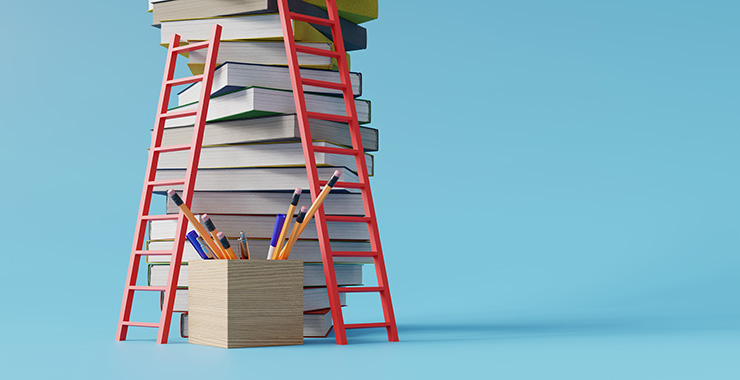
graphic of ladders for climbing pile of books

The mantra “publish or perish” looms large over academic careers, driving—and piling pressure on—scientists to secure their standing through ­peer-reviewed publications. These papers have long served as academia’s career-defining currency: Where and how often a scientist publishes can determine their job opportunities, tenure prospects, and overall credibility in the field.

But the value of this currency is shifting as academic publishing faces pressing questions about its future. The proliferation of new journals and mounting pushback against the peer-review process have exposed cracks in traditional publishing models. Those tensions came to the fore during the COVID-19 pandemic, when the urgency to share critical findings led many scientists to bypass formal peer review in favor of preprints—early versions of research papers made publicly available before third-party review. “More and more often since the pandemic, people are saying, ‘Peer review is broken, and we need a new system.’ It’s time we start having conversations about what specifically isn’t working and how we fix those issues,” said Lois Jones, peer review director for APA Journals.

The rise of large language models has also thrust science into new territory. Journals are scrambling to draft guidelines for artificial intelligence (AI) use even as debates swirl over whether these tools will spark innovation or breed shortcuts. “Can AI alone produce research or peer reviews right now? Absolutely not,” said Jones. “I don’t know what those models will look like years in the future, but people will always be needed at the heart of research.”

Yet as some aspects of academic publishing quickly evolve, others remain stuck. Disparities in scientific publishing persist despite growing calls for the system to be more transparent, diverse, and equitable. A large-scale analysis of 1 million scientific papers and editorial boards from six major publishers over 2 decades revealed that most countries in Asia, Africa, and South America have far fewer editors than statistically predicted from their share of authorship (Liu, F., et al., Proceedings of the National Academy of Sciences, Vol. 120, No. 13, 2023opens in new window). In psychology, for instance, U.S.-based scholars disproportionately occupy editorial roles, surpassing what would be expected based on the global distribution of senior psychologists. Gender imbalances are equally stark: 76% of psychology journals have editorial boards that are more than 50% male, while only 20% have similarly high female representation (Haeffel, G. J., et al., Communications Psychology, Vol. 2, No. 12, 2024opens in new window; Palser, E. R., et al., Nature Neuroscience, Vol. 25, No. 3, 2022opens in new window).

These issues, old and new, place academic publishing at a tipping point. But as the system faces rapid change, its leaders have a unique opportunity—not just to adapt but to reimagine existing practices and address long-standing inequities. APA and other organizations are at the forefront of efforts to build a more sustainable publishing process, including by pioneering editorial fellowships for early-career scholars and hosting public roundtables that confront tough questions about equity in publishing and promotion.

These programs aim to strengthen the infrastructure of academic publishing while creating new opportunities for underrepresented researchers to advance their careers. “We don’t want partial fixes; we need long-term solutions,” said Jones. “Those will only come if we have meaningful discussions about what we want academic publishing to look like decades from now.”
Evolving challenges in academic publishing

Several trends are reshaping academic publishing: The rise of online-only, open-access platforms has made scholarly research more accessible to a global audience; altmetrics and social media engagement now complement traditional citations as measures of research impact; and researchers and readers alike increasingly prefer concise, interactive formats for sharing and consuming academic work (Pal, A., et al., Current Medical Research and Opinion, Vol. 40, No. 4, 2024opens in new window).

Despite these innovations, journal editors say that peer review remains one of the most essential—and most threatened—elements of the academic ecosystem. As reviewers, scientists volunteer their time and expertise to evaluate other researchers’ work, offering feedback and suggestions to improve manuscript quality. In 2020, researchers worldwide dedicated more than 100 million hoursopens in new window, equivalent to 15,000 years, to peer-reviewing. For U.S.-based reviewers, the estimated value of this work exceeds $1.5 billion (Aczel, B., et al., Research Integrity and Peer Review, Vol. 6, No. 1, 2021opens in new window).

However, editors are increasingly struggling to source researchers willing to undertake this uncompensated, time-consuming work. Academic publishing relies on the “norm of reciprocity,” the expectation that people should repay favors and acts of goodwill, said Harris Cooper, PhD, a professor emeritus of psychology and neuroscience at Duke University. The expectation is that scientists who submit a paper and receive three peer reviews should, in turn, complete three reviews for others. While this norm has long supported the research infrastructure, it is now straining under the weight of academics’ ever-expanding workload.

Some researchers report being inundated with peer review requests, a trend driven by the explosion of scientific journals and increase in overall submissions since the COVID-19 pandemic (Else, H., Nature, Dec. 16, 2020opens in new window). “The volume of review requests many researchers receive is not feasible. I do 30 to 50 ad hoc reviews per year but receive 5 times that many requests,” said Katie Witkiewitz, PhD, a professor of psychology at the University of New Mexico and editor of APA’s journal Psychology of Addictive Behaviors.

Burnout and ongoing disruptions to academics’ professional and personal lives have also reduced scientists’ availability to review. In a November 2022 Nature poll, 75% of researchers reported reducing their weekly work hours since the beginning of the pandemic. (These figures may have shifted as institutions increasingly return to in-person work.) At the time of the survey, researchers were particularly likely to cut back on reviewing journal articles and grant proposals, as well as attending scientific conferences, with two-thirds attributing these changes to burnout (Forrester, N., Nature, March 3, 2023opens in new window).

The result is a lose-lose situation: Journal editors struggle to find reviewers; authors face extensive delays in having their papers reviewed. “You lose more and more expertise when you have to cast a wider net to find reviewers,” added Cooper, who also serves as the editor in chief of American Psychologist. The first few invited reviewers may be a perfect fit for a paper’s specialty, but subsequent reviewers might have less specific expertise. With a shrinking pool of willing reviewers, multiple journals end up approaching the same scientists, leading to less diversity in perspectives overall. “Science as a whole suffers,” said Cooper.

These growing challenges intersect with entrenched issues around the accessibility of academic publishing. Many prospective reviewers, particularly early-career scholars and researchers from historically underrepresented backgrounds, lack formal training or opportunities to engage in the peer review process, said Rose Sokol, PhD, APA’s journals and books publisher. Without guidance, they may be uncertain about when and how to review or how editors use peer review feedback. “People want to engage with peer review and contribute to their scientific community, but might question whether they’re the ‘right’ person for the job. We need more initiatives that say, ‘This is a space for you. You’re a developing expert. Please join the process,’” said Sokol.

Strengthening peer review

To secure the foundation of academic publishing, peer review needs to become faster, more transparent, and more reliable, Sokol emphasized. Building this stronger system will depend on the collective effort of its stakeholders—publishers, academic institutions, and researchers—each sharing their expertise and resources.

Modern tools are already facilitating this collaboration. For example, editors at APA Journals use a centralized system to monitor reviewer contributions in detail. This system records when reviewers were last invited, how often they accept assignments, and other details to prevent overloading or repeatedly selecting the same individuals. The latest iteration of this platform also captures demographic data, including professional stage, geographic location, and institutional affiliation. Editors do not have access to individual reviewers’ information to protect anonymity and user data, but the APA Journals team can see a general overview of the statistics, offering a clearer picture of the diversity within the reviewer pool.

One ongoing hurdle, however, is the undervaluation of peer review in academia. Most universities expect academics to participate in peer review as part of their service to the field yet undervalue this work in hiring or promotion decisions. In fact, a 2018 global survey of 11,800 scientists by Publons, a website where academics can track their editorial contributions, found that 83% of respondents believed professional institutions needed to more explicitly recognize peer review contributions (Global State of Peer Review, Publons, 2018opens in new window).

To help address this issue, APA partners with research databases such as ORCID and Web of Science to track peer review contributions. With these formal, unified records, researchers receive concrete documentation of their peer review work, which they can present to their institutions as evidence of their service. While each university ultimately decides how to weigh peer review in tenure evaluations, increasing visibility for reviewers is a critical first step, according to Jones.

In addition, APA journal editors and leadership are developing internal recognition programs to celebrate peer reviewers. Each APA print journal publishes an annual list of reviewers as a public acknowledgment. “Publicly thanking our reviewers is a fundamental part of recognizing their important work,” said Jones. “It may seem simple, but if it conveys even a fraction of our appreciation or inspires another scientist to review, it’s worth doing.”

Witkiewitz is expanding reviewer recognition efforts at Psychology of Addictive Behaviors as well. Instead of categorizing all reviewers as “ad hoc,” she established a “principal reviewer” role for early-career researchers who commit to reviewing up to six papers per year. “It’s a credential they can add to their CV that promotion and grant committees will recognize,” Witkiewitz explained. “The title gives them something concrete as a thank-you for their work.” The journal also presents annual awards for outstanding peer review contributions; recipients can include the award on their curriculum vitae and receive public recognition on social media.

Editors are also exploring collaborative approaches to strengthen the sustainability of the peer review system and expand access to academic publishing for early-career scholars. For example, in the Collaborative Review Modelopens in new window, an experienced reviewer partners with a graduate student or early-career professional in a mentor-mentee review process. The mentor guides the junior scholar through the academic, ethical, and legal aspects of peer review, while the junior reviewer contributes their unique insights to the feedback. Each reviewer’s name is attached to the final report, so all contributors receive credit for their work. By bringing reviewers together to discuss and evaluate research, journals can improve feedback quality, reduce biases, streamline the review process, and enhance transparency.

“How do we make the publishing world more accessible? How do we create long-term solutions for peer review? If we can develop programs that address both questions,” Jones said, “we’re making significant progress.”

Promoting equity, diversity, and inclusion in publishing

For many editors and publishing leaders, rethinking the peer review process serves their broader mission of creating a more equitable and inclusive academic publishing landscape. “Science is stronger when we bring more people and perspectives to the table,” said Witkiewitz. “We each carry our own value systems and learning histories, so we need to include more voices—not only to make the accept-or-reject decision, but to inform the entire process of evaluating science.”

To that end, in 2021, APA Journals released the first edition of its Equity, Diversity, and Inclusion Toolkit for Journal Editors, which offers more than 30 concrete actions for editors to promote equity in their journal’s practices and systems (the second edition was published in 2025). The toolkit aims to improve inclusivity for researchers while enhancing knowledge for readers. For instance, the toolkit encourages editors to require that authors not only disclose demographic data about research participants but also justify their sampling choices and explain their inclusion efforts. By doing so, readers can better contextualize a study’s findings. Nearly a third of APA’s journals now require this level of transparency, and from January 2022 to April 2024 the proportion of journals providing detailed participant descriptions more than doubled—from 17.6% to 51.7%—to include specifics on factors like age, disability, race and ethnicity, and clinical diagnoses (By the Numbers, Monitor on Psychology, November/December, 2024).

But improving diversity in academic publishing requires change from the top down, too. “If an editorial board only includes a small range of perspectives, it risks reinforcing a narrow view of what research matters, creating a self-fulfilling cycle,” said Boli Reyes-Jaquez, PhD, an assistant professor in psychology at the University of New Hampshire. “Editors are often the gatekeepers of what is published versus what will never see the light.”

APA is working to widen those gates. Twenty-six of the APA’s core journals now offer 1-year editorial fellowships for scholars from historically excluded groups, creating new avenues for emerging voices to shape academic publishing. Reyes-Jaquez, a 2023 fellowship participant, emphasized that these programs offer invaluable mentorship in the editorial process. “To become a journal editor, you often need access to professional networks that open doors. Without these, many early-career researchers never get a chance to experience the publication process from the other side,” he said.

During the fellowship, participants are paired with experienced editors who assist them through every stage of the editorial process for 2 to 12 manuscripts: Fellows learn how to evaluate manuscripts for novelty and impact, invite and assess peer reviews, and shepherd articles through their final edits. Their contributions are formally recognized on the journal’s masthead, and, upon successful completion of the program, fellows are invited to join the editorial board where they can become more involved in the publishing process.

To date, more than 135 fellows have served across APA’s core journals, with nearly 90 more fellows expected to serve in the 2025 cohort. Ninety-four percent of former fellows reported gaining new knowledge or skills through the program. Now an associate editor for the Journal of Experimental Psychology: General, Reyes-Jaquez is leading a special issue for the journal, shaping its content in real time. In his view, the editorial fellowship provided a rare opportunity to gain editorial knowledge while he honed his own research skills. “The program makes you a better editor, of course. But I also know it made me a stronger scientist,” Reyes-Jaquez reflected. “Seeing what editors are looking for gave me a new perspective on how to conduct and present my own work.”

Looking ahead, APA is exploring innovative ways to incentivize participation in the editorial process, such as granting continuing-education credits for scholars involved in prepublication stages of manuscript review. This initiative draws inspiration from clinical medicine publishing, where similar programs have proven effective in helping researchers at all career stages gain practical knowledge, refine their skills, and enhance their professional practices through editorial and peer review experiences (Kawczak, S., & Mustafa, S., BMJ Open, Vol. 10, No. 11, 2020opens in new window). APA journals have also expanded the number of quarter-time associate editor positions, which require handling approximately 10 manuscripts per year, fewer than the workload for full-time editor roles. These positions offer a pathway for scholars to take on leadership responsibilities while balancing other professional and personal commitments.

As publishing leaders refine their practices, they are placing greater emphasis on transparency, accessibility, and support across all stages of the academic pipeline. Sokol’s vision for the future of academic publishing is one that values not just the research itself but also the vibrant community that makes it possible. By embracing these changes, the field can evolve toward a model that upholds rigorous scientific standards while amplifying the range of perspectives that drive knowledge creation. “If someone out there wants to be involved in an APA journal—peer review, setting publication standards, or anything else—but doesn’t think they’re the right person for it, I’d say, ‘Please reach out. Talk to any of us at APA Journals at a conference,’” said Sokol. “Feel confident and step up. We celebrate having new voices in the publishing process.”

Further reading

Are psych scientists publishing too much?
Essential Science Conversations, APA, 2024

What can be done about scholarly communication’s diversity problem?opens in new window
Bowker, L., et al., LSE Impact Blog, May 23, 2024

How to level the global publishing playing fieldopens in new window
Kariuki, T., & Marincola, E., Nature, 2023

The peer review system is broken. We asked academics how to fix itopens in new window
Allen, K., et al., The Conversation, July 24, 2022

Recommended Reading

Speaking of Psychology

Subscribe to APA’s audio podcast series highlighting some of the most important and relevant psychological research being conducted today.

Subscribe to Speaking of Psychology and download via:

Appleopens in new window
Apple podcast logo

Spotifyopens in new window
Spotify logo

Related and recent