skip to main content
News

How global research is making a real difference in local communities

International collaborations are building scalable mental health programs
APA Style leaf logo Cite This Article in APA Style
Pappas, S. (2025, July 1). How global research is making a real difference in local communities. Monitor on Psychology, 56(5). https://www.apa.org/monitor/2025/07-08/international-research-local-solutions

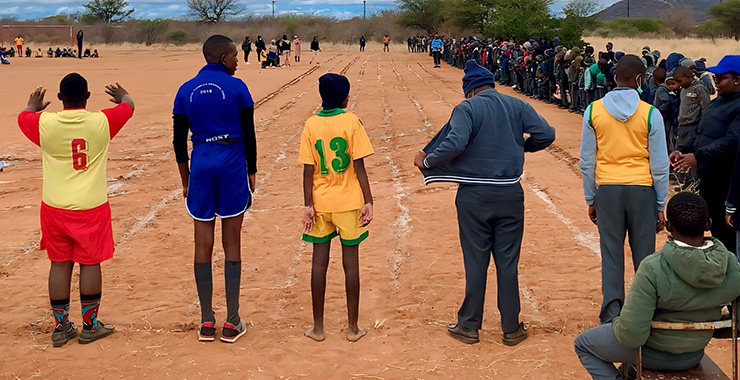
school boys in Botswana lining up for a race

Key points

  • Inexpensive, scalable interventions for mental and behavioral health are increasingly important amid worsening humanitarian crises and deep cuts in U.S. funding for global health.
  • When working across countries and cultures, interventions need to be adapted and retested to ensure they’re relevant and culturally appropriate; Western approaches such as randomized controlled trials are often inadequate.
  • Organizations such as the Fairstart Foundation and Youth Impact work with partners across communities and national borders to implement and scale interventions to mitigate challenges involving mental health, teen pregnancy, literacy and numeracy, caregiving, disability stigma, and more.

In many parts of the world, people struggling with mental health often lack somewhere to turn—and may not even realize that their needs deserve attention. But growing networks of psychologists, public health experts, nongovernmental organizations (NGOs), government agencies, and health systems are building scalable programs to support them. These programs pull from international research and cross-cultural collaborations to make a difference locally.

Inexpensive, scalable programs are more important than ever, given the destruction of the U.S. Agency for International Development, deep cuts in U.S. funding for global health, and a wobbly funding outlook from the European Union, where many countries are also reducing foreign aid budgets, according to the global development news organization Devex.

“It’s the biggest setback I’ve ever seen for helping children and families,” Niels Peter Rygaard, an occupational psychologist in Denmark who works with high-risk children and youth, said of the cuts. Rygaard is the CEO of the Fairstart Foundation, an organization that educates mental health staff for partner organizations worldwide.

The need for help, on the other hand, is only increasing, he said. “The crisis for families and children is growing constantly,” he said. “We need to scale up what we do.”

[Related: Psychology takes a global view]

From research to the real world

The gap between research and implementation is a problem the world over, but perhaps nowhere more so than in low- and middle-income countries, where resources for mental and behavioral health are few. It was this gap that led to the founding in 2014 of Youth Impact, a Botswana-based global health and education program that works to scale evidence-based interventions across international borders. Today, Youth Impact has worked with partners in more than 25 countries and has agreements in place with the governments of five countries to implement and scale programs to reduce HIV and teen pregnancy and improve basic literacy and numeracy.

The catalyst for the organization was a conversation between cofounders Moitshepi Matsheng and Noam Angrist, PhD, about a notable study in Kenya that found that an education program giving teenage girls facts about HIV infection rates in older men reduced teen pregnancies by 28% (Dupas, P., American Economic Journal: Applied Economics, Vol. 3, No. 1, 2011opens in new window). The United Nations and World Health Organization had praised the study as an opportunity to inform girls about the risks of getting into relationships with adult men, Angrist recalls, but Matsheng was frustrated to find that it had never been scaled beyond the initial randomized controlled trial.

Matsheng and Angrist got a start-up grant to test the program in Botswana and found mixed results. They revised the program to be more relevant to the local context and tried again—this time, with positive results. The tweaked program now runs in Botswana under the name Choices and is delivered by fellow young people, which was also shown to boost efficacy. With these changes, the 90-minute intervention has been shown to reduce teen pregnancy (a proxy for unprotected sex) by 40% (BMC Public Health, Vol. 19, 2019opens in new window).

The story of Youth Impact’s start illustrates one of the key challenges of transforming research into action: the need for flexibility. Especially when working across countries, programs need to be adapted and retested and tested again to ensure they’re relevant and culturally appropriate. Often, when programs are implemented, data collection drops away, said Claire Cullen, PhD, Youth Impact’s head of research. “We are very strong believers in monitoring data and measuring implementation fidelity,” Cullen said.

This often means that randomized controlled trials (RCTs), the gold standard in Western psychology for understanding whether an intervention works, are inadequate when applying research in different cultural contexts. Youth Impact uses A/B testing, common in the tech industry, to quickly evaluate whether tweaks to programs work. This provides more agility and responsiveness to different contexts than slower, more rigid RCTs. In India, researchers testing the Nae Umeed program for supporting caregivers of people with mental illness have used a pre/post experimental design to evaluate impact (Bailie, C. R., et al., Global Mental Health, Vol. 10, 2023opens in new window). “Nae Umeed consists of support groups, typically comprising women living in poverty, and the program is designed to be responsive to the women’s schedules and unique circumstances,” said Kaaren Mathias, MD, a public health physician at the University of Canterbury in New Zealand who advises the program.

Women may not be able to attend every session, and the delivery might vary depending on the facilitator and the group interests. RCTs, on the other hand, require very standardized delivery and recruitment processes. “We’re keen to explore rigorous evaluation,” Mathias said, “but not to believe that the RCT is the only way to do it.”

Putting the community first

Sometimes, an RCT is simply unacceptable to the community where the implementation is occurring. That was the case for the Community Partners in Care (CPIC) study, an effort to integrate depression screening and intervention into primary care in an underserved community in Los Angeles in the early 2000s. The study was first conceived as an RCT with a usual care arm, said Bowen Chung, MD, MSHS, a professor-in-residence of psychiatry and biobehavioral sciences at the University of California, Los Angeles. But the community said, “We can’t give the other arm nothing,” Chung said. In response, the researchers gave both arms of the study the same evidence-based toolkits to promote improvements in depression screening, medication management, and cognitive behavioral therapy. The community engagement arm, however, also included co-planning for implementation with providers and community members, as well as additional training and follow-up.

Though both arms of the intervention improved mental health–related quality of life, the community engagement model showed a greater effect (Wells, K. B., et al., Journal of General Internal Medicine, Vol. 28, No. 10, 2013opens in new window).

This experience was emblematic of community-based participatory research, a method of designing research projects with the full cooperation of the community. This mindset often permeates successful local interventions; without it, programs tend to fizzle and flop.

Rygaard’s Fairstart program teaches NGO and government partners to train local parents, foster parents, social workers, teachers, orphanage staff, and refugee staff in attachment-based care. The research team adapts the curriculum to fit local needs and parenting traditions. “We go to the country in question; we talk to everybody in the NGO or government agency on all levels, from leaders to caregivers; we do interviews and make videos of daily care,” Rygaard said.

Many caregivers in these programs are rural women who are isolated from other foster parents and have had little formal education, Rygaard said. The goal is to use attachment research to help them emotionally support the often-traumatized children coming into their care. One woman in the program described her 12-year-old foster son as often disobedient. They’d argue, and sometimes she’d beat him with a stick, and the boy would run away, returning when he realized he had no place else to go. After getting Fairstart training, the woman began to look for ways to connect with the child and realized he had a talent for raising chickens. Poultry husbandry gave the child a role he could take pride in and earned the family enough money to purchase a Jeep.

The key advantage of the program, which takes advantage of online classrooms to train staff who then disseminate the training within their countries, is that it’s both adaptable and scalable, Rygaard said. It costs less than a dollar to train a child’s caregiver for a day. So far, 990 students in 38 countries trained by Fairstart have trained the caregivers of about 100,000 children, he said.

Caregivers of another sort were the focus of a dementia awareness course developed by Charlotte Stoner, PhD, a senior lecturer in psychology at the University of Greenwich in London. In trying to implement cognitive stimulation therapy, a kind of psychological intervention for dementia, Stoner and her team found that many de facto caregivers in the countries they were targeting (India, Brazil, and Tanzania) had little opportunity for learning about the medical diagnosis of dementia or dementia treatments. They realized they needed an educational campaign for caregivers—and they didn’t want it to start from a Western perspective.

[Related: International humanitarian careers]

Instead, they sat down with their collaborators in the three countries and established a consensus on basic definitions and symptoms, and then they included country-specific statistics, myths, and misconceptions. They also customized how the awareness course would be publicized in each country, based on their local partners and the health system involved. In Tanzania, a clinical psychologist advertised the program on the radio. In India, it was delivered through NGOs, and in Brazil through a private hospital. An initial study found that the course appealed to the caregiver audience (Stoner, C. R., et al., Dementia, Vol. 21, No. 2, 2021opens in new window). The Covid-19 pandemic disrupted the wider implementation of the program, but Stoner is now working on a grant application to expand it to migrant communities in the United Kingdom.


Building on a firm foundation

Working with trusted people and organizations on the ground can be a huge boon when programs involve sensitive subjects. In Los Angeles, the CPIC researchers partnered with barbers, beauty shops, senior centers, and youth centers to spread the word about depression screening. In India, researchers looking to identify and support people with common mental health problems turned to community networks, including self-help groups run by women and farmers’ clubs run by men. “We firmly believe that people in communities have their own ways of dealing with stress and distress,” said Kaustubh Joag, a psychiatrist and senior research fellow at the Center for Mental Health Law and Policy in Pune. “We need to draw upon this social capital. They have their own networks.”

Joag is the coleader of Atmiyata, an initiative dedicated to outreach around common mental health issues. Atmiyata works within local networks with volunteers called Champions, who are trained to note signs of distress in their neighbors and to provide six sessions of counseling to those who need them. An RCT found that participants in the intervention showed significant recovery from their depression or anxiety symptoms at the end of the 3-month study period as well as at an 8-month follow-up (PLOS ONE, Vol. 18, No. 6, 2023opens in new window).

The program, originally funded by a grant from Grand Challenges Canada, is now funded by domestic foundations. It is active in 2,500 villages and is moving into new regions of India, including urban areas, Joag said. He and his coleader, Jasmine Kalha, will soon start working with Queen Mary University of London to adapt the program for communities in Newham, East London. “It’s all deeply rooted in the communities, and how then any community can utilize the core of it,” Joag said.

Community ties also helped strengthen a collaboration in Botswana to improve inclusion for people with physical disabilities (Disability and Health Journal, Vol. 15, No. 3, 2022opens in new window). Discussing disability is taboo in rural Botswana, said Courtney Jost, PhD, MPH, an instructor at Oregon State University, so she spent 2 years talking with community advocates there to build trust. Ultimately, villagers with disabilities felt comfortable enough to form a committee. Jost and her team supported the committee as it developed an educational program that busted myths about disability and suggested low-cost ways to improve accessibility and inclusivity in town. “Now that community working group is taking those programs and implementing them,” Jost said. They’re also developing their own programs, including a support group for parents of kids with disabilities.

“Ultimately our goal as researchers is to motivate at the beginning but work with the community to the point where they don’t need us anymore,” Jost said.

Recommended Reading

Speaking of Psychology

Subscribe to APA’s audio podcast series highlighting some of the most important and relevant psychological research being conducted today.

Subscribe to Speaking of Psychology and download via:

Appleopens in new window
Apple podcast logo

Spotifyopens in new window
Spotify logo

Related and recent