skip to main content
In brief

Perception bias, volunteering vs family care, loneliness, and more scientific studies

Summaries of research from psychology and related fields
APA Style leaf logo Cite This Article in APA Style
American Psychological Association. (2025, July 1). Perception bias, volunteering vs. Family care, loneliness. Research in Brief, 56(5). https://www.apa.org/monitor/2025/07-08/perception-family-care-loneliness

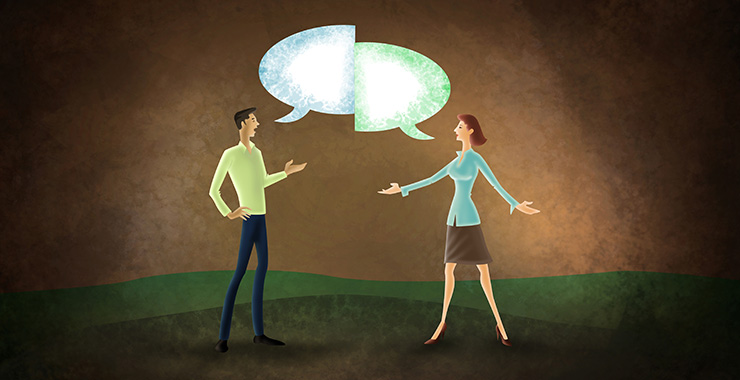
graphic of two people with conversation bubble depicted over their heads

Wishful perceiving bias

People often misperceive the values and beliefs of those with whom they are close and assume they see things the same way, according to a study in the Journal of Personality and Social Psychology. In six studies spanning four countries (Finland, Israel, Italy, and Poland), more than 2,200 participants responded to surveys about the values and beliefs of their spouses or romantic partners, children, parents, and close friends, as well as how closely these individuals aligned with participants’ personal values and beliefs. Participants tended to assume their close others shared their own values, even when controlling for the others’ actual values and beliefs. The effect was stronger in closer relationships. The researchers suggest one consequence of this bias is that if children perceive their parents’ values as similar to their own, they may not learn their parents’ real values.
DOI: 10.1037/pspi0000482opens in new window
In U.S., volunteering is more valued than family care

Americans believe volunteering to help strangers is more virtuous than providing care for family or friends, according to research in the Journal of Personality and Social Psychology. In the first of five studies with 7,326 participants in the United States, researchers found that Americans in lower, versus higher, social class contexts perceived that they contribute less to society and believed others would agree. The next four studies revealed the reasons: (a) Americans across social status perceive helping strangers as more altruistic and more of a societal contribution than helping family, and (b) in lower social class contexts individuals tend to engage in relatively more family care and less volunteering. These studies highlight a form of psychological inequality by which people in lower social class contexts perceive the type of help that is more accessible to them and more widely practiced as less of a contribution.
DOI: 10.1037/pspa0000411opens in new window

Stress associated with psychopathological states

Most people experience a variety of temporary psychopathological states on stressful days, according to a study in the Journal of Psychopathology and Clinical Science. Researchers assessed 13,493 daily surveys from 408 participants in the United States about the occurrence and severity of various stressful events, such as arguments and issues related to work or home. Participants also rated the intensity of their negative emotions at those times, such as fear and sadness, and completed measures assessing psychopathology states. On days with increased stress, participants reported higher levels of psychopathology states in different domains (e.g., antagonism, detachment, disinhibition, and negative affectivity). In addition, the researchers found an association between higher levels of trait psychopathology and stronger psychopathology responses, but this association was not always specific to the corresponding domain (e.g., a higher level of trait antagonism associated with stronger detachment responses).
DOI: 10.1037/abn0000954opens in new window

Lonely but loved

Lonely people underestimate how much their loved ones care about them, according to research in the Journal of Personality and Social Psychology. Researchers conducted three studies with 255 undergraduate students and 447 romantic couples to assess participants’ loneliness and perceptions of care from their loved ones. They found loneliness was associated with worse perceptions of relationship partners’ care, independent of the partners’ self-reported regard and care for the participants, informant reports from close friends, and observer ratings of partners’ support behaviors. In addition, loneliness indirectly predicted lower relationship quality (e.g., satisfaction, commitment) and lower relationship-promoting behaviors (e.g., self-disclosure, offers of support). These results were independent of self-esteem and attachment insecurity.
DOI: 10.1037/pspi0000451opens in new window

Narcissism linked to ostracism

Narcissists feel (and, in fact, may be) ostracized more frequently than their less self-absorbed peers, according to research in the Journal of Personality and Social Psychology. Researchers’ surveys of 1,592 individuals in Germany indicated that people with higher grandiose narcissism scores reported experiencing significantly more ostracism than those with lower narcissism scores. In a separate study, 323 participants logged moments when they felt excluded over 14 days. Those with higher narcissism scores reported feeling excluded more frequently, in accordance with the initial survey data. Next, six studies involving more than 2,500 participants revealed that narcissists are more sensitive to ambiguous (but not unambiguous) exclusion cues and are more often excluded because of their narcissistic traits. Finally, 14 years of data from a national survey in New Zealand involving 72,289 participants suggested that changes in feelings of exclusion preceded changes in narcissism levels 1 year later—and vice versa—indicating that ostracism seems to solidify narcissistic traits over time.
DOI: 10.1037/pspp0000547opens in new window

Miranda rights, suspects wronged?

People tend to perceive criminal suspects who exercise their right to remain silent or request a lawyer as more likely to be guilty compared with those who waive these rights, according to research in Law and Human Behavior. In the first of two studies, researchers asked 256 undergraduate students in the United States to play the role of a police officer investigating a series of crimes in which the suspect either invoked their Miranda rights, sat in silence, or spoke to police. Participants perceived the suspects as guiltier if they invoked their right to silence or remained silent compared with those who waived their rights and spoke to police. Participants also allocated more time to investigating such suspects. A second study with 119 students pursuing degrees in law enforcement or related fields replicated these results. The researchers suggest that this “Miranda penalty” bias may erode suspects’ legal protections and negatively influence investigations and prosecutions.
DOI: 10.1037/lhb0000587opens in new window

The complexity of well-being

Average life-satisfaction scores fail to adequately capture the well-being of countries, as this measure omits relevant information like the extent of suffering and inequality, suggests a study in the Journal of Personality and Social Psychology. Researchers analyzed nationally representative data from 3,035,971 participants across 148 countries drawn from the 2005–2022 Gallup World Poll and the 1981–2021 World Values Survey. They found that life-satisfaction scores were not evenly distributed, suggesting that the scores’ means and standard deviations could not adequately capture other qualities of well-being. After re-ranking countries by degree of inequality, the researchers found that the rank of 56 of the 148 countries moved up or down by at least 20 spots compared with the mean life-satisfaction rankings. Finally, increased suffering or inequality accompanied increases in average life-satisfaction scores at the country level between 9% and 46% of the time.
DOI: 10.1037/pspp0000549opens in new window

Time, culture shape moral compasses

Relative time and cultural differences begin influencing people’s moral compasses around age 8 or 9, suggests research in Developmental Psychology. Researchers asked 346 children ages 6 to 9 in the United States and China about their moral and immoral actions in hypothetical scenarios occurring in the past week or the coming week. By 8 and 9 years old, the attitudes of Western children matched those of previously studied Western adults: They considered future good acts more deserving of reward and praise than those performed the week prior. The opposite was true among Chinese children. Trends among 6- and 7-year-olds were similar to those of the 8- and 9-year-olds but not statistically significant. Chinese children’s moral reasoning emphasized social connectedness and conformity, whereas U.S. children’s moral reasoning focused on individuality and personal choices.
DOI: 10.1037/dev0001825opens in new window

Vocalized goals boost older adult cognition

Older adults can improve some aspects of their cognitive functioning by vocalizing periodic reminders of their goals, suggests research in Psychology and Aging. Eighty younger (ages 18 to 35) and 78 older (ages 65 and older) participants completed a Stroop task in which most trials were congruent (the color of the letters matched the words the letters spelled), a condition that tends to make participants forget the goal of identifying the colors, not the words spelled. Every 24 trials, half of the participants in each age group read aloud a goal-reminder statement (“The goal is to name the color of the letters, not the word the letters spell”) or a non-goal statement (“I am participating in a psychology study”). Older participants who vocalized goal reminders had shorter reaction times in the incongruent trials, when the color of the letters and the word were mismatched, than those who vocalized the non-goal statement. However, this benefit was short-lived, lasting for about 12 trials. Vocalizing goals or not made no difference for younger adults’ performance on the Stroop task.
DOI: 10.1037/pag0000882opens in new window

Humility lowers anger

Humility is associated with lower levels of anger and less likelihood of attributing hostility to others in ambiguous social situations, according to research in Personality and Individual Differences. In two studies with 278 participants in the United States, researchers found that those who scored higher on cognitive and general humility reported less anger and fewer hostile attributions when interpreting ambiguous situations. Furthermore, humility was associated with lower levels of physical aggression, verbal aggression, and hostility. In a third study, 96 participants were randomly assigned to a condition that included tasks meant to evoke humility or a control condition that included self-reflection tasks. Participants in the humility-evoking group reported lower emotional experiences of anger, but their hostile attributions or behavioral aggression did not differ from those in the control condition. The findings suggest that humility mainly influences the emotional side of anger rather than the cognitive or behavioral aspects.
DOI: 10.1016/j.paid.2024.112980opens in new window

Perceptions of posed versus spontaneous expressions

According to research in Emotion, people’s perceptions of facial expressions can vary widely depending on whether those expressions are posed or spontaneous. Researchers asked 2,408 participants to judge the emotions of three models displaying 1,244 dynamic facial expressions of eight emotions (anger, disgust, fear, sadness, joy, pride, compassion, and love). They found that both Western (Dutch) and ­non-Western (Chinese) participants were much better at recognizing emotions in posed compared with spontaneous expressions. Furthermore, they observed a “negativity bias” with posed expressions. Specifically, participants were better at recognizing negative emotions than positive emotions when expressions were posed, while they better recognized positive emotions than negative emotions when expressions were spontaneous. The findings question the generalizability of psychological research and clinical assessments involving the identification of emotions from facial expressions, which typically use posed expressions as stimuli.
DOI: 10.1037/emo0001473opens in new window

Reframing gender gap angers, motivates women

Reframing the gender gap in political leadership positions from “women are underrepresented” to “men are overrepresented” elicits anger from women (but not men) and motivates actions to narrow the gap, suggests research in the Journal of Experimental Social Psychology. In three pilot studies and a fourth registered study with more than 10,000 total participants, mock news stories framing the gap as men’s overrepresentation in political (but not business) leadership elicited more anger among women and increased their perceptions that the gap is unjust. Furthermore, the pilot studies revealed that anger at the disparity was associated with stronger intentions and behaviors to close the gap, including reading more about changing the status quo, writing stronger letters supporting legislation to address gender disparity, and feeling more motivation to donate to gender-bias reduction programs.
DOI: 10.1016/j.jesp.2024.104709opens in new window

Bad weather boosts social posts

People use social media more when the weather is bad, according to a study in Psychological Science. Researchers paired more than 3.5 billion Facebook and Twitter (now X) posts from more than 300,000 individuals with weather data over the contiguous United States between 2009 and 2016. They found that when temperatures dropped or spiked and precipitation increased, people used social media more. The highest increase they found, 35%, occurred on days colder than 23°F with 0.6 to 0.8 inches of precipitation. The largest increases rivaled major events when social media activity often spikes, such as the Boston Marathon or Mardi Gras. And lousy weather was associated with increases in weather-related posts as well as nonweather posts.
DOI: 10.1177/09567976241306099opens in new window

Accepting advice? Prepare to accept culpability

People who follow advice counter to their intuition feel more responsible for their decisions if things go wrong than if they had not been influenced by another opinion, according to research in Personality and Social Psychology Bulletin. In a set of five studies, researchers gave a total of 3,200 participants the choice between two lotteries to participate in, one of which clearly had a better set of prizes. An adviser offered participants input, always recommending the lottery with the worst prizes. Most participants accepted the advice, and most of them also followed it. This group expressed greater feelings of culpability and the perception that they had control over the lotteries’ outcomes than those who made their decisions independently. This effect occurred regardless of whether the input was solicited or unsolicited but only when participants went against their better judgment—not when they rejected poor suggestions or followed input that aligned with their own judgment.
DOI: 10.1177/01461672251319380opens in new window

Early adversity’s rippling effects

Children are 71% more likely to develop mental health problems between the ages of 5 and 18 if the firstborn child in their family experienced early adversity, according to a study in The Lancet Public Health. Using electronic health records of 333,048 mothers and their 534,904 children in the United Kingdom, researchers assessed adverse childhood experiences in firstborn children during the period 1 year before and 2 years following their birth, including child maltreatment, intimate partner violence, maternal substance misuse, maternal mental health problems, adverse family environments (such as homelessness), and high-risk presentations of child maltreatment. More than one third (37.1%) of firstborn children had at least one adverse childhood experience. Mothers whose firstborn children were exposed to adversity had 1.71 times as many children with mental health problems. Firstborn children with adverse childhood experiences and their siblings were also more likely to have been admitted to the emergency department and have contact with mental health professionals.
DOI: 10.1016/S2468-2667(24)00301-3opens in new window

Creativity circuit

Creativity maps onto a common brain circuit centered in the frontal cortex, damage to which appears to be associated with decreases and paradoxical increases in creativity seen in some brain diseases, according to a study in JAMA Network Open. Researchers performed a meta-analysis of 36 neuroimaging studies that reported increased brain activity during creative tasks such as drawing, writing, and making music in 857 healthy participants. About 86% of the studies reported brain regions associated with creativity that formed a common brain circuit with negative connectivity with the right frontal pole (i.e., one area is active while the other area is inactive). In a separate pool of patients, damage to this circuit by lesions (56 patients) or neurodegenerative disease (4,804 patients) was associated with both decreases and increases in creativity. In the cases of increased creativity, negative connectivity between the circuit and the right frontal pole may be consistent with the hypothesis that creativity can sometimes depend on silencing self-censoring judgments that otherwise inhibit free association and idea generation.
DOI: 10.1001/jamanetworkopen.2024.59297opens in new window

Recommended Reading

Speaking of Psychology

Subscribe to APA’s audio podcast series highlighting some of the most important and relevant psychological research being conducted today.

Subscribe to Speaking of Psychology and download via:

Appleopens in new window
Apple podcast logo

Spotifyopens in new window
Spotify logo

Related and recent