skip to main content
Feature

The promise of precise, personalized mental health care

Coordinated, individualized tools such as brain imaging, genetic profiling, health history, and more can help determine the best treatment approach 

APA Style leaf logo Cite This Article in APA Style
Stringer, H. (2025, September 1). The promise of precise, personalized mental health care. Monitor on Psychology, 56(6). https://www.apa.org/monitor/2025/09/personalized-mental-health-care

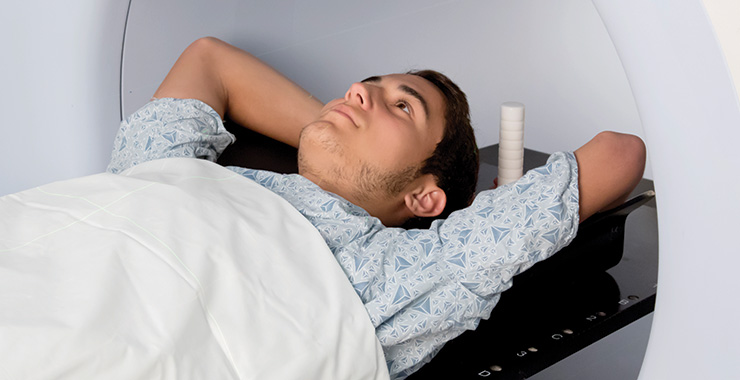
patient in bed

Key points

  • Precision mental health uses brain scans, genetics, and lifestyle insights to match patients with the right treatment.
  • Precision mental health can tailor treatments for those who don’t respond to standard care and can prevent serious mental illness before it starts.
  • Machine learning combined with clinician input is helping predict suicide risk within months, enabling earlier, more targeted interventions for those most at risk.

Nearly one third of adults with major depressive disorder fail to respond to at least two different antidepressant medications, and half of those treated for generalized anxiety disorder do not respond to first-line treatments. Numerous other mental health conditions also require that patients endure a lengthy period of treatment experimentation (Zhdanava, M., et al., The Journal of Clinical Psychiatry, Vol. 82, No. 2, 2021opens in new window; Ansara, E. D., Mental Health Clinician, Vol. 10, No. 6, 2020opens in new window).

“This is like getting the wrong antibiotic,” said Leanne Williams, PhD, a professor of psychiatry and behavioral sciences at Stanford University and director of Stanford Medicine’s Center for Precision Mental Health and Wellness. “In that time, the disability is developing. It is essential to find a way to get patients to the right treatment as quickly as possible to limit the chances of chronic illness.” Williams lost her partner, who suffered from major depression for decades, when he died by suicide in 2015.

Williams is among a growing cadre of researchers leading the charge to improve mental health outcomes by collecting data about a patient’s brain circuitry, genetics, environment, and lifestyle to better diagnose, treat, and prevent disease. This individualized treatment model, known as precision health, has already been adopted in cancer, cardiology, and other disciplines, and mounting evidence suggests that the field of mental health is the next frontier.

At present, the medical community tends to treat patients with a particular mental health diagnosis as if they are all the same, according to Jordan Smoller, MD, ScD, director of the Massachusetts General Hospital (MGH) Center for Precision Psychiatry. “If we could know ahead of time who is more likely to do well with a given treatment—whether it is psychotherapy or medication—that could avoid the sometimes long odyssey of trial-and-error treatment and reduce the burden of illness for those who are struggling.”

Recent studies highlight the benefits of using fMRI, biomarkers, electronic health records, and other information about a patient to treat and potentially prevent depression, suicide, attention-deficit/hyperactivity disorder (ADHD), anxiety disorders, and schizophrenia. In addition, researchers are developing precision health technology tools that clinicians can use to inform their decisions about which mental health treatments to recommend for a patient. While this approach has yet to become a standard of care, those pioneering this method believe it is an innovation that is long overdue.

“Someone who is sleeping only 4 hours a night, has lost weight, and is intensely agitated may not have the same biological problem as a patient who has gained 40 pounds, can’t get out of bed, and has lost interest in things that used to be enjoyable, but they may get the same diagnosis and treatments,” said Conor Liston, MD, PhD, a professor of psychiatry and neuroscience at Weill Cornell Medicine in New York City. “The field is being transformed by an increased understanding of neurobiology that is leading to more personalized care.”
Biotypes for precision

fMRI brain scans are one way to capture biological differences between individuals, and Williams has studied this data on thousands of patients with depression. Williams has identified at least six “biotypes” of depression that are associated with certain patterns of dysfunction in brain circuits (Nature Medicine, Vol. 30, No. 7, 2024opens in new window). One of the biotypes shows hyperconnectivity within the default mode circuit, which is associated with internal reflection and thinking about the past and future. She has found that cognitive behavioral therapy (CBT) is particularly effective for people with this biotype. “If this circuit is not easily suppressed, cognitive therapy can train people to focus their thoughts differently, and this changes the brain,” said Williams.

Another biotype exhibits dysfunction in brain circuits associated with positive affect. These patients experience emotional numbness and lack of pleasure in activities they previously enjoyed. People with this biotype do not typically respond to standard antidepressants, but Williams found that pramipexole—a drug used to treat restless leg syndrome and Parkinson’s disease—boosted activity specifically in the reward circuits in the brain. One study participant who struggled with depression since childhood had lost his job and was experiencing suicidal ideation. He had failed to respond to five different antidepressants when he joined Williams’s study. But 2 weeks after starting the test drug, he called the research team to share that when he heard one of his favorite songs on the radio, he felt joy for the first time in years. He also found a new job and has continued to experience relief from depression since he started taking the medication several years ago.

Brain scans can also identify patients who have underactive or overactive cognitive control circuits, which are associated with executive functioning. Based on her studies, Williams estimates that about one quarter of people with depression have dysfunction in their cognitive control circuits. These patients do not typically improve with standard antidepressants, but study participants with underactive circuits in this region improved after receiving transcranial magnetic stimulation (TMS), a noninvasive brain stimulation technique using magnetic fields to influence electrical brain activity. “For these people, it is a big effort to make the cognitive control circuits active, and as a result they experience brain fog,” said Williams. Cognitive control performance increased significantly after a few early sessions of TMS treatment and continued after the full 6-week course of treatment (Nature Mental Health, Vol. 2, No. 8, 2024opens in new window).

In another study of people diagnosed with both major depression and obesity, one-third who had overactive cognitive control circuits responded to a form of CBT known as problem-solving therapy. This type of treatment helps people learn to disregard irrelevant details and process information more efficiently. Brain scan data showed that in the group receiving this therapy, decreased cognitive control circuit activity was associated with improved problem-solving ability (Science Translational Medicine, Vol. 16, No. 763, 2024opens in new window). “This therapy is creating brain changes that help people solve problems in their relationships, at work, or in other situations that affect mental health,” said Williams.

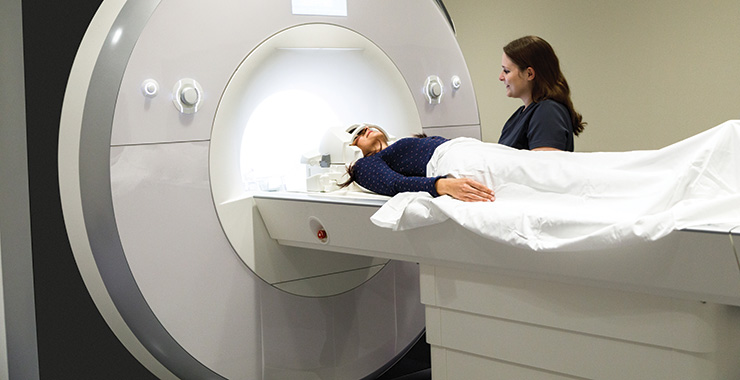
MRI machine

Personalized prevention

While precision mental health has the potential to help people with mental health conditions who do not respond to standard treatments, psychologists are also exploring whether this approach could prevent the onset of serious mental illness. Carrie Bearden, PhD, a professor of psychiatry, biobehavioral sciences, and psychology at the University of California, Los Angeles, has been studying how an individual’s genetic information could help clinicians predict who has an increased risk of developing schizophrenia. About 20% of people missing a piece of DNA on chromosome 22, known as 22q11.2 deletion syndrome, develop schizophrenia, but it has been difficult to predict who will develop the disease and who will not, Bearden said.

In a recent study, she and her colleagues discovered that participants with this genetic syndrome, in addition to other genetic variants associated with schizophrenia, had a much greater risk of developing the disease than those with the genetic syndrome and low variant risk (Nature Medicine, Vol. 26, No. 12, 2020opens in new window). “The damaging effects to the brain appear to be greatest during the first 5 years of the illness, and early intervention can make a significant difference in outcomes,” she said. “In the early stages, before full-blown illness hits, psychosocial treatments like family-focused therapy and cognitive behavioral therapy can improve symptoms and functioning.”

Psychologist Susan Whitfield-Gabrieli, PhD, is using precision techniques to help adolescents reduce their risk of developing major depression and severe anxiety later in life. In a pilot study, teens with a history of depression, anxiety, or both, learned mindfulness exercises that can help downregulate an overactive default mode network. While in the scanner, a software program converts an individual’s brain signal into an image of a ball. The degree of motion of the ball helped participants see the calming effect of the mindfulness exercise on their default mode network (Molecular Psychiatry, Vol. 28, No. 6, 2023opens in new window).

“Each person’s default mode network is different, so they can experiment with different types of mindfulness training to see on the scanner what works best,” said Whitfield-Gabrieli, the Tommy Fuss Endowed Chair in Precision Psychiatry at MGH. “The really exciting part is empowering patients to learn how to change their brains by seeing a visual of how they are doing.” She has four NIH-funded clinical trials to use this technology to mitigate symptoms to help individuals with depression, borderline personality disorder, or schizophrenia, and people at risk for psychosis, but one of the grants has been affected by the recent funding cuts. She is also applying for a grant to use this technology to help elementary-school-age children use the technology to learn techniques that change their brain circuitry, which could ultimately help reduce their chances of developing mental health conditions.

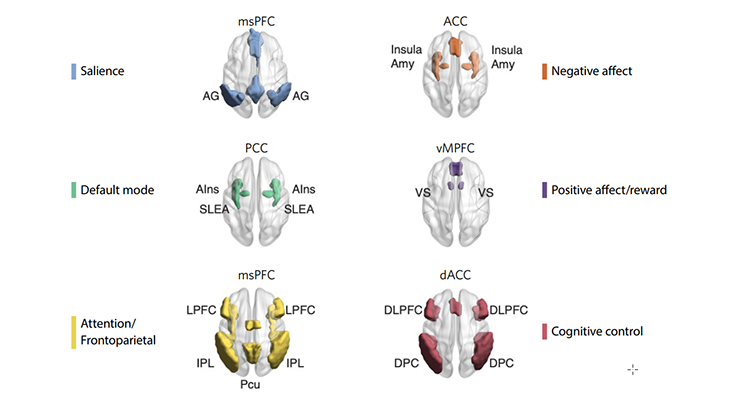
fMRI example
The colored areas represent the regions of the brain on an fMRI that show abnormal activity in a distinct set of brain circuits that
regulate mood and cognition. This data can help clinicians identify which treatment would likely be effective for a patient.

Lowering suicide risk

Researchers are also investigating how precision health could help clinicians more accurately predict both who is at risk of suicide and when the risk is highest. “When clinicians see large volumes of patients in settings such as the ER or primary care, even the most trained providers have trouble identifying who are the few who will actually go on to attempt suicide,” said Kate Bentley, PhD, an assistant professor of psychology at Harvard Medical School and director of the Suicide Prevention Research Program at the MGH Center for Precision Psychiatry.

Bentley is part of a team that is using machine learning algorithms to improve prediction of who is at risk of suicide within months of seeing a health care provider. In a recent study, the team collected data from more than 800,000 suicide risk assessments entered by clinicians into the electronic health record for nearly 90,000 patients in the Boston area between 2019 and 2023. The assessments included questions about suicidal ideation, depressed mood, firearm access, and social support. At the end of each assessment, clinicians documented their overall estimate of a patient’s risk. Over the 6 months that followed, the researchers tracked whether patients visited the emergency room for a suicide attempt (JAMA Psychiatry, Vol. 82, No. 6, 2025opens in new windowlogin requiredlogin required).

While clinician estimates of risk were higher than chance, using statistical machine learning models that combined those estimates with suicide risk assessment data significantly improved the accuracy of predicting future suicide attempts. “This type of personalized prediction could be used to alert providers if there is a patient they need to be especially concerned about and elevate the level of care,” Bentley said. “It could also let them know who they don’t need to be as concerned about, reserving high-cost interventions for the highest risk patients.”

Psychology researchers are also investigating how to use precision health techniques to tailor risk assessment and prevention strategies for depression. In one study of more than 100,000 adults in the United Kingdom, a machine learning algorithm analyzed data using 106 variables for each patient, including exercise, sleep, diet, media use, green space, and social connections. The participants had also shared genetic information for depression biomarkers and reported their history of traumatic life experiences, such as childhood sexual, emotional, or physical abuse. For individuals at higher risk of depression based on genetic or trauma data, three factors showed the most potential for preventing disease: confiding in others, reducing television time, and managing daytime sleep (American Journal of Psychiatry, Vol. 177, No. 10, 2020opens in new window). “Once depression develops, it is difficult to treat and tends to come back again, so preventing the onset of depression is important for reducing its burden,” said study coauthor Karmel Choi, PhD, an assistant professor of psychology at Harvard Medical School and director of the Precision Prevention Program at the MGH Center for Precision Psychiatry.

In another study, patients with a higher genetic risk of depression were 20% less likely to develop depression when they engaged in more physical activity than when they didn’t. With 45 minutes a day of activity—such as yoga, walking, or jogging—the outcomes for these patients looked more like people with low genetic risk for depression, (Depression & Anxiety, Vol. 37, No. 2, 2020opens in new window). “We can use precision strategies to recommend the lifestyle factors most likely to reduce depression risk, informed by an individual’s own risk profile,” said Choi.

Precision psychiatry in the clinic

Although precision techniques in mental health are primarily used in academic research settings, studies are underway to develop decision support tools providers can use in the clinical setting. Psychologist Ellen Dreissen, PhD, of Radboud University in Nijmegen, Netherlands, spent 10 years collecting and analyzing raw data from more than 60 randomized clinical trial studies involving nearly 10,000 patients globally who were diagnosed with depression.

Dreissen’s team is building a machine learning model that can give individualized treatment recommendations based on multiple variables, such as patient history, family history, suicidality, inpatient treatment, personality factors, anxiety and depression assessments, comorbidities, and more (PLOS ONE, Vol. 20, No. 4, 2025opens in new window). The algorithm will combine this information with outcome data on five different treatments: antidepressant medications, cognitive therapy, behavioral therapy, interpersonal therapy, and short-term psychodynamic therapy.

“To a large extent, research in mental health treatment has focused on ‘average treatment effects’ from clinical trials that compare one treatment versus another, but this can mask the fact that there are many different patient-level factors at play that affect outcomes,” said Zachary Cohen, PhD, the study’s senior author and an assistant professor of psychology at the University of Arizona. “Using machine learning models, we can develop multivariable models to predict which treatment is indicated for a specific individual.” The team’s goal now is to develop an algorithm-based tool that can be disseminated to clinicians and patients to support shared decision-making. Clinicians could potentially tell patients their likelihood of responding to an antidepressant medication versus psychotherapy, or one type of psychotherapy versus another.

Researchers are also testing another decision support tool that uses data from a patient’s brain scan, depression rating scale, and symptoms to generate a depression subtype and predictions about which treatments would be most effective. “It would be similar to doctors ordering blood tests, an EKG, and a chest X-ray for chest pain,” said Liston, who is leading a study of the tool. “Doctors would use this information to make decisions to treat mental health conditions.”

While tests such as brain scans are not typically covered by insurance to diagnose and treat mental health conditions, researchers like Liston are hopeful that evidence will build the case to adopt precision mental health tools into primary care, emergency departments, and psychiatry throughout the world.

“We must generate more data to prove that precision mental health works,” said Liston. “If we can show how this approach improves outcomes, these tools can be scaled to better help patients with depression, OCD, autism spectrum disorder, and many other conditions that are difficult to treat and affect millions of people worldwide.”

Recommended Reading

Speaking of Psychology

Subscribe to APA’s audio podcast series highlighting some of the most important and relevant psychological research being conducted today.

Subscribe to Speaking of Psychology and download via:

Appleopens in new window
Apple podcast logo

Spotifyopens in new window
Spotify logo

Related and recent