skip to main content
In brief

Morals and happiness, implicit bias, AI and creativity, and more science

Summaries of research from psychology and related fields
APA Style leaf logo Cite This Article in APA Style
Palmer, C. (2025, October 1). Research in brief. Research in Brief, 56(7). https://www.apa.org/monitor/2025/10/morals-happiness-implicit-bias-ai-creativity

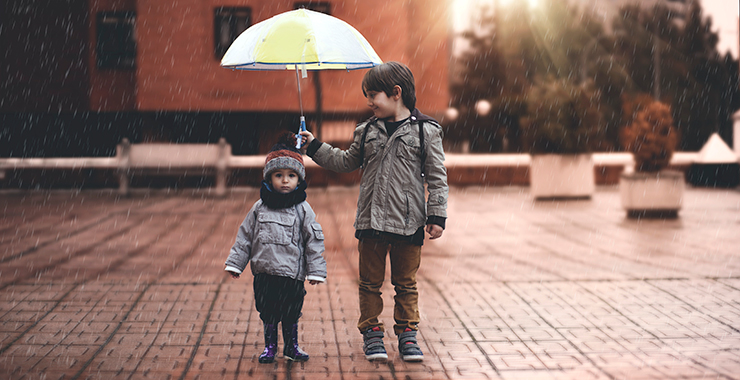
boy holding umbrella over younger boy

Higher morals, greater happiness?

People considered good tend to be happier, suggests research in the Journal of Personality and Social Psychology. Across three studies conducted in the United States and China involving 1,499 participants, individuals judged as more moral (i.e., more compassionate, honest, and fair) by others also reported higher levels of well-being and meaning in life. These associations were independent of the participants’ likability, religious beliefs, gender, and age. The studies indicate that highly moral individuals may feel happier in part because they have better relationships with others. Furthermore, acting in line with one’s values may boost the sense of life satisfaction and purpose.
DOI: 10.1037/pspp0000539

Implicit biases shift over time

People’s knee-jerk reactions to certain topics can change over time, whether in tandem with their more controllable feelings or in opposition to them, suggests research in the Journal of Experimental Psychology: General. Researchers surveyed more than 1.4 million participants in 34 countries about attitudes regarding age, body weight, sexual orientation, race, and skin tone over 11 years, from 2009 to 2019. In each category, the participants’ explicit preferences toward the nondominant group became less negative over time. The changes to people’s gut feelings—or implicit attitudes (as measured by a timed task in which people quickly paired words and images)—were more varied, however. They became less negative about sexual orientation (less pro-straight/antigay), more negative about skin tone (more pro–light skin/anti–dark skin), and stayed about the same regarding age, body weight, and race.
DOI: 10.1037/xge0001746

Can generative AI boost creativity?

Research in the Journal of Applied Psychology indicates that generative artificial intelligence (AI) might boost employee creativity—but only for those who actively reflect on and adapt how they use it. Researchers randomly assigned 250 employees in the United States either to use the AI tool ChatGPT or not. Those with access to ChatGPT were rated as more creative by both supervisors and outside evaluators, but only if they used metacognitive strategies, such as planning, monitoring, and evaluating their own performance. The study also found that ChatGPT offered benefits that support job performance and creativity, like providing information, enabling effective task switching, and allowing mental breaks. However, these advantages only helped employees with strong metacognitive skills, who could identify the information they needed and the best times to switch tasks or take breaks.
DOI: 10.1037/apl0001296

Both empathy and schadenfreude toward workplace abuse

People who observe workplace mistreatment react as strongly as those who experience it, but some observers show a surprising amount of schadenfreude, or pleasure at another’s pain, according to research in the Journal of Applied Psychology. Researchers examined 158 studies published in 105 journal articles on witnessing workplace abuse. They explored different forms of mistreatment, including abusive supervision, injustice, incivility, and sexual harassment, and found that third-party observers were impacted to a similar degree as direct victims of the abuse. While observing mistreatment more often induced anger and empathy, it also brought about schadenfreude, alongside negative evaluations of and behaviors toward victims, such as undermining actions and gossip.
DOI: 10.1037/apl0001211

From good soldier to bad apple

When envious coworkers ostracize top performers, the standout workers may sabotage team productivity, according to research in the Journal of Occupational Health Psychology. Researchers twice surveyed 630 workers on 131 workplace teams of three or more in various industries in China, including health care, finance, and manufacturing. In the first survey, employees rated their proactivity and job satisfaction and the extent to which they experienced envy, coworker ostracism, and negative emotions. In the second survey, employees evaluated their own intentional underperformance. The researchers found that teams with higher rates of envy were more likely to ostracize high-performing employees—and that the targets of this exclusion were more likely to dial back their efforts at work.
DOI: 10.1037/ocp0000389

More to FOMO than missing out

Often, FOMO (fear of missing out) isn’t just about missing a group activity; it’s also the worry that one’s absence could damage social relationships or lead to exclusion from the group, suggests research in the Journal of Personality and Social Psychology. Across seven experiments with 5,441 online participants, researchers discovered that FOMO is driven by worries about missed bonding opportunities and concerns about the negative fallout on relationship strength. Participants felt greater FOMO when they missed events involving others close to them, as opposed to strangers or unimportant social groups, and when the events had the potential to foster social bonding—even when the events themselves were considered unenjoyable. FOMO was further intensified when participants were particularly concerned about the strength of their connection to the social group.
DOI: 10.1037/pspa0000418

Unmet needs drive conspiracy thinking

People are more likely to believe in and promote conspiracy theories when they tend to rely on intuition, have poor reasoning ability, perceive existential threats (particularly from the world around them and in society), and feel a need to defend their self-image and the image of their in-group, according to a meta-analysis in Psychological Bulletin. Researchers examined 279 studies involving 137,406 participants that measured the relationships between conspiracy beliefs and psychological motives. Overall, when participants’ needs to feel informed, secure, and valued were unmet, they were more likely to believe in conspiracy theories. The authors suggested that researchers and policymakers focus on satisfying these motives when designing interventions aimed at tackling problematic conspiracy beliefs. 
DOI: 10.1037/bul0000463

Meaning or joy?

People with high self-control tend to prioritize meaningful activities over pleasurable ones, according to research in Social Psychological and Personality Science. In one study, researchers asked 680 participants in Switzerland to imagine or engage in activities during some unexpected free time and how they felt about these activities. They also evaluated the participants on two personality traits: self-control and hedonic capacity, or the degree to which they enjoyed pleasurable experiences. Participants with higher self-control rated their chosen or imagined activities as more meaningful, while participants with higher hedonic capacity reported experiencing greater pleasure from their activities. In a second study, the researchers asked 248 participants to make hypothetical choices between meaningful and pleasurable activities. Participants with higher self-control chose activities deemed meaningful, while those with higher hedonic capacity chose activities deemed pleasurable.
DOI: 10.1177/19485506251323948opens in new window

Parental connection and girls’ suicide risk

How young girls communicate during emotionally stressful interactions with parents might serve as an early behavioral signal of their suicide risk, according to a study in Development and Psychopathology. Researchers evaluated the behaviors of 129 girls ages 11 to 13 and their parents while they discussed conflicts they had recently experienced together. The researchers measured two specific behaviors: how much time each participant spent looking in each other’s eyes and how often they displayed happy facial expressions. They also assessed the girls’ suicidal ideation at the start of the study and again 12 months later. The researchers found that in pairs where parents were less likely to return their daughter’s gaze or reciprocate her expressions of happiness, the girls were more likely to report suicidal thoughts 1 year later. This pattern held even after accounting for symptoms of depression and anxiety. 
DOI: 10.1017/S0954579425000070opens in new window

Better to be liked than attractive

A person’s attractiveness can influence how moral they appear, but this effect is mainly driven by how much others like them, according to research in Scientific Reports. Across two studies in the United States and Poland involving 2,701 participants, researchers found that people perceived highly attractive women (but not men) as more moral than moderately attractive ones. The extent to which the participants liked the individuals they evaluated explained most of the relationship between attractiveness and moral character judgments. In a third study with 1,024 participants in the United Kingdom, the researchers independently manipulated the target’s attractiveness and liking. They found no association between high attractiveness and greater morality. Instead, the liked target was judged as more moral than the disliked target. “Belief in a just world”—an assumption that the world is fundamentally fair—did not moderate the relationship between attractiveness and moral judgments, suggesting that the effect of attractiveness on morality operates primarily through affective mechanisms rather than belief in fairness or justice. 
DOI: 10.1038/s41598-025-97022-2opens in new window

Dads’ mental distress and children’s development

According to a study in JAMA Pediatrics, perinatal paternal depression, anxiety, and stress significantly impact child development across multiple domains, including social-emotional, cognitive, and language skills. Researchers performed a meta-analysis of 84 studies examining the association between paternal perinatal depression, anxiety, and stress and offspring development during the first 18 years of life. The studies comprised 48 cohorts and thousands of father-child pairs. The researchers found that paternal perinatal mental distress between pregnancy and 2 years post-birth was associated with children’s poorer global, ­social-emotional, cognitive, language, and physical development beyond infancy and into childhood. These associations were generally stronger for mental distress during the postnatal period than the antenatal period. No links were found for paternal mental distress and children’s motor development or ability to adapt to changes and manage daily needs. 
DOI: 10.1001/jamapediatrics.2025.0880opens in new window

So, you want to be a YouTuber?

Extroverts, narcissists, and people prone to histrionic expressions, including excessively dramatic attention-seeking behavior, are more likely than others to aspire to be YouTubers, suggests a study in Telematics and Informatics. Researchers assessed the personalities of 711 adolescents ages 16 and 17 in Poland and the United Kingdom and rated their motivation to pursue various professions. They found that extraversion, narcissism, and histrionic tendencies were positively associated with motivation to become a social media influencer. In contrast, conscientiousness was negatively associated with that desire. For the Polish participants, narcissism was the only predictor of wanting to be an influencer. For the U.K. participants, extraversion and histrionic traits were the strongest predictors, with lower conscientiousness also playing a role. Histrionic traits showed no associations with any other profession assessed in the study. DOI: 10.1016/j.tele.2025.102248opens in new window

Reality or illusion? Potential implications for schizophrenia

The fusiform gyrus—a visual processing region of the brain—plays a key role in distinguishing reality from imagination, suggests a study in Neuron. Researchers instructed 26 participants to look for a faint pattern within a noisy background and indicate whether the pattern was present, which it was only half of the time. At the same time, they asked participants to imagine the same faint pattern of lines running in a certain orientation or an orthogonal pattern. On some trials, the presented and imagined patterns (e.g., a set of lines oriented at a 45-degree angle) were the same. On those trials, when the participants reported that the imagined pattern was particularly vivid, they were more likely to report seeing a real pattern, indicating they mistook the imagined image for reality. Brain imaging performed simultaneously indicated that fluctuations in fusiform gyrus activity predicted whether participants determined a pattern to be real or imagined, regardless of whether it was present. The researchers suggest the findings may inform what might happen in the brain during psychiatric conditions like schizophrenia, where patients struggle to tell imagination from reality. 
DOI: 10.1016/j.neuron.2025.05.015 opens in new window

Jargon can satisfy but does not explain

When reading explanations of scientific phenomena, people find jargon satisfying even though it reduces their understanding, suggests research in Nature Human Behaviour. Across nine experiments with 6,698 participants, researchers found that jargon typically weakened how laypeople comprehended explanations. However, jargon increased laypeople’s satisfaction with circular explanations because they assumed the jargon-filled gaps in their understanding. However, when explanations were more complete, adding jargon decreased comprehension without increasing satisfaction because there weren’t obvious gaps for the jargon to fill. The researchers also found that when participants attempted to generate their own explanations, they were less likely to inflate their judgments of poor explanations and became better at assessing their ability to explain things. Similarly, participants expressed less satisfaction with jargon-filled explanations when they were asked follow-up questions about the phenomena. 
DOI: 10.1038/s41562-025-02227-0opens in new window

Knowing who knows whom

When it comes to climbing the social ladder, knowing how people are connected matters more than knowing lots of people, suggests research in Science Advances. Researchers conducted six assessments with 187 first-year students living in three dormitories at a midsize university in the United States over an academic year. At each check-in, participants completed an online questionnaire about their friendship status with all other participants. To track the evolving social network, the researchers graphed the connections that developed over time. Participants were also given “network knowledge tasks” where they were shown pairs of photos of fellow students and asked to identify whether the individuals in the photos were friends. The responses suggested participants’ knowledge about other friendships in the network, including those outside their friendship circles. Participants who occupied the central position in the social network graphs by the end of the year did not rack up the most friendships early on but demonstrated the strongest knowledge of the networks’ evolving structure.
DOI: 10.1126/sciadv.ads2133opens in new window

Feeling similar may make couples happier

Perceived similarity between romantic partners may be more related to relationship satisfaction than actual similarity, according to a study in the Journal of Social and Personal Relationships. Researchers conducted a scoping review of 339 studies investigating actual and perceived similarity in relationships. The review examined couples’ similarity in values, demographics, lifestyle, personality, physical characteristics, and romantic habits. In studies that calculated actual similarity, most found no strong link between being alike and having better relationships. Studies of perceived similarity, however, found that seeing one’s partner as similar was associated with higher satisfaction and stability. Studies using self-reported similarity were also more likely to find a link with satisfaction, whereas studies with more complex methods seldom did. Also, many studies were powered to detect only relatively large effects, meaning they may have overlooked smaller benefits of similarity. 
DOI: 10.1177/02654075251349720opens in new window

Hawks and doves

People with certain narcissistic traits are more accepting toward war than others, suggests research in Personality and Individual Differences. Researchers surveyed 789 adults in Poland about their values, attitudes, and behavioral intentions toward war and indications of grandiose narcissism across four dimensions—sanctity (seeing oneself as deeply moral and kind), heroism (seeing oneself as a protector), admiration (seeking status and uniqueness), and rivalry (seeing others as threats). Participants high in rivalry expressed the strongest acceptance of war and weakest support for peace. Admiration also was associated with a strong acceptance of war and weak support of peace. Sanctity was associated with a desire for peace, driven by concern for others’ well-being, openness to new ideas, and respect for traditional values. Heroism was associated with higher acceptance of war but more active engagement in both pro-peace and pro-war behaviors. 
DOI: 10.1016/j.paid.2025.113183opens in new window

This is your brain on abstract art

Abstract art elicits greater variability in brain activity than representational art, according to research in the Proceedings of the National Academy of Sciences. Researchers used fMRI to quantify differences in the brain activity of 59 participants in response to either abstract or representational paintings. They found no significant differences between participants’ brain activity in the visual cortex, suggesting both types of paintings activated similar sensory processing. However, they did find differences in activity in higher-order brain regions. In particular, participants showed more variability in brain activity in the default mode network—involved in imagination, memory recall, and self-referential thought—in response to abstract paintings than representational paintings. This finding indicates that abstract art elicited more personal associations than representational art. 
DOI: 10.1073/pnas.2413871122opens in new window

Recommended Reading

Speaking of Psychology

Subscribe to APA’s audio podcast series highlighting some of the most important and relevant psychological research being conducted today.

Subscribe to Speaking of Psychology and download via:

Appleopens in new window
Apple podcast logo

Spotifyopens in new window
Spotify logo

Related and recent